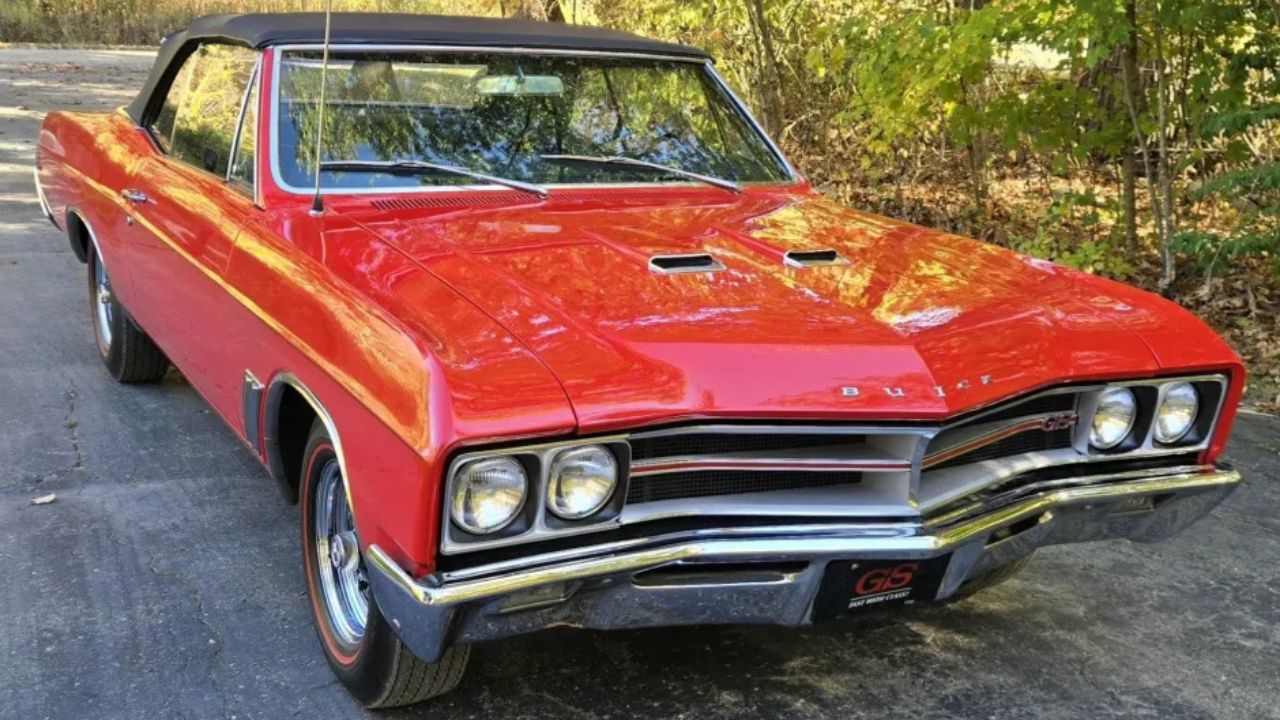
The Buick Skylark GS 400 arrived in 1967 as a full-strength muscle car that refused to shout about it. While rivals leaned on stripes, spoilers, and street-race bravado, Buick wrapped serious performance in clean sheetmetal, upscale trim, and a quiet confidence that fit the brand’s “gentleman’s hot rod” image. Today that restraint makes the GS 400 one of the more intriguing, and often undervalued, artifacts of the original muscle era.
From a distance, a GS 400 could pass for a well-kept mid-size coupe driven by a careful owner. Up close, the details tell a different story: big-block torque, heavy-duty hardware, and a chassis tuned to move a family Buick with surprising urgency. The car delivered muscle without marketing theatrics, and that balance of civility and speed is exactly what sets it apart now.
What happened
By the mid-1960s, nearly every domestic brand had a performance badge, and Buick was not content to sit out the horsepower race. The Gran Sport package had already appeared on earlier Skylarks, but 1967 marked the first full model year where the GS 400 identity crystallized around a specific formula: a 400 cubic inch V8, mandatory performance equipment, and subtle cosmetic cues that signaled power only to those who knew where to look.
At the heart of the GS 400 was its namesake engine, a 400 cubic inch big-block V8 designed for abundant torque at street speeds. Period figures placed output at well over 300 horsepower with a broad torque curve that arrived early in the rev range, which suited Buick’s emphasis on effortless acceleration rather than high-strung theatrics. The engine sat behind a wide grille and under a long hood, with the car’s proportions hinting at the power without resorting to exaggerated scoops or bolt-on aggression.
Buick paired the big-block with transmissions that reinforced the car’s dual personality. Buyers could choose a manual gearbox for more direct control or a smooth automatic that aligned with the brand’s comfort-first reputation. Either way, the driveline was supported by heavier-duty suspension components, stronger rear axles, and upgraded brakes compared with ordinary Skylark models, all tuned to manage the additional weight and thrust of the 400 V8.
Styling changes were measured rather than loud. The GS 400 shared the basic Skylark body, but Buick added restrained badging, modest trim tweaks, and wheel options that suggested performance without shouting it. Inside, the cabin leaned more toward comfort than spartan race-car minimalism. Bucket seats, woodgrain accents, and upscale materials reflected Buick’s position above Chevrolet and Pontiac in General Motors’ hierarchy, even in a performance-oriented model.
That formula would later evolve into even more powerful cars such as the GS 455 and the fearsome GSX. Enthusiasts often point to the 1970 GS 455, with its massive torque and understated styling, as the peak of Buick’s muscle program, and period coverage of the GS 455 highlights how the brand continued to favor subtle looks over flash. The GS 400 helped lay the groundwork for that approach, establishing the idea that a Buick muscle car should be fast, composed, and slightly conservative in appearance.
Within the broader market, the GS 400 occupied an interesting niche. It competed with cars such as the Pontiac GTO and Oldsmobile 4-4-2, which also blended comfort and performance, but Buick’s tuning skewed even more toward refinement. Road tests from the period often described the GS as quick and quiet, a car that could cover distance at speed without feeling harsh or crude. That character made the GS 400 an appealing choice for buyers who wanted serious acceleration but did not want to give up the smooth ride and low noise levels associated with the Buick name.
Production numbers for the GS 400 stayed modest compared with mass-market muscle models, in part because the car’s positioning targeted a more mature and somewhat smaller audience. Pricing also reflected its upscale equipment and materials. The result is that the GS 400 never dominated sales charts, yet it carved out a loyal following among drivers who appreciated its mix of speed and civility.
Why it matters
The 1967 Skylark GS 400 matters because it represents a different philosophy of American performance. While many muscle cars of the period chased maximum visual drama and quarter-mile bragging rights, Buick tried to reconcile big power with the brand’s long-standing emphasis on comfort and quiet competence. That tension produced a car that could run with the pack yet looked and felt more grown-up than many of its peers.
Viewed in historical context, the GS 400 illustrates how diverse the muscle era actually was. The popular image centers on bright colors, stripes, and aggressive marketing, but cars like the GS show that some manufacturers were experimenting with a more understated formula. Buick’s decision to keep the styling relatively conservative, and to equip the car with a level of interior refinement that bordered on luxury, anticipated later trends in performance sedans and coupes that hide capability behind reserved exteriors.
The GS 400 also helps explain how Buick built credibility that later supported its most famous muscle machines. When the GS 455 and GSX arrived with even larger engines and more focused performance tuning, they did so on the foundation of earlier Gran Sports that had already proven Buick could engineer serious speed. The 1967 model year sits close to the midpoint of that development, when the brand had fully committed to the big-block formula but before insurance costs and emissions rules began to erode the segment.
For collectors and historians, the car offers insight into how General Motors managed brand differentiation inside a single corporate family. Chevrolet, Pontiac, Oldsmobile, and Buick all fielded mid-size performance cars, yet each had to appeal to a distinct buyer. The GS 400’s blend of strong torque, subdued styling, and plush interiors shows how Buick positioned itself as the choice for drivers who wanted muscle without sacrificing the calm, almost formal character that defined the marque.
That positioning has implications for how the car is valued today. Because it lacks the visual theatrics of some rivals, the GS 400 often flies under the radar at casual car shows, overshadowed by more flamboyant models. Among enthusiasts who understand its context, however, the car commands respect as a sleeper: a machine that can deliver authentic muscle-era performance while cruising in near silence. The relative scarcity of surviving examples, combined with the car’s distinctive character, has begun to draw more attention from buyers who are looking beyond the usual high-profile nameplates.
From a design standpoint, the GS 400 demonstrates how small cues can communicate intent without overwhelming the base car. Subtle badging, slightly more aggressive wheel and tire combinations, and an assertive stance give the Skylark body just enough edge to suggest capability. That approach contrasts with later trends toward overt aero kits and oversized graphics, and it aligns more closely with modern notions of “stealth” performance cars that keep their power largely hidden.
The car also matters as a snapshot of pre-regulation American engineering. By 1967, safety and emissions discussions were gaining momentum, but the most restrictive rules had not yet reshaped engine design. The GS 400’s big-block V8, with its generous displacement and relatively simple hardware, captures a moment when manufacturers could still prioritize raw torque and straightforward mechanical solutions. That simplicity contributes to the car’s appeal among restorers, who often value engines and drivetrains that can be rebuilt and tuned without complex electronics.
In cultural terms, the GS 400 reflects a segment of buyers who wanted performance as part of a broader package rather than as a lifestyle statement. These were drivers who might have families, commutes, or professional roles that made a loud, stripped-down muscle car impractical. Buick gave them an alternative: a car that could keep up in a straight line yet arrive at a business lunch without looking out of place. That dual identity, part executive express and part street machine, continues to resonate with enthusiasts who see performance as one dimension of a well-rounded vehicle rather than its sole purpose.
What to watch next
Interest in understated muscle cars has been rising as collectors seek alternatives to the most heavily publicized models. The GS 400 sits squarely within that trend. As high-profile nameplates command increasingly steep prices, attention often turns to cars that offer similar performance and period charm with a different personality. The Buick’s combination of big-block power, relatively low production, and subtle styling puts it in a strong position to benefit from that shift.
Market watchers will be paying close attention to how values for early Gran Sport models move in relation to later, more famous Buicks. If cars such as the GS 455 and GSX continue to climb, earlier GS 400s are likely to gain visibility as buyers trace the lineage back to its roots. The documented performance of the later GS 455 already anchors Buick’s reputation in the muscle era, and that halo effect can draw renewed interest to the 1967 car that helped define the formula.
Another factor to watch is how restoration and modification trends evolve around the GS 400. Some owners aim for factory-correct rebuilds that highlight the car’s original balance of comfort and performance, preserving details like interior trim and period-correct ride height. Others lean into the sleeper aspect, upgrading suspension, brakes, and engine internals while keeping the exterior nearly stock. The choices enthusiasts make will shape how the model is perceived in the next decade, either as a historically faithful artifact or as a flexible platform for modernized performance.
Parts availability and documentation will also influence the car’s trajectory. The GS 400 shares many components with other GM mid-size models, which eases some restoration challenges, but certain Buick-specific pieces, especially trim and interior items, can be harder to source. Clubs and online communities have already become important hubs for sharing information, tracking down parts, and preserving build data. As more owners document their cars and restoration processes, the knowledge base around the GS 400 is likely to grow, supporting both authenticity and creative builds.
On the cultural side, the car’s story fits neatly into a broader reappraisal of what performance means. Modern performance sedans and coupes from various manufacturers often hide capability behind conservative styling, a concept that echoes what Buick was doing in the late 1960s. As enthusiasts draw parallels between current “sleeper” models and their historical counterparts, the GS 400 stands out as an early example of that philosophy in American metal.
There is also an emerging interest in cars that bridge segments, and the GS 400 does exactly that. It is part luxury coupe, part muscle car, and part highway cruiser. Future coverage, events, and auctions that highlight cross-genre vehicles are likely to feature cars like the GS alongside more traditional muscle icons, which can broaden awareness beyond brand loyalists.
For younger enthusiasts, the GS 400 offers a different entry point into classic performance. Its more reserved styling can appeal to drivers who prefer subtlety, while the big-block engine and rear-wheel-drive layout still provide the visceral experience associated with the muscle era. As generational tastes continue to diversify, cars that blend performance with restraint may gain a new following that values character and story as much as raw output.
More from Fast Lane Only