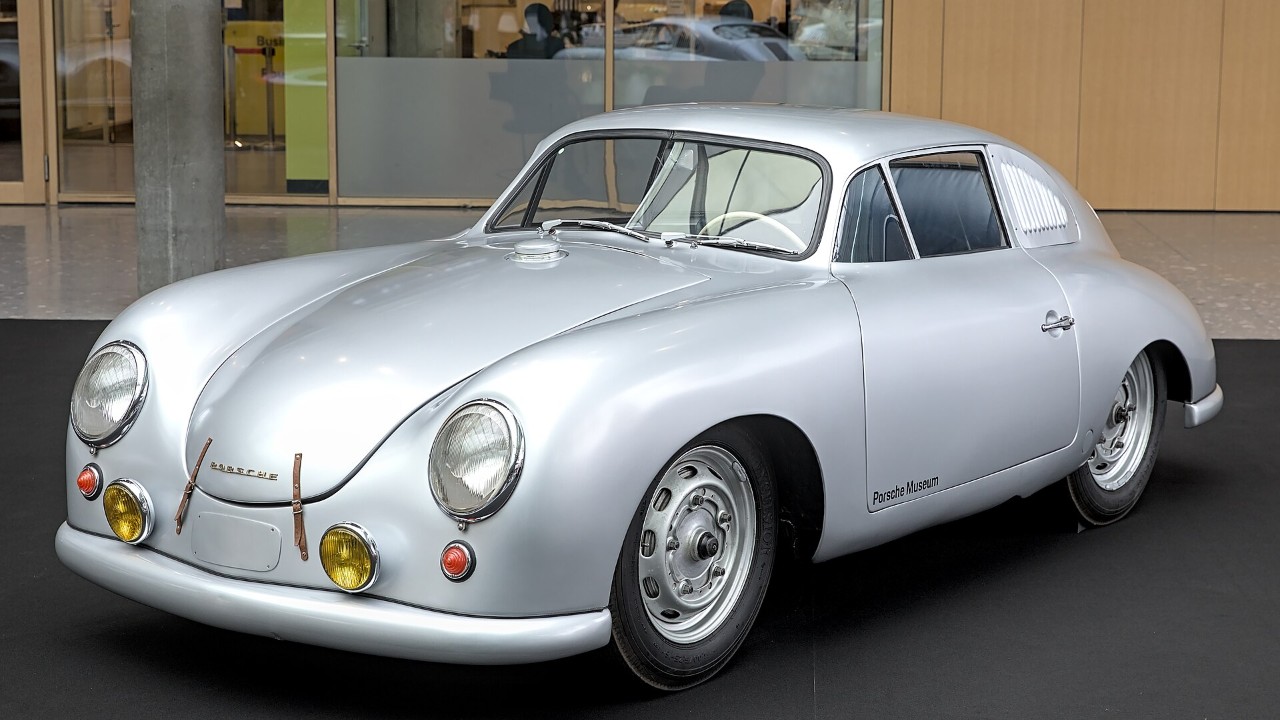
Porsche built nine 356 SL race cars, five in 1951 and four more in 1952. One of the 1952 cars never left the company. Porsche says it is the only one of the nine that has stayed in company hands the whole time, and the Porsche 356 SL is the car that started the brand’s factory-supported racing.
That first effort paid off quickly. According to Porsche, the 356 SL took the company’s first class win at the 24 Hours of Le Mans in 1951. It did so with a small coupe built around an air-cooled four-cylinder engine in the tail.
The count of nine comes from new research by Porsche’s Corporate Archive. Porsche published it on September 30, 2026, alongside an episode of Raceborn Moments, a video series from Porsche Heritage and Museum. Here is what that research says about the cars, the race and the one that stayed home.
Why Porsche built the 356 SL
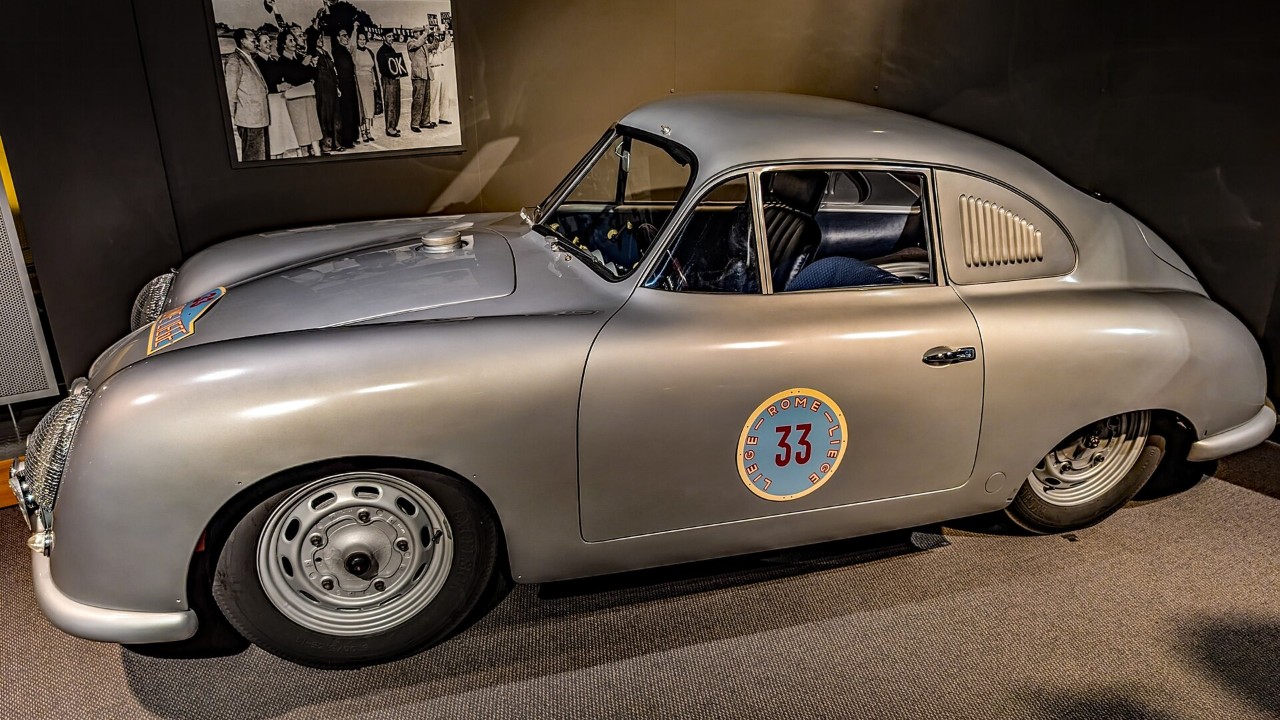
The idea came from inside the company. In 1950, racing director Paul von Guilleaume proposed an international race entry to Ferry Porsche, according to Porsche’s newsroom. However, the timing was poor. Production had only just started in Stuttgart, and the first cars had gone to dealers.
Instead of building new bodies, Porsche used leftover aluminum bodies from its Gmünd era. Gmünd is the town in Austria where Porsche worked before it moved back to Stuttgart. Some of those bodies came from Tatra in Vienna. Workers in Stuttgart then converted and modified them for racing.
Internally, the work went by another name. Porsche’s records call it “Project 514.” At first the number referred to the engine type, but later it covered the whole project, the company says.
The Porsche 356 SL at Le Mans in 1951
The invitation came from the race itself. According to Wikipedia’s race page, Le Mans race director Charles Faroux approached Porsche about becoming “the first German car in the post-war races.”
Two Frenchmen drove the class-winning car. The Automobile Club de l’Ouest, which runs Le Mans, names them as Auguste Veuillet and Edmond Mouche. Veuillet had begun importing Porsches to France. Together they won the 1.1-liter class and covered 2,840 kilometers at an average of 118 km/h, the club says.
Their finishing position depends on the source. The club’s own history lists the car 20th overall. By comparison, the Wikipedia results table for the race puts the No. 46 car 19th overall after 210 laps. Both agree that it won its class.
The engine figures also vary a little. The club’s photo caption gives a 1,086 cc engine making 45 hp. In the same piece, Ferry Porsche speaks of 1,100 cc and 48 hp. Meanwhile, Wikipedia lists 1,086 cc and 46 bhp, with a top speed of about 100 mph. Still, every figure fits the 1.1-liter class it won.
The 356 SL also went rallying. For example, a photo in Porsche’s release shows Helmut Polensky and Herbert Linge with a 356 SL at the Liège–Rome–Liège Rally.
How Porsche counted nine cars
According to Porsche, five 356 SLs came together in 1951. Then four more followed in 1952, built from four additional aluminum bodies. That makes nine in all.
To reach that number, the Corporate Archive worked with outside specialists. They went through files, photographs and historical records. Tatra body numbers turned out to be useful, because they appear alongside chassis numbers in the paperwork. As a result, the team could follow individual bodies from one document to the next.
The archive also drew on period notebooks. Racing engineer Wilhelm Hild kept notes on the cars and their races. In addition, financial records showed how many aluminum bodies Porsche had at a given time. Motorsport registration papers showed when each chassis number was in use.
Karl Rabe’s notes added another layer. Rabe was an early Porsche engineer with a key role in developing the 356, the company says. Finally, the team checked its findings against published books, private records and outside experts. It also cross-referenced photos and documents to work out which car a given record meant.
Porsche does not claim it found a lost car. Instead, the release frames the work as matching up records that already existed. Frank Jung, head of Corporate Archive and Collections, and Achim Stejskal, head of Porsche Heritage and Museum, both speak in the episode.
The 1952 car that stayed with Porsche
This is the car the research centered on. It is one of the four 356 SLs from 1952. Porsche kept it and used it for racing and testing for several years, according to the release. Today it sits in the company collection.
Before this project, relatively little of its history was known, Porsche says. That is the gap the archive set out to close. By tracing body numbers, notebooks and registration papers, the team pieced together where this car went and when.
That matters for a simple reason. Every other 356 SL left Porsche’s ownership at some point. This one never did, so its records stayed inside one company from start to finish.
Where the surviving cars are now
Porsche says six 356 SLs are known today. Three are in the United States. One is in Mexico, and another is in Belgium.
The sixth is the 1952 car. It remains in Porsche’s own collection, the only one of the nine that has never had another owner.
More from Fast Lane Only
- Unboxing the WWII Jeep in a Crate
- 15 rare Chevys collectors are quietly buying
- 10 underrated V8s still worth hunting down
- Police notice this before you even roll window down
This article was created with the help of AI and was reviewed and edited by Fast Lane Only editors before publication.