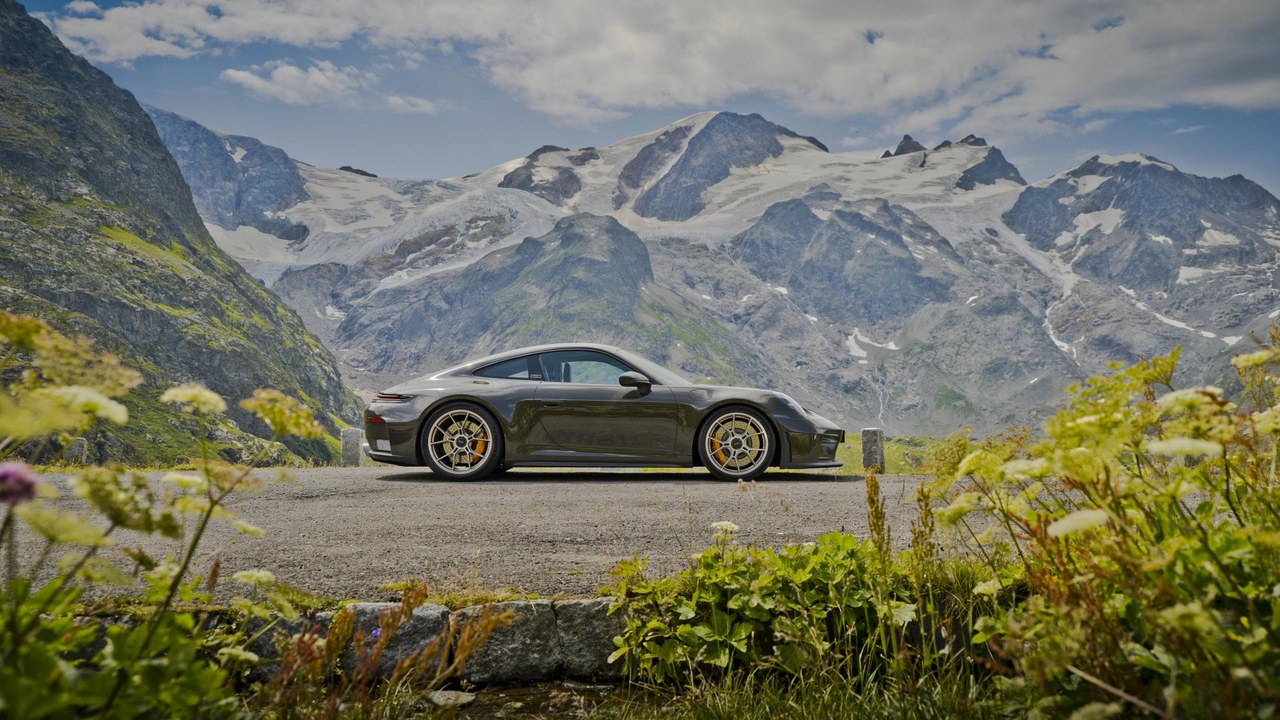
Porsche is building 100 examples of the 911 GT3 Bergsport, and each one gets its special details by hand after it leaves the regular 911 line. The car is a market edition of the 911 GT3 with Touring Package. Porsche sells it only in Austria, France, Italy and Switzerland, the four countries whose Alpine roads shaped its early history.
On October 1, Porsche published a look inside the factory to show how the car comes together. Photographer Stefan Bogner followed the build in Zuffenhausen. What he documented was a mix of robots and people, and a car that starts life exactly like any other 911.
The edition made its debut a month earlier at a Swiss hill climb. That setting fits, because “Berg” is German for mountain. In fact, Porsche’s racing history runs straight up the Alps.
How the GT3 Bergsport is built in Zuffenhausen
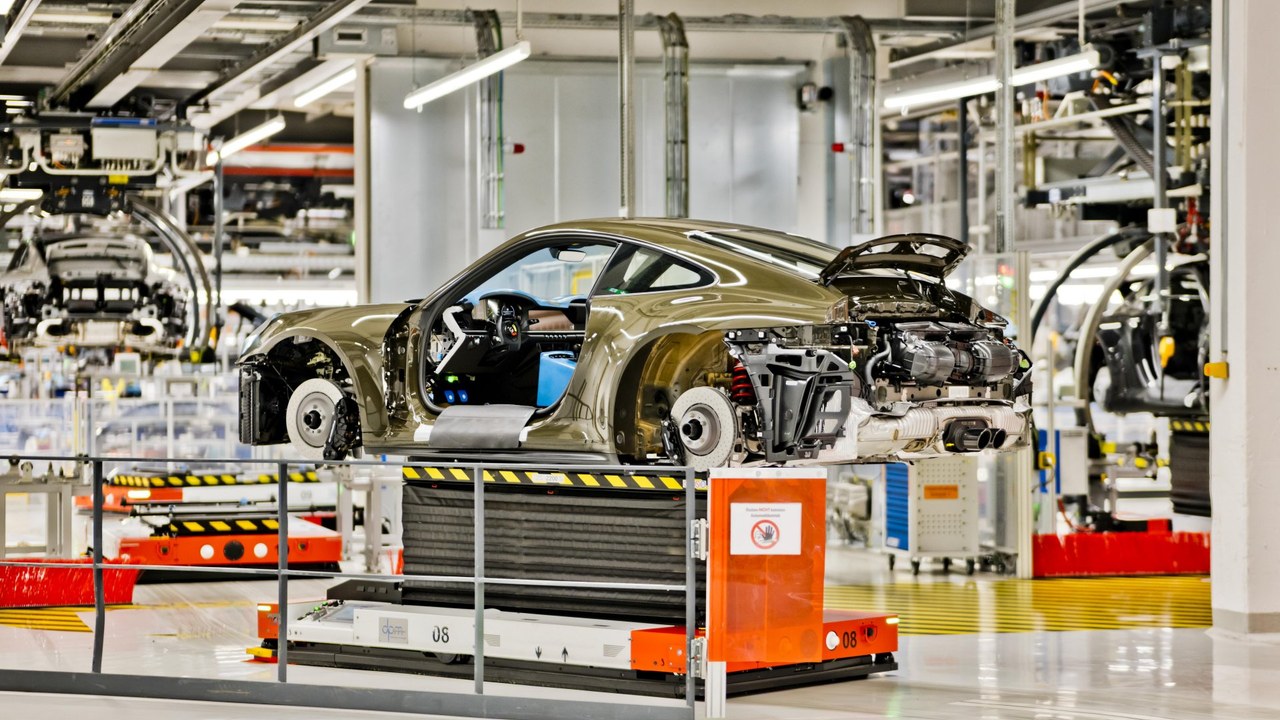
In its October 1 production release, Porsche says the GT3 Bergsport goes through the same process as every other 911. Altogether, the plant builds 25 model variants on a single line, from the 911 Carrera to the GT3 Cup race car. Porsche adds that Zuffenhausen has built every 911 variant on one line for more than six decades.
Overall, each car takes about four days, from body construction and paint to final assembly. According to Porsche, a 911 uses about 1,900 components. Robots handle jobs that need precision and repeatability. Meanwhile, people handle the craft work and the quality checks.
Bogner’s point was that people, not a cold automated line, are what he found behind the scenes. A duPont Registry report on the build confirms the same picture. It also counts 100 cars, one of 25 variants, at about four days apiece.
What Exclusive Manufaktur adds by hand
The special work starts after series production. That is when Porsche Exclusive Manufaktur, the company’s in-house personalization department, takes over the finished car. First comes a round badge on the B-pillar that reads “GT3 Bergsport.” According to Porsche’s September 1 launch release, the lettering is raised White Gold on high-gloss black, with a Ceramica border.
Next, a second badge goes on the rear lid grille. Inside, the department also embosses the Bergsport badge into the leather lid of the center console. It also adds orange stitching, plus black-and-white cross-stitching on the doors and upper dashboard. Porsche says that cross-stitch forms stylized mountain peaks.
Finally, the owner gets a matching set of smaller pieces. The key, a leather key pouch and a documentation wallet all carry the Bergsport colors and logos, Porsche says.
Valleygreen paint and Alpine details
The color is Valleygreenmetallic, a new shade from Porsche’s Paint to Sample Plus program. Porsche says gold metallic particles in the paint should sparkle in sunlight. Even so, the October release notes that the car goes through the standard 911 body, paint and assembly processes.
The wheels also change. The Lightweight Package normally brings forged magnesium wheels. On this car, however, Porsche swaps them for forged aluminum wheels in satin White Gold and Ceramica. The brake calipers are orange, a shade Porsche says evokes alpenglow, the red light on mountain peaks at dawn and dusk.
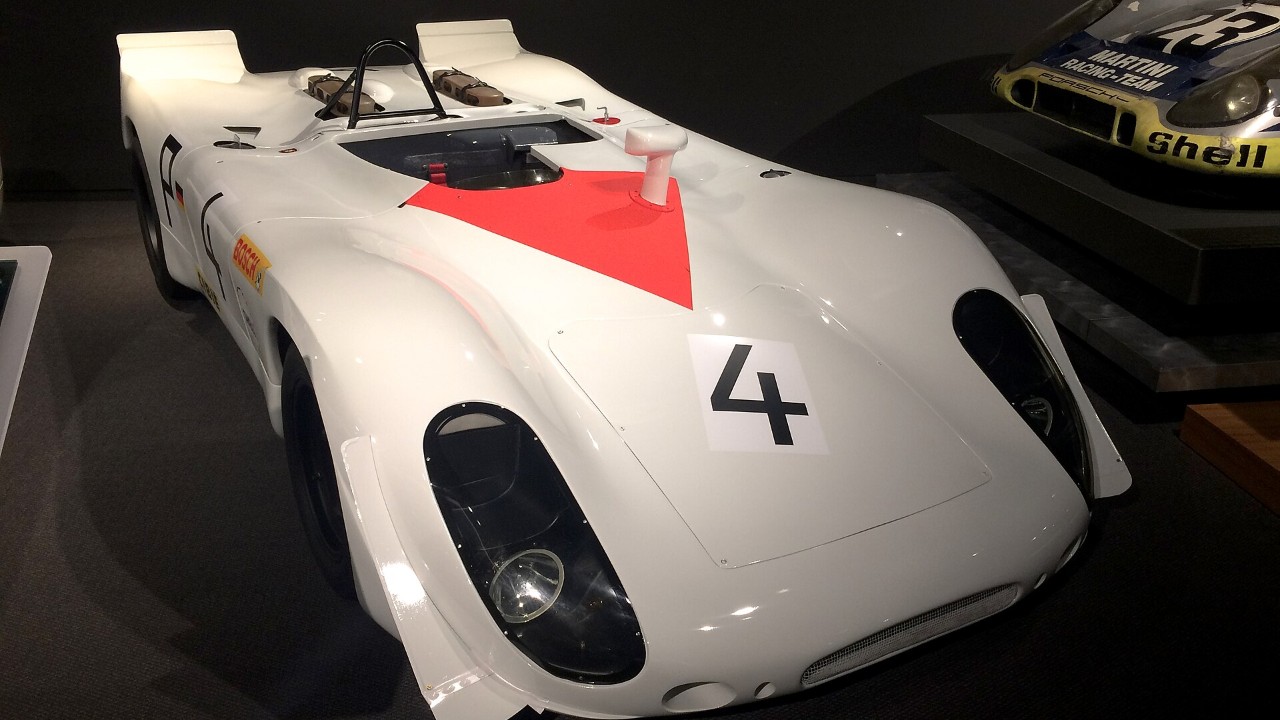
Similarly, two more emblems tell the story. A chequered-flag motif on the front luggage lid borrows from the 908 Bergspyder. In addition, a round badge on the engine cover shows four Alpine summits, one for each country, above a winding road.
The rest of the spec follows the GT3 Touring with a few extras. Porsche lists the Lightweight Package, a six-speed manual gearbox, a front-axle lift system and a 90-liter fuel tank. Inside, Valleygreen leather covers folding carbon-fiber bucket seats. The headrests also carry embroidered “GT3” lettering.
The hill-climb history behind the GT3 Bergsport
Porsche ties the edition to its roots. Its launch release recalls that the first Porsche sports cars took shape in a former sawmill in Gmünd, Austria, in the shadow of the Alps. It also calls the mountain passes the proving ground for its earliest road and racing cars.
Indeed, the racing record backs that up. According to a Porsche history feature on the Gaisberg hill climb, its works sports cars raced that Austrian hill from 1958 to 1968 and won nine European titles. Between 1966 and 1982, the 911 and its derivatives also claimed 15 European Hill Climb Championships, Porsche says.
The purpose-built hill-climb cars were extreme. Porsche says the 909 Bergspyder weighed just under 384 kilos ready to race, fuel included, and the company built only two. By comparison, the 910/8 Bergspyder made 275 PS from an eight-cylinder boxer engine. A separate Porsche Museum release says Porsche won the European Hill Climb Championship with the 910/8 in 1967 and 1968.
Engine, markets and the Arosa debut
Porsche’s two releases give no engine output and no price for the Bergsport. However, autoevolution reports a 4.0-liter naturally aspirated flat-six rated at 503 horsepower and 331 lb-ft of torque. The same report says North America is not one of the markets.
The world premiere came at the Arosa ClassicCar hill climb in Switzerland on September 4, 2026, according to Porsche. Brand ambassador Jörg Bergmeister was set to drive it on a 7.3-kilometer course. Altogether, that road climbs 422 meters through 76 corners.
Porsche built a small product line around the car as well. It includes model cars, HEAD GT3 Bergsport skis for the 2027/2028 winter season, and a special Curves Magazine edition limited to 1,000 copies.
Likewise, the car itself is limited. Porsche says it will build 100 GT3 Bergsports, and Exclusive Manufaktur finishes every one in Zuffenhausen.
More from Fast Lane Only
- Unboxing the WWII Jeep in a Crate
- 15 rare Chevys collectors are quietly buying
- 10 underrated V8s still worth hunting down
- Police notice this before you even roll window down
This article was created with the help of AI and was reviewed and edited by Fast Lane Only editors before publication.