

GM announced Saturn in 1985 as “a different kind of car company,” built to beat Japanese imports with no-haggle prices and plastic body panels. Demand outran the factory for its first five years, and a few collectors now save them. Even so, most Saturns are cheap transportation that cost more to fix properly than they will ever return.
These are our picks for the ones we’d leave alone, and the verdicts are our opinion. The facts behind them come from the references listed at the end.
2000–2002 Saturn SL1

The SL1 was the base sedan in the last S-Series lineup, and the original S-Series ended in 2002. By then the styling had gone soft, and critics picked at the third-generation cars for panel gaps and refinement. Hagerty also notes that these cars rust at the rear door sills and near the engine and transmission cradle, which often fails inspection. A plain SL1 has no rare trim to rescue. In our view, it makes a fine beater and a poor restoration project.
1998 Saturn SC2

The SC2 badge meant the twin-cam version of a 1.9-liter four that was unique to Saturn. By 1998, however, the coupe had already lost the pop-up headlights and smooth sides that gave the first version its charm. That leaves a second-generation car whose plastic panels tend to crack with age. We’d buy a clean one to drive, but we wouldn’t strip one down and start over.
1995 Saturn SW2

The SW2 wagon belongs to the first S-Series family, the one that sold a record 286,000 units in 1994 alone. That number is exactly the problem for a restorer. These wagons were everywhere. Meanwhile, a tired one needs sill rust repair and new trim, and some small engine parts are hard to find, according to Hagerty. We’d rather buy the best one out there than rebuild a rough one.
Saturn Ion
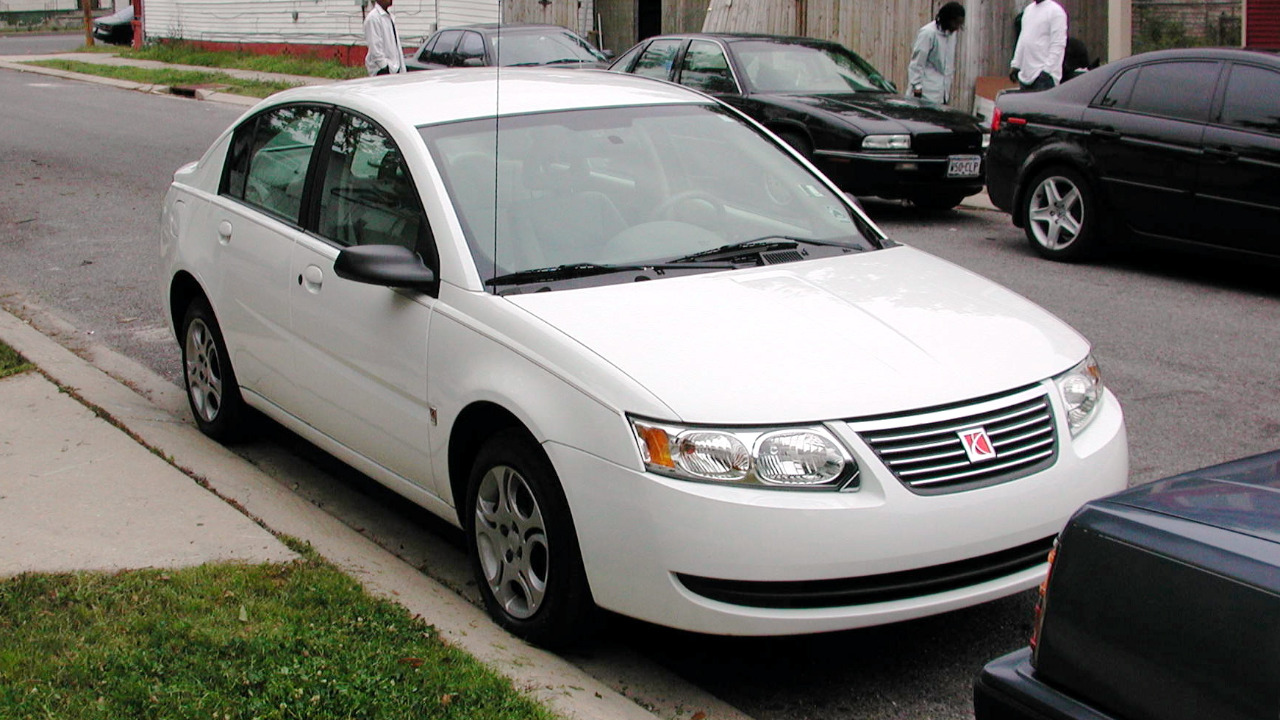
The Ion replaced the S-Series and ran from 2003 through 2007. Edmunds faulted its hard cabin plastics, tight rear seat and center-mounted gauges that take some getting used to. It also listed seven recalls for the 2007 car, covering the ignition, electric power steering and fuel pump. Earlier, we looked at the Saturns that showed the brand could have survived, but a base Ion isn’t one of them. Restoring one buys you a better version of a car nobody missed.
Saturn Relay

The Relay was the only minivan Saturn ever sold, and it was gone after the 2007 model year. GM built it alongside the Chevrolet Uplander and Buick Terraza and marketed the trio as “Crossover Sport Vans.” Curbside Classic notes that sales were very low and that critics found little to recommend. Because GM gave the Relay so little of its own, a restored one would look like a Chevy van with a different grille. We’d skip it.
Saturn Vue Red Line

The best part of this Vue came from Honda. SlashGear notes that the Red Line used a Honda-built 3.5-liter V6 with 250 hp and a Honda five-speed automatic. It also sat an inch lower on 18-inch wheels and cost $1,995 more than a standard Vue. Still, SlashGear called the package mostly an appearance job. The Red Line-only fascias and ground effects are plastic trim on an aging crossover. In our view, that makes a clean survivor worth keeping, though a rough one isn’t worth a full rebuild. For a happier angle, see our list of affordable performance cars Saturn could sell today.
2007 Saturn Aura XE

The Aura XE rode on a stretched version of GM’s Epsilon platform, shared with the Pontiac G6. Edmunds lists a 3.5-liter V6 with 224 hp and a four-speed automatic, and the XE couldn’t be ordered with stability control. Some owners also report electrical faults and transmission and steering repairs. It is a decent used sedan, but nothing about the XE makes a restoration pay off. Then the brand itself disappeared, and Saturn’s dealer network closed for good in October 2010.
More from Fast Lane Only


