By 1967, the Mustang was already a success, but Carroll Shelby had other plans. He wasn’t interested in just selling sporty cars—he wanted to build something faster, tougher, and more serious. The result was the GT500, a big-block fastback that didn’t just look mean—it backed it up.
This was the year Shelby took the Mustang from lightweight scrapper to heavyweight contender. With a 428 under the hood and Shelby’s fingerprints all over the chassis, the ’67 GT500 wasn’t built to impress everyone—it was built to move. And it still does.
Carroll Shelby Took the Mustang Up a Notch
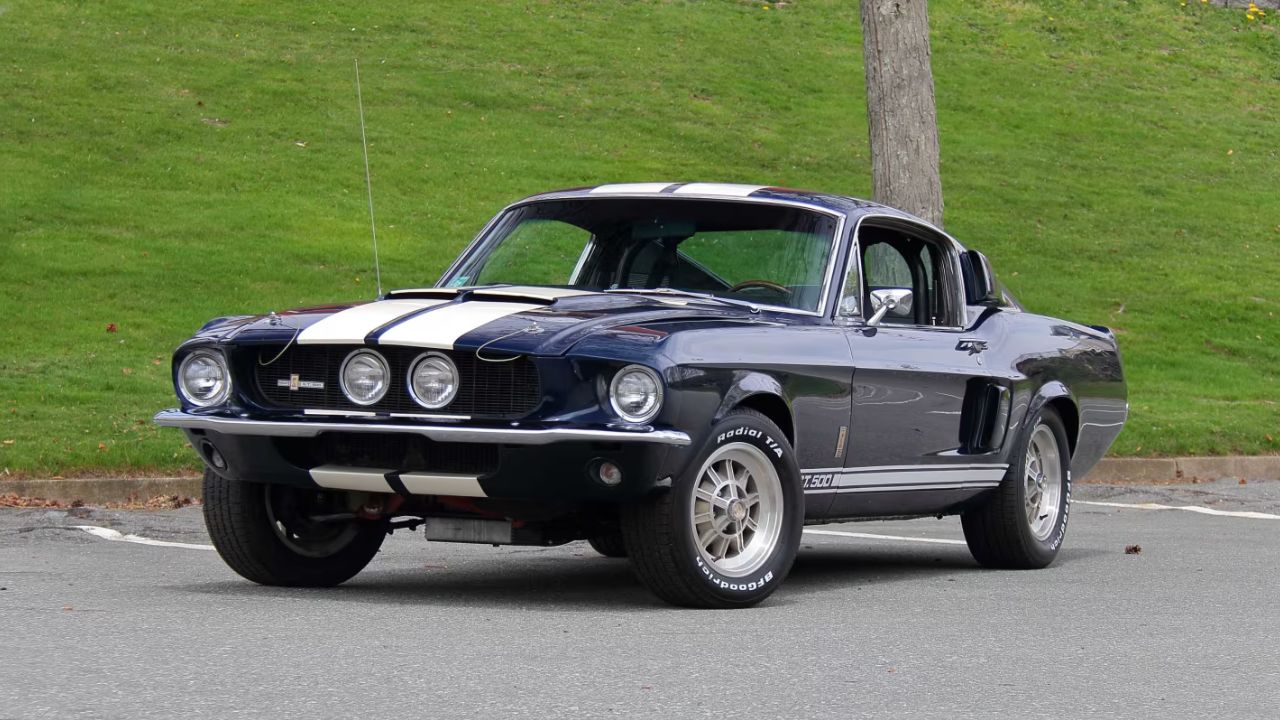
When Carroll Shelby got his hands on the ’67 Mustang, he didn’t just tweak it—he reworked it into something far more serious. Ford’s new big-block 428 Police Interceptor engine gave the car its muscle, but Shelby’s team made sure it had the handling and attitude to match.
The GT500 was the first Shelby Mustang to ditch the high-revving small-blocks. It came out swinging with torque and street manners that leaned more toward grand touring than raw track days. Shelby’s version had real presence, and the performance backed it up.
428 V8 Wasn’t a Racing Engine—But It Worked

The 1967 GT500 used Ford’s 428-cubic-inch Police Interceptor V8, a torquey big-block not built for racing but tuned just right for the street. It made a factory-rated 355 horsepower, though real output was likely higher—closer to 400.
This wasn’t a high-winding engine like the 289 Hi-Po from earlier Shelbys. Instead, it delivered power low in the RPM range, which made it easy to launch hard and cruise fast. Paired with a 4-barrel Holley carb and a dual-plane intake, it was all about effortless grunt.
Suspension Got a Street-Ready Makeover

Shelby didn’t just throw a big engine in and call it a day. The GT500 got a stiffer front suspension, Gabriel shocks, and thicker anti-roll bars. It sat lower than the standard Mustang, giving it better cornering balance.
While it wasn’t race-car stiff, it struck a nice balance between comfort and capability. On a backroad, it felt planted. On the freeway, it settled into a confident rhythm. It wasn’t trying to out-handle a Corvette, but it handled a lot better than most big-engine cars of the era.
Dual Exhaust and Functional Scoops Meant Business

From the side scoops to the fiberglass hood and tail panel, the GT500 looked ready to move—and it was. The scoops weren’t just for show; they helped cool the brakes and engine bay. The dual exhaust with chrome tips out back gave it a low, burly sound.
That fiberglass hood was a key detail. It was lighter than steel and gave the car a different profile from the stock Mustang. Combined with the scoops, it sent a clear message—this wasn’t a dealer option package. It was something else entirely.
Interior Mixed Sport with a Bit of Class

Inside, the ’67 GT500 kept the Mustang’s basic layout but added a few tweaks. The wood-rimmed steering wheel, special 140-mph speedometer, and center-mounted gauges gave it a more serious look. It still had Ford’s standard materials, but the small changes made a difference.
Bucket seats were firm and well-bolstered for the time. You also got a roll bar—unusual for a street car back then. Shelby wasn’t going full race interior, but it definitely felt like something more intentional than your average ’67 coupe.
The GT500 Was a Fastback Only

Shelby’s team focused on the Fastback body style in 1967. No convertibles, no notchbacks. The Fastback’s long roofline and sloped rear deck gave it a more aggressive stance—both visually and aerodynamically.
It also gave Shelby more room to work with when it came to aero parts and interior bracing. The fiberglass rear panel, spoiler lip, and wide taillights worked better on the Fastback layout. It looked clean, low, and wide—like a muscle car should.
Manual or Auto—Both Had Their Strengths

You could get the GT500 with a 4-speed Toploader manual or a C6 automatic. The 4-speed was the purist’s choice, of course—solid, dependable, and connected. But the C6 was a smooth, tough transmission that handled torque without breaking a sweat.
Most buyers went with the 4-speed, but the automatic version had its appeal. On the street, the C6 made the GT500 a surprisingly relaxed cruiser. Either way, the drivetrain handled the big 428 with confidence and felt put together, not slapped together.
Brakes and Tires Were Up to the Task

Shelby added front disc brakes, a big step up from the stock Mustang setup. Rear drums were still in place, but the upgraded front binders gave the GT500 enough stopping power for spirited driving. Not fade-proof, but better than most muscle cars of the day.
The 15-inch wheels originally wore Goodyear Speedway tires (BFGoodrich pictured here), which offered decent grip for 1967. Tread technology was still in its early days, but the GT500 didn’t feel sketchy when pushed. As long as you respected its limits, it stayed composed and predictable.
Built by Shelby—But Not for Long

The 1967 GT500 was the last true Shelby built at Shelby American in Los Angeles. In 1968, production moved to Michigan under Ford’s control, and while the cars were still fast, they lost some of the original character.
That ’67 model is often seen as the sweet spot—big power, good looks, and still built under Shelby’s direct oversight. It had more polish than earlier models, but still enough edge to feel different. You could tell it came from people who cared about getting it right.
Only Around 2,050 Were Ever Made

Shelby produced about 2,048 GT500s in 1967, making it one of the rarer factory muscle cars from the era. Compared to the massive production runs of regular Mustangs, that’s a drop in the bucket.
Most were painted in classic shades—Wimbledon White, Nightmist Blue, Brittany Blue. A few got stripes, some didn’t. They weren’t cookie-cutter builds. That limited production, paired with the car’s style and performance, helped it become one of the most sought-after Mustangs ever made.
Like what you read? Here’s more by us:
*Created with AI assistance and editor review.