By 1970, the muscle car wars were in full swing, and Chevrolet wasn’t backing down. The Chevelle SS454 was already a street brawler, but the LS6 package took things to another level. With 450 horsepower straight from the factory, it was one of the quickest cars you could buy—period. And if you were one of the very few who ordered it as a convertible, you got all that brute force with a clear view of the sky.
This isn’t just a powerful car—it’s a rare one. Few were built, even fewer survive, and when one shows up, people pay attention.
Heavy Hitter in a Mid-Size Body

Even though it was part of the mid-size lineup, the LS6 Chevelle carried serious weight—nearly 4,000 pounds. It had to, with a massive V8 up front and a beefed-up drivetrain to handle the torque. But it wasn’t just brute strength that made it stand out.
The F41 suspension package came standard, including stiffer springs, heavy-duty shocks, and a front sway bar. It was tuned to keep the car composed without sacrificing the straight-line punch it was known for. The handling wasn’t nimble by today’s standards, but it was solid for a car this size and power.
Built for One Thing: Pure Power

The LS6 Chevelle wasn’t subtle. Under the hood sat a 454-cubic inch V8 rated at 450 horsepower and 500 lb-ft of torque. It was one of the most powerful engines Chevrolet ever stuffed into a factory muscle car. Official numbers were conservative—everyone knew this thing had more to give.
The LS6 was only available with a 4-barrel Holley carb, solid lifters, and a 11.25:1 compression ratio. That meant premium gas wasn’t optional—it was mandatory. This car wasn’t built for economy runs. It was made to haul, and it did that better than just about anything else in ’70.
Not Many Were Drop-Tops

The LS6 convertible is rare—extremely rare. Chevrolet only built around 20 of them with the LS6 and a four-speed. Exact numbers are debated, but production was incredibly low compared to the coupe. Most Chevelle buyers who wanted performance went with the hardtop.
That makes this drop-top something special. It gave you all the muscle of the coupe, but with the option to drop the roof and let the big-block rumble fill the air. You weren’t just going fast—you were making a statement. If you see one today, it’s probably parked behind ropes.
The Muncie Made It Matter

Most LS6 convertibles came with the Muncie M22 “Rock Crusher” four-speed. It got that nickname because of its unrefined, mechanical whine and its ability to take a beating. This wasn’t a shifter for the casual cruiser—it required a firm hand and clear intent.
The M22 had close-ratio gears that let you keep the revs right in the meat of the powerband. Pair that with a 3.31 or 4.10 rear axle, and you had a car that could shred tires in first and still pull hard through the quarter. No surprise—it ran mid 13s bone stock.
Inside Was All Business

The interior wasn’t flashy, but it was purposeful. Most LS6 convertibles came with bench or optional bucket seats trimmed in vinyl. A U14 gauge package was often added, giving you a 7,000-rpm tach, oil pressure, amp, and temp gauges in the dash. That alone told you this wasn’t your average Malibu.
You’d also find a Hurst shifter poking through the console when equipped with the M22. The interior trim leaned practical, not plush. You could spec it with air conditioning, but most weren’t. Weight mattered, and anything that slowed the car down usually got left off the build sheet.
SS454: The Only Way In

You couldn’t just walk into a dealer and ask for an LS6. It only came as part of the SS454 package, which added more than just the motor. You got badging, the domed cowl-induction hood, blacked-out grille, and beefed-up suspension. It was a full-package deal, not just a big engine swap.
The cowl hood wasn’t for looks—it was functional. A vacuum-operated flapper fed cold air to the carb at wide-open throttle. That gave it a bit of an edge at speed, and more importantly, it let everyone know you weren’t in a standard Chevelle.
Factory Fast, No Apologies

In 1970, there wasn’t anything at your local dealership quicker than a properly set-up LS6 Chevelle. It was capable of 13.2-second quarter miles at over 105 mph with street tires. That was faster than the Hemi ’Cuda, faster than a Boss 429, and faster than most people expected.
It didn’t need dealer tweaks or aftermarket tuning to get there. The LS6 was fast out of the box. That kind of straight-line performance in a factory-built convertible was practically unheard of. If you wanted muscle and didn’t care about subtlety, this was your car.
Color Choices? Just Enough
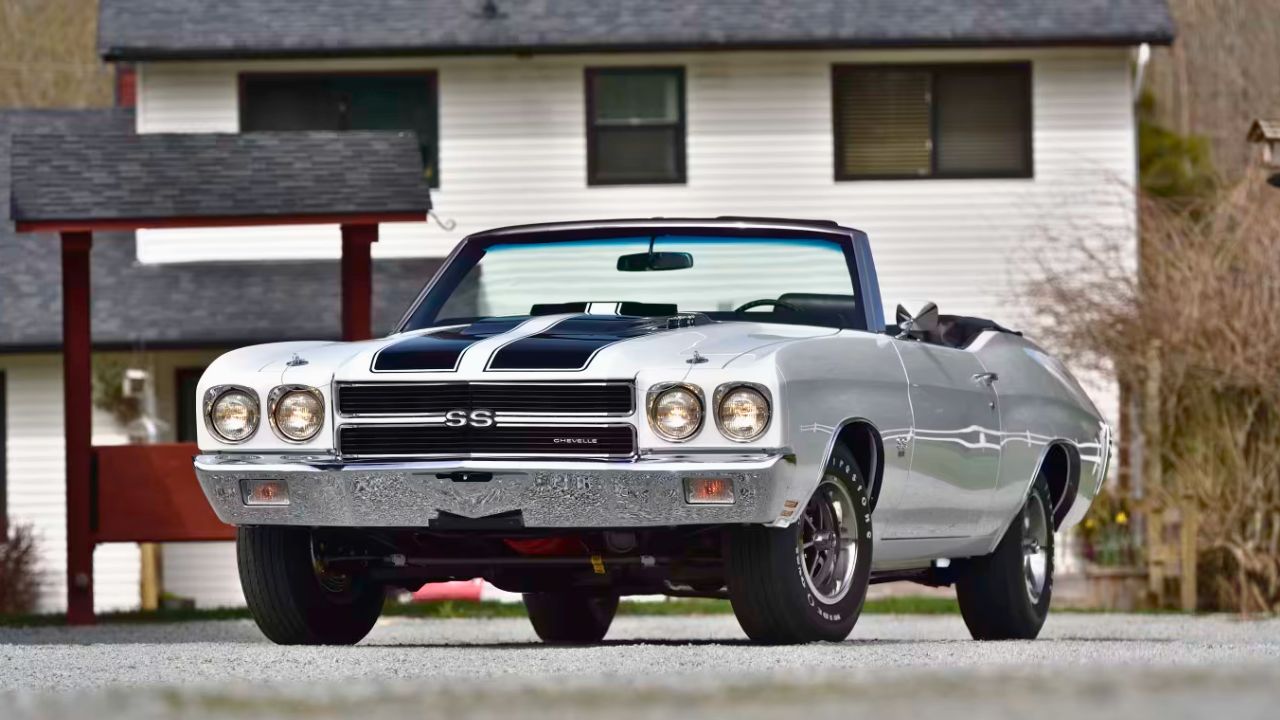
Chevrolet offered a wide range of colors in 1970, and that included the Chevelle SS454. Tuxedo Black, Cranberry Red, Fathom Blue, and Forest Green were popular picks. Convertibles looked especially good in light colors like Classic White or Misty Turquoise.
Stripes were optional but often chosen—especially with the cowl hood. A black or white stripe running down that raised center section just looked right. Interiors matched or contrasted depending on the buyer’s taste, but black was the go-to for most builds. It kept the cabin simple and timeless.
Built to Be Loud

One thing the LS6 Chevelle didn’t do quietly was leave the line. The factory dual exhaust had low-restriction mufflers and deep-tone tips that made sure people heard you coming. Add in that big solid-lifter cam, and it lopey-idled like it had something to prove.
Even the horn got a pass—it was a dual-note unit that sounded just a bit more serious than your average Chevy. No high-pitched chirps here. This was a car that didn’t sneak up on anyone. Whether idling at a red light or rolling into a show, it had presence.
Near the End of an Era

1970 was the high-water mark for factory muscle. Compression ratios would start to drop the next year, and insurance companies were already starting to raise rates on high-horsepower models. The LS6 convertible came out swinging just as the party was winding down.
That’s part of what makes it so special now. It wasn’t just rare when it was new—it was a last gasp of unfiltered power before regulations and market shifts took over. Today, it’s a reminder of how wild things got at the peak of Detroit’s horsepower wars.
Like what you read? Here’s more by us:
*Created with AI assistance and editor review.