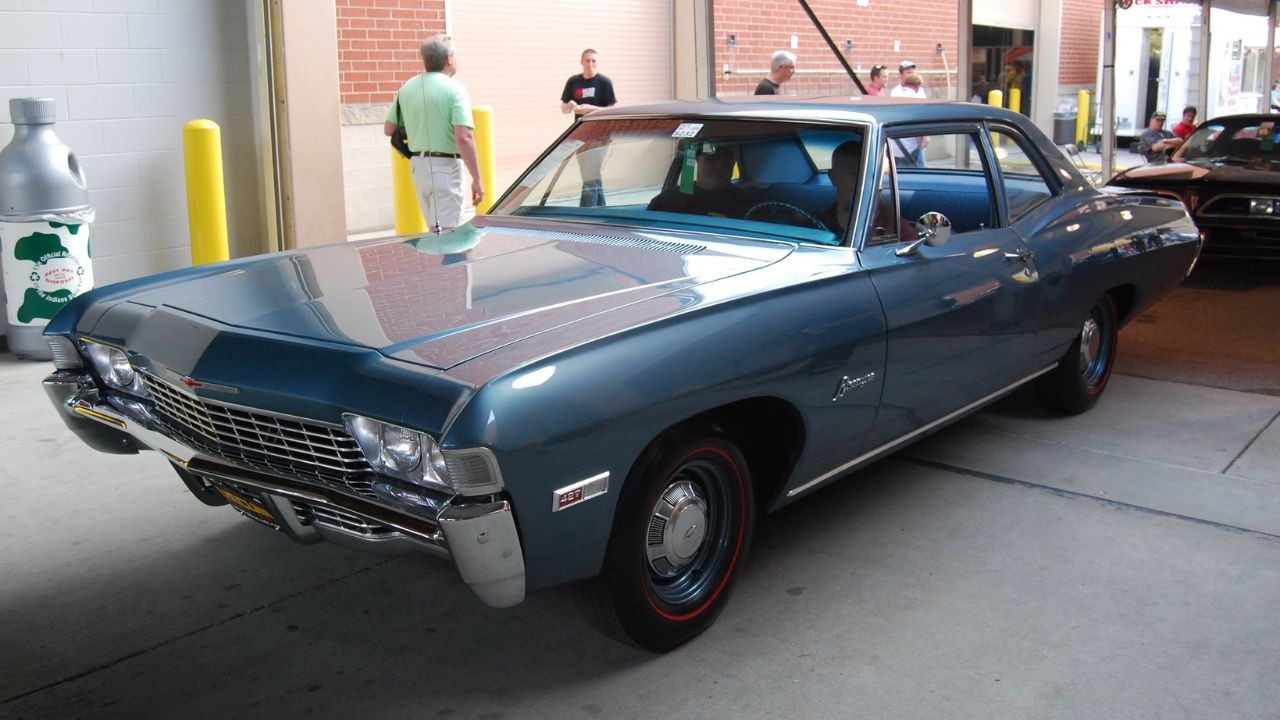
The 1968 Chevrolet Biscayne 427 looked like a basic full-size sedan, but in the right configuration it packed genuine muscle-car performance. With a factory big-block under its plain sheet metal, this fleet-friendly Chevy could outrun many flashier machines of its era while keeping a low profile on the street.
Stripped of chrome and luxury trim, the big-block Biscayne turned the usual muscle-car formula inside out. Instead of loud stripes and spoilers, it offered an unassuming body wrapped around serious speed hardware, turning it into a cult favorite among drag racers and sleeper fans.
What happened
Chevrolet positioned the Biscayne at the bottom of its full-size lineup in 1968, below the Bel Air, Impala, and Caprice. Aimed at budget-minded buyers, taxi fleets, and government agencies that wanted basic transportation with minimal frills, the car became a natural candidate for a lightweight performance build because it carried fewer comfort features and less trim than its showroom siblings.
Despite its bare-bones mission, Chevrolet allowed buyers to order the Biscayne with serious power. The key option was the 427 cubic inch big-block V8, a performance engine normally associated with more glamorous Chevys. Paired with a 4-speed manual transmission, the 427 turned the Biscayne into a full-size rocket that enthusiasts now view as one of the great factory sleepers. Modern coverage of a surviving example highlights how rare it was to find a factory big-block, 4-speed 1968 Biscayne, since most buyers of the model chose small-block engines and automatic gearboxes for everyday duty, not quarter-mile heroics.
In period, the 427 engine family covered a range of power levels, from mild to very aggressive, and Chevrolet let customers bolt that capability into the most basic body it sold. The car featured the same fundamental full-size chassis used by the Impala, but the Biscayne’s lower trim level meant fewer power accessories, simpler interiors, and a curb weight advantage that performance-minded buyers could exploit. The result was a car that looked like a fleet sedan yet delivered performance that rivaled better-known muscle machines.
Surviving documentation and enthusiast research describe how some Biscaynes were ordered by knowledgeable buyers who knew exactly what they wanted: the most powerful engine and the least equipment. A documented factory big-block 4-speed car, like the one highlighted in a detailed profile of a restored example, shows how that strategy played out. The car retains its simple bench seat, dog-dish hubcaps, and plain body panels, but under the hood sits the 427, and between the seats is a floor-shifted manual transmission that transforms the driving experience.
As muscle-car values climbed, enthusiasts and collectors began hunting for these unusual specifications. The combination of a 1968 Biscayne body with a factory-installed 427 and 4-speed has become particularly desirable, as outlined in coverage of a long-term ownership car that traces its history back to when big-block Biscaynes could still be found in used-car lots. That profile notes how rare it has become to acquire a genuine factory big-block, 4-speed 1968 Chevy Biscayne, and how much effort goes into verifying original drivetrain components, build sheets, and option codes for these cars.
Today, the 1968 Biscayne 427 is often restored to look almost exactly as it did when new, with plain paint colors, minimal brightwork, and steel wheels. The focus stays on preserving the sleeper character. Owners may rebuild the big-block for reliability and performance, but they usually resist adding flashy cosmetic upgrades that would undermine the car’s original mission as a quiet assassin among full-size Chevrolets. Enthusiast coverage of one such survivor emphasizes the contrast between its modest appearance and the performance available when the 427 and 4-speed are used as intended on open roads or drag strips.
Why it matters
The 1968 Biscayne 427 matters because it captures a specific moment when Detroit allowed buyers to mix and match hardware in ways that would be tightly controlled today. Chevrolet did not market the Biscayne as a halo performance car, yet its option sheet quietly opened the door for one. That freedom helped create a small but influential group of cars that enthusiasts now view as the purest expression of sleeper performance.
In the broader muscle-car story, the big-block Biscayne challenges the idea that performance always came wrapped in stripes and badges. Many of the most collectible Chevrolets of the era, such as the Chevelle SS 396 or the Camaro SS, were designed to advertise their capability. The Biscayne 427 did the opposite. It hid its potential behind taxi-spec looks, which appealed to buyers who wanted speed without attention. That low-key approach has aged well in a car culture that increasingly celebrates subtlety and originality.
The car also illustrates how weight and simplicity can matter as much as raw horsepower. Compared with an Impala or Caprice equipped with the same engine, a Biscayne typically carried fewer options and less sound deadening, which helped performance. Enthusiast tests and owner reports describe how a well-tuned 427 Biscayne feels more responsive than heavier full-size Chevys with similar power. This focus on power-to-weight ratio foreshadows modern performance thinking, where engineers often chase grams and complexity just as much as horsepower.
From a collector perspective, the 1968 Biscayne 427 shows how rarity and authenticity drive value in the classic market. Because so few were ordered with the big-block and 4-speed combination, and because many were driven hard or modified, documented survivors are scarce. That scarcity has pushed enthusiasts to track original paperwork and casting numbers carefully. Coverage of a long-owned example explains how the owner spent years confirming that the car retained its factory drivetrain and options, a process that has become standard practice for serious collectors of these cars.
The car’s story also highlights how tastes within the hobby have shifted. For years, many buyers chased top-trim models with the most chrome and luxury features. Over time, interest has grown in stripped-down performance cars that feel closer to what racers would have ordered new. The Biscayne 427 fits that trend perfectly. Its appeal rests on authenticity, mechanical honesty, and a kind of blue-collar performance that contrasts with the more polished image of contemporary muscle icons.
Finally, the big-block Biscayne serves as a reminder of how flexible the full-size platform once was. Chevrolet used the same basic architecture to build family sedans, police cars, taxis, and, in rare cases, high-performance sleepers. That versatility allowed the company to serve a wide range of customers with relatively few parts, while also giving enthusiasts a path to unexpected performance. The 1968 Biscayne 427 stands as one of the clearest examples of how that strategy produced cars that continue to fascinate decades later.
What to watch next
Interest in sleeper muscle cars has been climbing, and the 1968 Biscayne 427 sits at the center of that trend. As more collectors seek out understated performance, demand for documented big-block Biscaynes is likely to remain strong. Coverage of a long-term ownership car notes how difficult it has become to find a factory big-block, 4-speed 1968 Chevy Biscayne, which suggests that prices for verified examples will stay elevated as supply tightens.
Restoration approaches will also shape how these cars are perceived in the future. Many owners now prioritize period-correct details, from paint colors to hubcaps, to preserve the sleeper personality. At the same time, some choose subtle mechanical upgrades such as improved cooling, better ignition systems, or modern radial tires to make the cars more usable on present-day roads. Enthusiast profiles of restored Biscaynes highlight this balance between authenticity and drivability, and future buyers will likely reward cars that respect the original configuration while incorporating reversible improvements.
Documentation will remain a key factor. With values rising, the incentive to clone or re-create a big-block Biscayne grows, which makes original paperwork and matching numbers even more important. Collectors are paying close attention to build sheets, trim tags, and engine codes to separate genuine cars from later conversions. Reports on specific survivors describe how owners track every piece of evidence, from dealer invoices to engine casting dates, to prove that a car left the factory with the coveted 427 and 4-speed combination.
More from Fast Lane Only