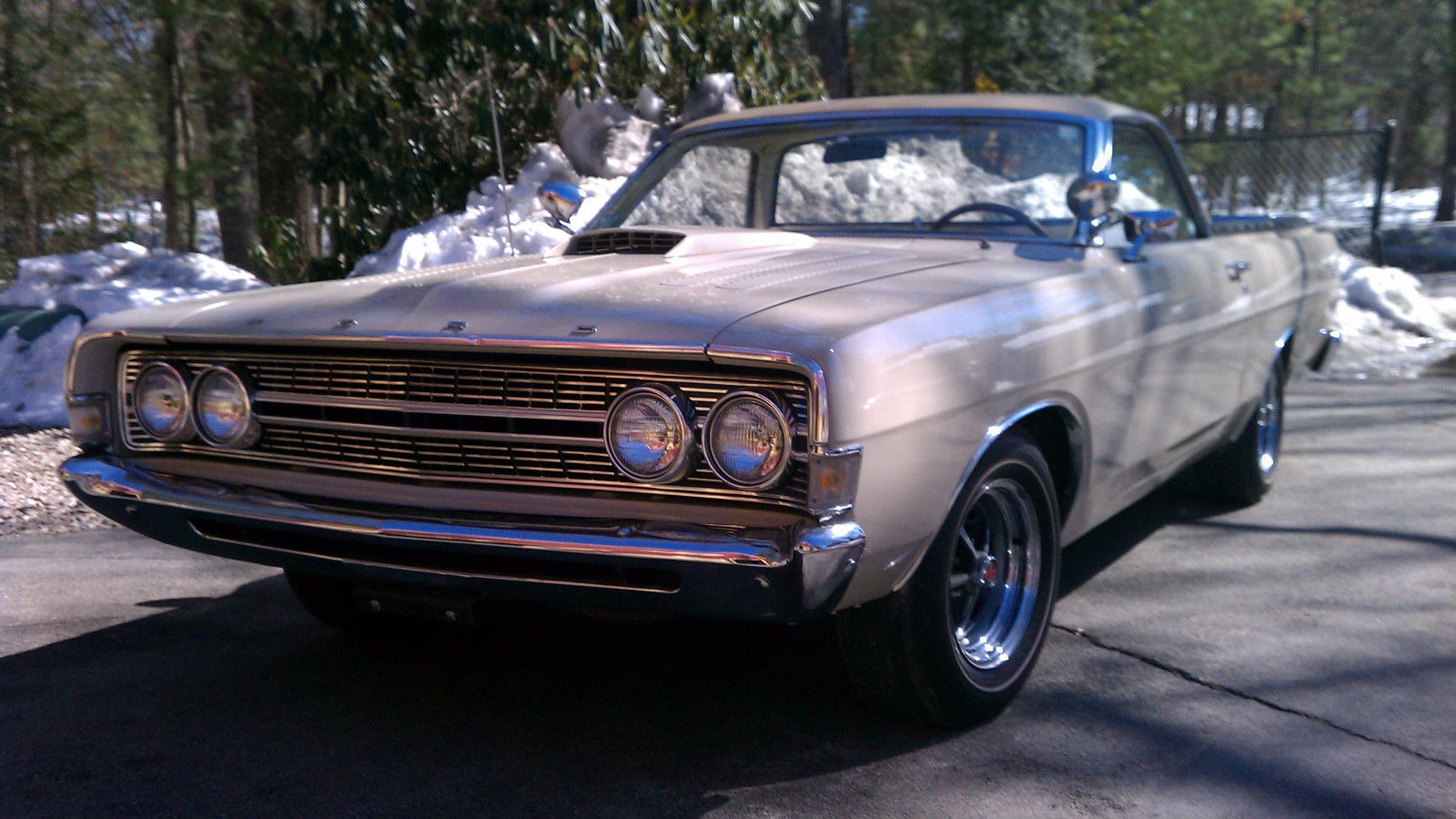
The 1969 Ford Ranchero GT was built as a workhorse with a pickup bed, yet it carried the heart and hardware of a muscle car. More than half a century later, a single lap of the Nürburgring has turned this oddball hybrid of utility and performance into a fresh talking point among enthusiasts. The run underscored how a once-overlooked GT can still surprise when its V8 power, chassis tuning, and blue-collar practicality come together on one of the world’s toughest circuits.
What happened
The recent spotlight on the 1969 Ford Ranchero GT began when a privately owned example tackled the Nürburgring Nordschleife, a circuit that has become an informal benchmark for modern performance cars. This particular car was not a stripped-out race truck or a heavily modified pro-touring build. It remained recognizably a Ranchero, with its long bed, period styling, and street-focused setup, yet it was prepared carefully enough to handle the 20.8-kilometer loop without turning into a spectacle of body roll and brake fade.
Under the hood, the 1969 Ranchero GT could be ordered from the factory with serious power. Period specifications list the 390 cubic inch FE V8 and the 428 Cobra Jet among its options, both engines that placed the Ranchero in the same conversation as contemporary muscle coupes. Enthusiast coverage has repeatedly cited the Ranchero, especially in GT trim, as one of the most underrated Ford performance models of its era, largely because buyers focused on Mustangs and Torinos while the car-truck hybrid sat in the background.
For the Nürburgring outing, the Ranchero GT arrived with a naturally aspirated V8, a manual gearbox, and a chassis that retained its basic late-1960s architecture. Its suspension used upgraded springs and dampers, along with modern radial tires, but the core layout still reflected the Torino-based platform that Ford engineers had developed for a mix of comfort and load-carrying ability. Inside, the driver faced a cabin that looked more like a period cruiser than a track-day weapon, complete with wide bench seating and original-style gauges.
On track, the Ranchero GT logged a lap time that surprised viewers who expected a lumbering relic. The run, documented in detail by enthusiast media, showed the car maintaining steady pace through the Nordschleife’s fast sections and staying composed over bumps and elevation changes. Coverage of the event highlighted how this particular 1969 Ranchero kept up with modern traffic well enough that the stopwatch became a secondary story to the way it carried itself.
Video from the lap captured the Ranchero’s V8 pulling strongly out of corners, its long hood rising slightly under acceleration, and the rear staying planted despite the lack of weight over the empty bed. Braking zones, often a weakness for classic vehicles, looked controlled and predictable. The driver could place the nose accurately into apexes and exploit the torque to climb the hills that define the Nordschleife’s middle sector.
Enthusiasts who followed the outing noted that the Ranchero’s performance did not rely on exotic modifications or modern electronics. The car ran without traction control, stability systems, or active suspension. Instead, it leaned on mechanical grip, a broad torque curve, and the driver’s familiarity with both the circuit and the quirks of a 1960s chassis. That combination gave the lap a raw authenticity that resonated with viewers used to watching heavily optimized track builds.
Why it matters
The Nürburgring run matters because it reframes how enthusiasts think about the Ranchero GT and, more broadly, about what a muscle car can be. For decades, the conversation around classic Ford performance has centered on Mustangs, Torinos, and Fairlanes, while the Ranchero has often been dismissed as a curiosity. The recent attention shows that a vehicle designed to haul lumber or tools can also deliver legitimate pace on one of the world’s most demanding circuits when given the right mechanical support.
From a historical perspective, the 1969 Ranchero GT already occupied an unusual niche. It shared its front-end styling and much of its structure with the Torino, yet it wore a pickup bed and targeted buyers who needed to tow, haul, or run a small business. The GT package layered performance onto that utility, pairing heavy-duty suspension components with big-block engines and performance-oriented trim. In period, that meant an owner could drive to a work site during the week and still keep up with muscle coupes at the local drag strip on the weekend.
The modern Nürburgring lap validates that original dual-purpose concept. It shows that the underlying engineering, though rooted in 1960s priorities, has enough bandwidth to cope with high-speed corners, compressions, and long braking zones. The Ranchero’s ladder-like frame sections, leaf-spring rear, and front coil springs were never meant for the Nordschleife, yet with careful tuning they delivered stability and feedback that many viewers did not expect from a half-century-old utility vehicle.
There is also a cultural angle. The Ranchero has long been overshadowed by the Chevrolet El Camino in popular memory, especially in discussions about car-based pickups. The Ford often appears as a side note, even though its GT variants carried similar or greater power and shared drivetrains with respected muscle machines. By demonstrating credible track performance, the 1969 GT pushes back against that second-tier status and invites enthusiasts to reassess how they rank Ford’s late-1960s performance catalog.
The lap has implications for how collectors and builders approach classic utility-based performance vehicles. For years, many Rancheros were treated as parts donors for more fashionable models, their big-block engines and disc brake setups transplanted into Mustangs or Torinos. Seeing a complete, well-sorted GT perform strongly encourages preservation of intact examples. It also suggests that thoughtful upgrades, rather than radical transformations, can unlock the chassis’ potential without erasing its character.
In the broader discussion of performance benchmarks, the Nürburgring has become a shorthand for engineering bragging rights. Modern manufacturers chase lap times with aerodynamic aids, electronic driver aids, and purpose-built tires. A 1969 Ranchero GT circulating the same circuit at a respectable pace acts as a reminder that raw mechanical balance and torque-rich engines still have a place in that conversation. The car does not compete with contemporary supercars on outright speed, yet it delivers an experience that blends noise, weight transfer, and steering feel in a way that modern machinery often filters out.
The story also highlights how enthusiast media can reshape the reputation of older vehicles. By focusing on the Ranchero’s strengths rather than treating it as a novelty, coverage has helped reposition the GT as a serious classic performance option. That shift can influence everything from auction values to the types of builds that shops and private owners pursue. A vehicle once pigeonholed as a quirky work truck now appears in discussions about track-capable classics, which alters how future projects might be planned.
From a practical standpoint, the Ranchero’s combination of cargo space and speed speaks to a recurring theme in car culture: the desire for a single vehicle that can handle daily tasks and weekend thrills. Modern buyers see this in performance SUVs and high-output pickups. The 1969 GT shows that this idea has deep roots. Its ability to carry tools, parts, or motorcycles while still entertaining on a back road or track day makes it a precursor to current trends, framed in chrome and sheet metal instead of plastic cladding and touchscreens.
The lap also underscores the importance of driver skill and mechanical sympathy when pushing classic vehicles. Unlike modern performance cars, which can mask mistakes with electronics, the Ranchero demands precise inputs. The way it navigated the Nordschleife illustrates how a driver who respects the limits of vintage brakes, tires, and cooling systems can extract satisfying performance without risking mechanical failure. That lesson resonates with owners of other classic machines who may feel intimidated by the idea of taking older hardware to demanding circuits.
Finally, the renewed attention on the Ranchero GT feeds into a broader reappraisal of underappreciated muscle-era vehicles. As headline models from the 1960s and 1970s climb in value, enthusiasts are looking more closely at alternatives that share drivetrains and performance credentials but lack the same name recognition. The Ranchero, especially in GT form, fits that pattern. Its Nürburgring outing functions as a case study in how a single high-profile event can unlock interest in a model that had quietly sat in the background of collector conversations.
What to watch next
The Nürburgring lap is unlikely to be the final chapter in the 1969 Ranchero GT’s modern story. One area to watch is how the market responds. If more buyers begin to see the GT as a legitimate performance classic rather than a niche curiosity, prices for well-preserved examples could rise. Auction listings may start to emphasize performance credentials, such as original big-block engines, factory GT packages, and documented upgrades suited to spirited driving.
Enthusiast builders are another key audience. The success of a relatively mild GT on the Nordschleife may encourage more owners to develop track-capable Rancheros that retain their utility. Expect to see projects that combine period-correct aesthetics with upgraded suspension components, modern disc brakes, and carefully chosen tires. Builders may experiment with weight distribution solutions, such as strategic placement of fuel cells or toolboxes in the bed, to fine-tune handling without sacrificing the truck’s practical nature.
Clubs and event organizers could also respond by giving the Ranchero a more visible role at track days and classic car gatherings. A vehicle that can haul spare wheels, tools, and camping gear while still turning laps is attractive for grassroots motorsport. The GT’s recent attention may prompt organizers to feature car-based pickups in dedicated classes or exhibition sessions, showcasing how these hybrids straddle the line between work vehicles and weekend toys.
On the media side, the Ranchero’s story may inspire deeper dives into other underrecognized performance models from the same era. If a utility-focused Ford can impress on the Nordschleife, then similar attention may turn to wagons, sedans, and other body styles that shared muscle car drivetrains but never received the same spotlight. That kind of coverage can broaden the definition of what qualifies as a classic performance car and offer enthusiasts more accessible entry points into the hobby.
Another development to watch is how owners balance originality with performance upgrades. The Nürburgring example showed that a Ranchero can be made track-capable without losing its identity, yet every modification involves trade-offs. Some collectors will prioritize factory-correct restorations, focusing on original paint codes, trim, and drivetrain configurations. Others will pursue restomod builds that incorporate fuel injection, overdrive transmissions, and modern cooling systems to improve reliability during hard use. The debate between preservation and performance will likely intensify as more Rancheros are pulled from barns and workshops into the spotlight.
The lap may also influence how Ford fans think about the brand’s heritage. As modern Ford performance vehicles continue to evolve, from turbocharged hot hatches to electric models, the company’s back catalog offers a reminder that experimentation with body styles and use cases has long been part of its identity. The Ranchero GT stands as an early example of Ford blending practicality with speed, a lineage that can be traced forward to performance trucks and SUVs that now populate showrooms.
More from Fast Lane Only