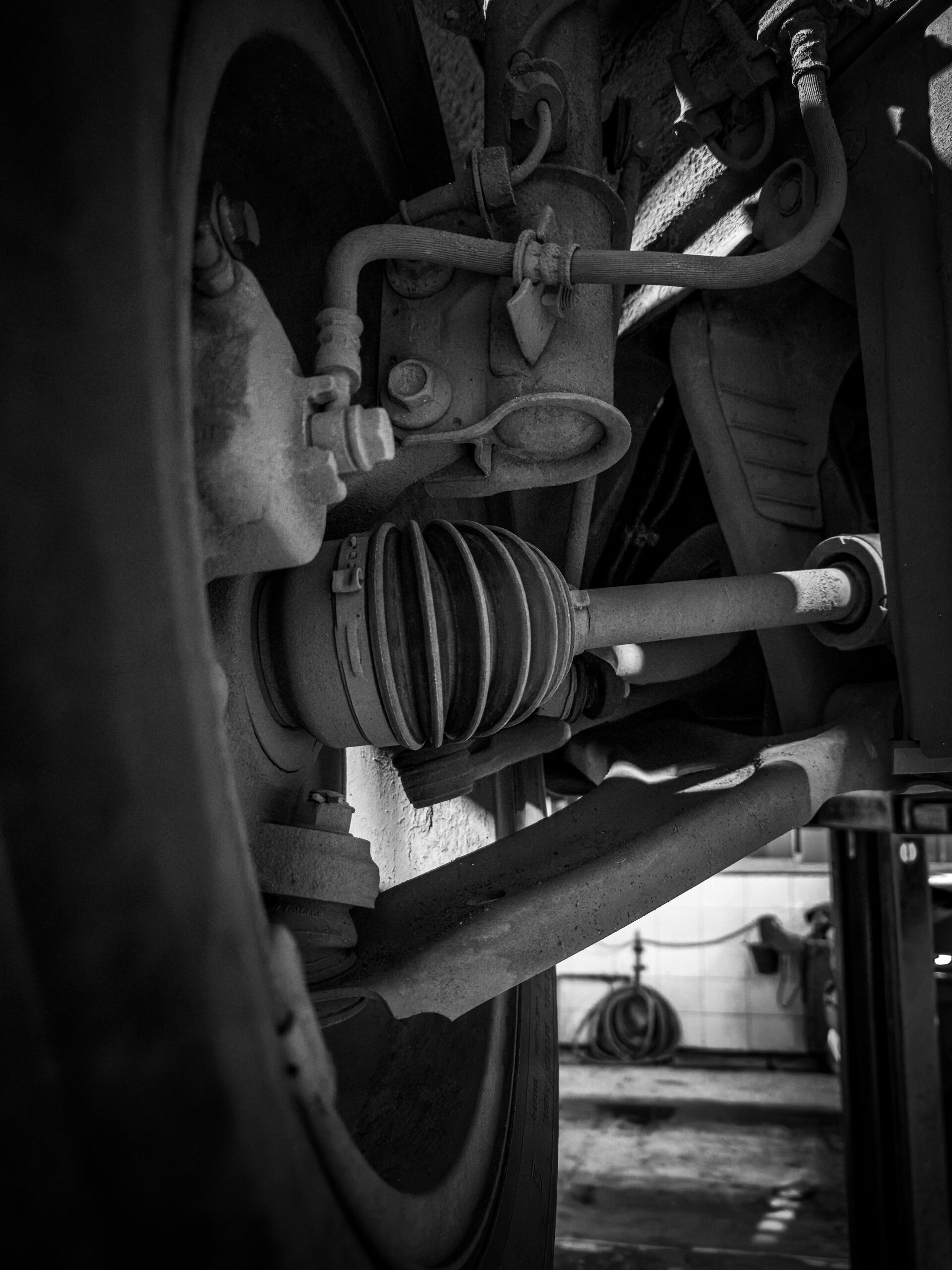
It started as one of those small, oddly specific sounds you only notice when life slows down for a second. Every weekday afternoon, crawling through the school pickup line, an SUV made a faint clicking noise on turns. Not loud, not dramatic—just a steady little tick-tick-tick that seemed to show up right when the steering wheel was cranked and the car was moving at a walking pace.
At first, it was easy to shrug off. The windows were down, kids were yelling, the curb lane was a mess of backpacks and impatient horns, and a million things can squeak on an older vehicle. But a few weeks later, that clicking finally stopped being “just a noise” and turned into a problem you can’t ignore: the CV axle snapped while the SUV was pulling into traffic.
The Sound That Only Showed Up in the Pickup Line
The pattern was strangely consistent: slow speed, steering turned, gentle acceleration, and click-click-click from the front end. That’s practically a perfect recipe for revealing an outer CV joint issue. In normal driving—straight roads, steady speed, minimal steering angle—the joint can hide its wear pretty well.
School pickup lines are basically a stress test for front-wheel-drive and AWD components. Lots of tight turns, stop-and-go creeping, and little bursts of throttle while the wheels are angled. If a CV joint is worn, that’s when it likes to sing.
What a CV Axle Actually Does (And Why It Clicks)
A CV axle—short for constant velocity axle—connects the transmission to the wheels and delivers power while the suspension moves and the wheels turn. It uses CV joints at each end so the axle can bend and rotate smoothly. When those joints wear out, they don’t glide anymore—they start to knock and click as the internal bearings and grooves loosen up.
The classic symptom is clicking during turns, especially when accelerating. Turning forces the joint to operate at a sharper angle, and acceleration loads it up, which makes the noise more obvious. People often notice it first during parking maneuvers, U-turns, or tight loops… which, yes, describes school pickup perfectly.
From “Annoying Noise” to “Oh No” in a Matter of Seconds
On the day it happened, everything was normal until it wasn’t. Leaving the curb, the SUV rolled forward, wheels turned, and the driver eased into the throttle to merge. Then came a sharp crack—more felt than heard—followed by a sudden loss of drive.
The engine revved, but the SUV didn’t go like it should. In some cases, a snapped CV axle can still let the vehicle creep a bit, but it’s often effectively stranded right where it is. And when “right where it is” happens to be the edge of live traffic, your heart rate finds a new personal best.
What “Snapped” Usually Means in the Real World
Most of the time, it’s not the solid axle shaft that cleanly breaks in half like a movie prop. It’s the CV joint failing—either the joint cage gives up, the bearings come apart, or the splines strip out. The result feels the same from the driver’s seat: power isn’t getting to the wheel the way it should.
When an outer CV joint fails completely, that wheel may stop pulling, and the vehicle can become unpredictable if the other side is still driving. On some setups, especially certain AWD systems, a single axle failure can cause a no-move situation altogether. It’s one of those parts that seems optional until you realize it’s literally the bridge between “engine running” and “car moving.”
Why It Waited for the Worst Possible Moment
Car problems have impeccable comedic timing, don’t they? But there’s a mechanical reason failures show up during low-speed turns and acceleration. That combination puts maximum stress on the outer CV joint, and if it’s already worn, it doesn’t need much encouragement to finish the job.
The pickup line also hides the warning signs in plain sight. You’re distracted, moving slowly, and the noise blends into the background chaos. Plus, when the sound comes and goes, it’s tempting to assume it’s a loose trim piece or something rolling around under a seat.
The Usual Causes: Boots, Grease, and Time
CV joints live a hard life, but they’re supposed to last a long time when sealed and lubricated. The weak link is often the rubber CV boot. If that boot cracks or tears, grease flings out and water and dirt get in, turning a smooth joint into a gritty, worn-out one.
Once the grease is gone, damage can accelerate fast—especially if the vehicle sees lots of tight turning, potholes, steep driveways, or rough roads. Sometimes a boot tear is visible if you look behind the wheel: grease splattered around the suspension or wheel well is a big clue. Other times, the only clue is that click you keep hearing and keep meaning to check “sometime.”
What to Do If You Hear That Clicking
If you notice rhythmic clicking while turning—especially on acceleration—it’s worth getting it inspected sooner rather than later. A shop can confirm it with a quick road test and a look at the boots, and they can check for play in the joint. Replacing an axle that’s merely noisy is usually straightforward; replacing one that’s exploded on the roadside is a whole different afternoon.
There are a few other sounds that can mimic it, like loose wheel bearings, worn sway bar links, or even a rock stuck in a tire tread. But the “clicking on turns” CV pattern is common enough that mechanics don’t need to squint too hard to suspect it. If the sound is getting louder over time, that’s basically your vehicle underlining the message.
If It Fails in Traffic, Safety Comes First
If an axle fails while you’re moving, the priority is getting out of harm’s way without forcing the vehicle to do something it can’t. If the SUV won’t move, hazards on, steer to a safe spot if momentum allows, and call for help. Trying to “power through” can cause additional damage, and in the worst cases, a flailing axle can take out nearby components.
Once it’s safe, the next steps are pretty typical: tow if needed, inspect both axles, and consider replacing them in pairs depending on mileage and condition. It’s also smart to fix the root cause if it was a torn boot, a leaking clamp, or suspension issues that put extra angle on the joints. The goal is to stop the sequel before it gets greenlit.
A Small Noise That Was Trying to Be Helpful
The frustrating part is that the SUV had been offering a warning every afternoon like clockwork. The clicking wasn’t random—it was a mechanical hint, delivered on schedule, right between the orange cones and the crossing guard. And while nobody loves paying attention to car noises, this one was basically the vehicle politely clearing its throat.
Still, it happens to plenty of people. Life’s busy, the car still drives, and you tell yourself it can wait until the next oil change. But if your vehicle starts clicking during turns in that slow, familiar loop you do every day, it’s worth listening—because the next time it might decide to stop clicking for good, right as you’re trying to merge.
More from Fast Lane Only
- Unboxing the WWII Jeep in a Crate
- 15 rare Chevys collectors are quietly buying
- 10 underrated V8s still worth hunting down
- Police notice this before you even roll window down
*Research for this article included AI assistance, with all final content reviewed by human editors.