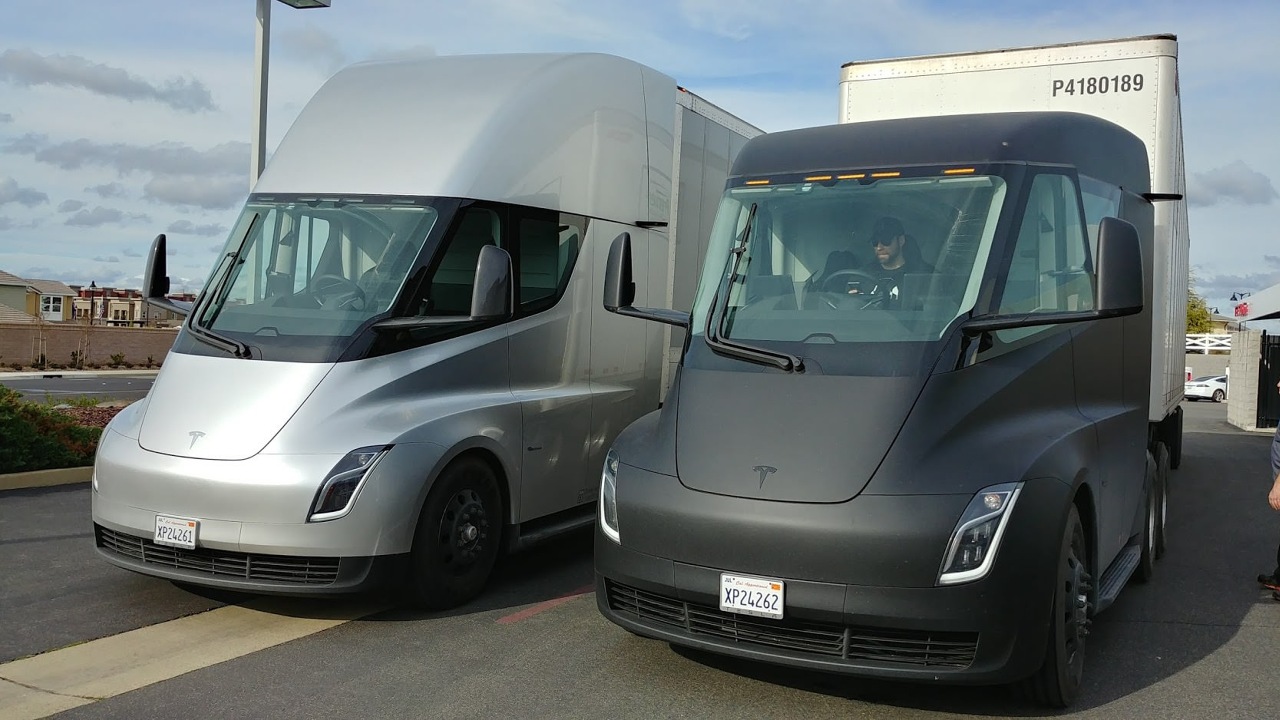
Tesla has secured a pivotal partner for its electric truck ambitions, striking a deal to install high power Semi chargers across locations operated by the largest truck stop chain in the United States. By embedding its heavy duty charging hardware directly into the country’s dominant freight corridors, the company is moving from pilot projects to the beginnings of a national refueling backbone for battery powered big rigs.
The agreement with Pilot Travel Centers LLC positions Tesla’s Semi program squarely inside the daily routines of long haul fleets, from food distributors to refrigerated carriers. It also signals that truck stop operators now see electric freight as a core business line rather than a side experiment, with the first wave of chargers scheduled to open to drivers over the coming summer.
The scope of Tesla’s new truck stop foothold
The centerpiece of the deal is an agreement between Pilot Travel Centers LLC and Tesla to integrate dedicated Semi chargers into 20 truck stop sites across five states. Pilot, described as the nation’s largest operator of travel centers, plans to host these installations at locations that already serve heavy freight traffic, giving Tesla’s electric trucks access to charging directly along major interstate routes. The companies have indicated that the first of these chargers are expected to open in summer 2026, turning what has been a limited depot based charging model into one that more closely resembles the refueling flexibility of diesel.
According to Pilot, the initial rollout will focus on sites in California, Georgia, Nevada, New Mexico and Texas, all of them positioned on high volume freight corridors. Reporting on the agreement notes that the Semi chargers will be installed at select Pilot locations along routes such as I 5 and I 10, corridors that carry a significant share of West Coast and Sun Belt truck traffic. By anchoring the first wave of infrastructure in these lanes, Tesla and Pilot are targeting routes where electric trucks can rack up substantial mileage and where fleets are under pressure to cut emissions in states with aggressive climate policies.
How the Semi chargers will fit into Pilot’s network
Pilot’s plan is to fold Tesla’s heavy duty charging hardware into its existing travel center footprint, rather than building standalone electric depots. The company has described the project as a Semi charger network for fleets, with chargers integrated into about 20 locations across its sprawling system. Each site is expected to combine truck parking, restrooms, food options and driver amenities with high capacity charging bays sized for Class 8 tractors, so that charging sessions can align with federally mandated rest breaks and overnight stops.
The Semi chargers are being positioned as part of Pilot’s growing alternative fuel portfolio, which already includes offerings such as compressed natural gas and other lower carbon options. By adding Tesla’s equipment to that mix, Pilot is signaling that battery electric freight is moving into the same strategic category as other long term fuel bets. The company has emphasized that the chargers will be designed for professional drivers and fleets, with layouts that accommodate tractor trailers and refrigerated units rather than passenger cars, and with services tailored to the needs of long haul operations.
What the deal means for Tesla’s freight strategy
For Tesla, embedding Semi chargers at Pilot locations is a way to extend the reach of its electric trucks beyond dedicated customer depots. The company has already delivered Semis to early adopters, but long distance operations require public or shared charging options that can support high daily mileage. By partnering with the largest truck stop operator, Tesla gains access to real estate, grid connections and driver traffic that would be difficult and costly to replicate on its own, while also giving fleets more confidence that they can route electric trucks across multiple states without bespoke infrastructure at every destination.
The agreement aligns with Tesla’s stated plans to ramp up volume production of the Semi and to support those vehicles with a network of high power chargers. Reports on the deal describe the Pilot sites as part of a broader strategy to create a corridor based charging system for heavy trucks, with the Semi chargers expected to deliver the kind of fast turnaround times that freight operators demand. By situating chargers on interstates that connect ports, distribution centers and major metro areas, Tesla is effectively building the heavy duty counterpart to its passenger vehicle Supercharger network, but with locations and power levels tailored to commercial freight.
Implications for fleets and early adopters
The Pilot Tesla partnership arrives as fleets begin to test how electric trucks perform in real world freight operations. One example highlighted in the reporting is Performance Food Group Pilots Electric Refrigerated Truck, which illustrates how temperature controlled freight can be electrified when both the tractor and the supporting infrastructure are in place. For companies moving perishable goods, the availability of high power charging at truck stops along key routes is critical, since refrigerated trailers draw additional energy and require predictable charging windows to protect cargo.
Fleet operators evaluating the Semi will likely see the Pilot network as a way to reduce the risk of early deployments. Instead of relying solely on depot charging, they can design routes that combine overnight charging at home bases with en route top ups at Pilot locations in California, Georgia, Nevada, New Mexico and Texas. This hybrid approach allows electric trucks to cover longer distances while still operating within the constraints of current battery ranges, and it gives dispatchers more flexibility to adjust routes as freight demand shifts. As more chargers come online, fleets that start with regional runs may be able to extend into multi state lanes without a complete redesign of their logistics networks.
Why truck stop infrastructure is central to freight decarbonization
The decision by Pilot to integrate Tesla Semi chargers into its travel centers underscores how central truck stop infrastructure will be to any serious effort to decarbonize freight. Long haul trucking depends on a dense network of refueling points that can handle large vehicles, provide driver services and operate around the clock. By committing to host electric truck chargers at about 20 locations in multiple states, Pilot is effectively treating battery electric refueling as a core service on par with diesel, which could encourage other truck stop operators to follow suit and accelerate the build out of heavy duty charging along interstate corridors.
At the same time, the scale of the initial rollout highlights how early the transition still is. Twenty sites, even when strategically located along I 5, I 10 and other major routes, represent a starting grid rather than a fully mature network. The success of the Tesla and Pilot collaboration will depend on factors such as charger reliability, grid capacity at each site, pricing structures that make electric freight competitive, and the ability to accommodate trucks from multiple fleets without long queues. If those pieces come together, the Semi chargers at Pilot locations could serve as a template for a broader national system, but if they falter, they will offer a cautionary lesson in how challenging it is to electrify heavy transport at scale.
More from Fast Lane Only