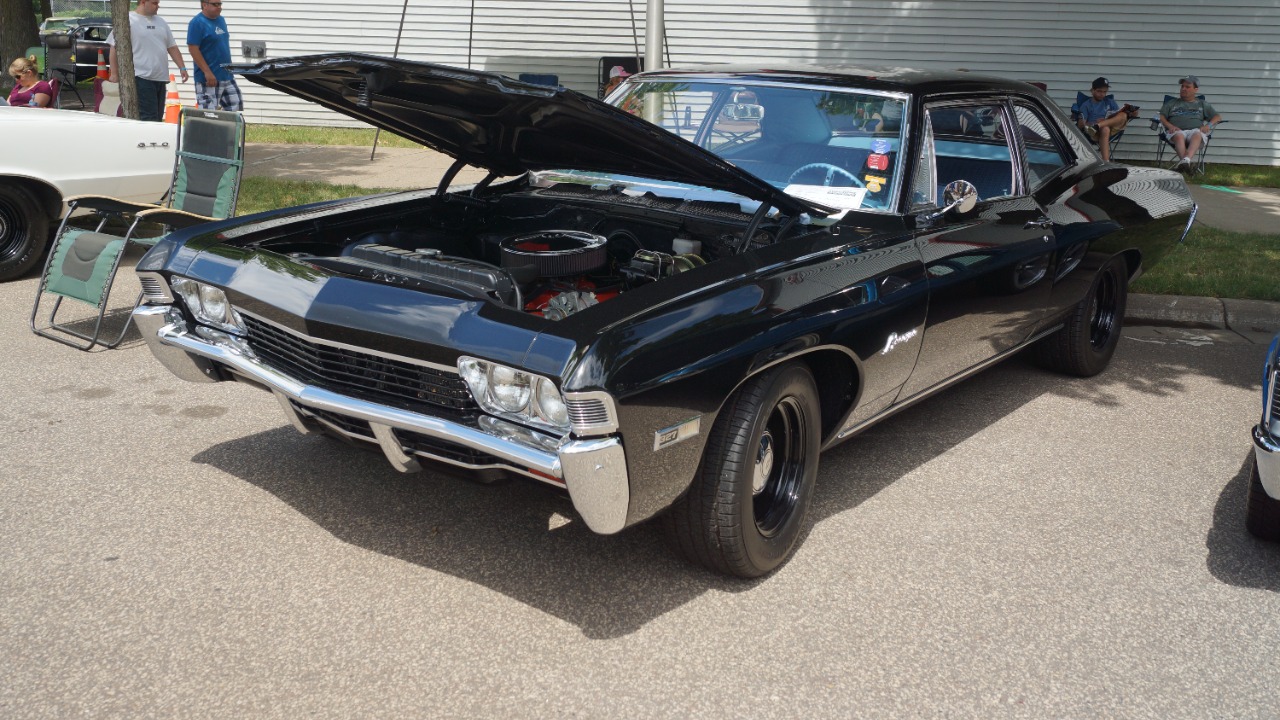
In the late ’60s, performance shoppers were supposed to want the flash. You know the recipe: stripes, badges, a hood that looked like it could inhale small birds, and a name that sounded fast even while parked. And yet, quietly, a different kind of Chevrolet started catching the attention of people who cared more about what happened after the light turned green.
The 1968 Chevrolet Biscayne wasn’t the poster car. It was the sensible one, the “fleet special,” the full-size sedan your neighbor might’ve bought because it was straightforward and priced right. But in that exact plainness, some buyers spotted an opportunity—and they pounced.
A full-size “basic” car in the middle of a horsepower era
By 1968, Chevy’s full-size lineup had a clear social hierarchy. Impala and Caprice wore the nicer clothes, got the shiny trim, and generally did the job of looking expensive. Biscayne sat at the bottom, built to be durable, affordable, and easy to order in bulk.
That made it unglamorous, sure, but also lighter on frills and sometimes lighter on the scale than its more decorated siblings. In a decade when people were comparing quarter-mile times like baseball stats, a no-nonsense full-size shell started sounding less like a compromise and more like a blank canvas.
It was a sleeper before “sleeper” was a lifestyle
Part of the Biscayne’s appeal was psychological. A big Chevy sedan with modest trim didn’t scream “race me.” It blended in at the drive-in, in a grocery store lot, or idling at the curb, looking like it had a calendar appointment to be responsible.
Then it would leave hard, squat on the rear suspension, and surprise someone who assumed “cheap trim” meant “slow.” That’s the kind of moment people talked about for weeks, usually starting with, “You’re not gonna believe what just happened.”
Big-block power made the plain wrapper interesting
Here’s where the Biscayne’s reputation shifted from “thrifty” to “wait, seriously?” Chevrolet’s full-size cars could be ordered with serious engines, and the late ’60s were a sweet spot for that kind of menu. Depending on how it was equipped, the Biscayne could end up with the same kind of big-block muscle that buyers associated with much louder, more glamorous models.
That mattered because the Biscayne wasn’t trying to be a sports car. It was a big, stable platform with room for a strong drivetrain, stout cooling, and the kind of highway manners people actually lived with every day. When you combine that with real horsepower, it stops being “entry-level” and starts being “strategic.”
Price and options: the sneaky performance math
Performance has always had a budget side, and the Biscayne played that game well. If you could get the engine and drivetrain you wanted without paying for every last piece of extra trim, you were already ahead. Some buyers weren’t interested in vinyl roofs or fancy interior patterns; they wanted a car that would run hard and still have money left for tires.
It also meant less guilt about using it the way a performance car gets used. A Biscayne built with go-fast intentions didn’t feel precious, and that’s liberating. Nobody was tiptoeing around the idea of swapping parts, tuning it, or letting it eat on a Friday night.
Roomy, heavy, and oddly confident at speed
On paper, a full-size sedan doesn’t sound like the obvious performance pick, mostly because “full-size” often gets translated into “heavy.” But weight isn’t the whole story, especially when power climbs right along with it. A big engine pulling a big car can feel effortless, the kind of torque you don’t need to rev to enjoy.
There was also a real-world comfort factor that muscle coupes didn’t always match. Long wheelbase, wide stance, and big-car stability made highway runs feel composed. If someone wanted a car that could handle commuting Monday through Thursday and still make noise on the weekend, the Biscayne could do that without drama.
It didn’t pick fights, which made it better at winning them
Flashy performance cars tend to attract attention—from other drivers and sometimes from people who’d rather you weren’t having fun at all. The Biscayne’s low profile helped it slide under that radar. It looked like a car with errands, not an agenda.
That “quiet” image could be a practical advantage for anyone who liked spirited driving but didn’t want to live in constant conversation with every stoplight challenger. A sleeper doesn’t have to prove itself in the parking lot. It just does the work when the road opens up.
The 1968 redesign helped, even if nobody bought it for styling
Chevrolet’s 1968 full-size cars carried freshened lines that looked more modern and substantial than earlier shapes, even in basic trim. The Biscayne didn’t get the fancy brightwork treatment, but the underlying body still had presence. It was the sort of car that looked honest—like it wouldn’t apologize for being big.
And that honest look paired well with the idea of hidden performance. A Biscayne could sit there with simple wheel covers or plain steel wheels and still have something serious going on under the hood. It’s the automotive equivalent of wearing work boots to a weightlifting contest.
Buyers started treating it like a platform, not a model
What made the Biscayne an “unexpected choice” wasn’t that everyone suddenly fell in love with its base-model vibe. It was that more buyers began thinking like builders. They saw a strong chassis, available power, and fewer cosmetic costs, then filled in the rest the way they wanted.
That mindset fits perfectly with how performance culture really works. Not everybody wants the loudest factory package; some want the best starting point. For those people, the Biscayne was less a bargain car and more a loophole with a license plate.
A reputation that aged well
Over time, the Biscayne’s story became part of its charm. While the spotlight stayed on the headline-grabbing muscle names, the “plain big Chevy that could move” earned a quiet respect. It’s the kind of respect that usually comes from being surprised once and remembering it forever.
Today, the idea makes immediate sense: a big, simple car with room for power, built in an era when power was plentiful. Back in 1968, though, it took a certain kind of buyer to look at the most basic full-size Chevy and think, “Yeah, that one. That’s the fast one.”
More from Fast Lane Only
- Unboxing the WWII Jeep in a Crate
- 15 rare Chevys collectors are quietly buying
- 10 underrated V8s still worth hunting down
- Police notice this before you even roll window down
*Research for this article included AI assistance, with all final content reviewed by human editors.