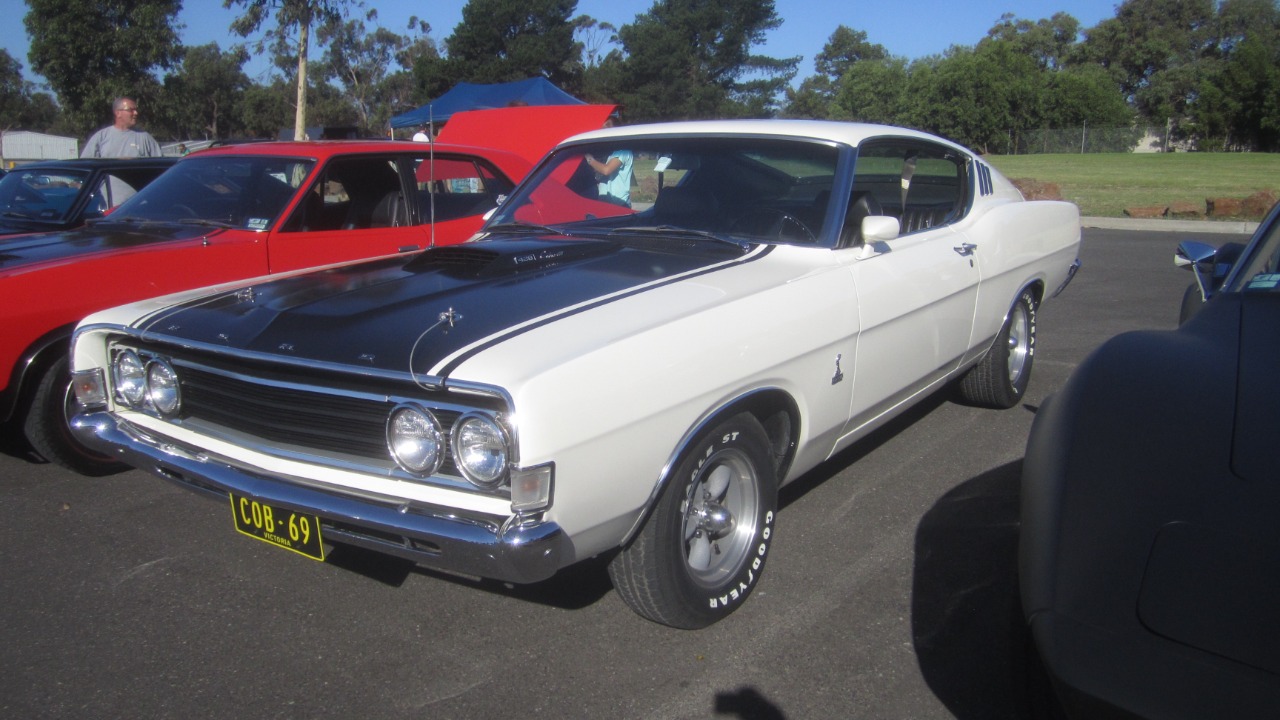
People tend to picture the 1969 Ford Cobra as a no-nonsense muscle machine: loud, fast, and built with one job in mind. But look past the badges and the reputation, and you’ll find it wasn’t isolated from the rest of Ford’s lineup. In a lot of ways, it benefited from the same parts, engineering decisions, and supplier pipelines that also served more comfort-minded cars. That overlap surprised some buyers then—and it still catches enthusiasts off guard now.
That doesn’t mean it was “soft,” or that Ford tried to turn it into a luxury car. It means the Cobra existed inside a big company that standardized components where it could. In the late 1960s, that kind of sharing kept costs under control and made service easier. It also meant certain touches you might associate with upscale models could show up in a performance-focused package.
What “Cobra” meant in 1969
In 1969, “Cobra” referred to a high-performance trim within Ford’s pony-car orbit, most commonly connected with the Mustang’s performance ecosystem. The idea wasn’t just stripes and emblems; it was a way to signal more hardware and a more aggressive intent than ordinary models. At the same time, Ford’s performance branding during this era often lived alongside convenience and appearance packages rather than replacing them.
That mix is important context. Buyers could end up with a car that had serious performance cues while still reflecting mainstream Ford design and parts strategies. So while the Cobra name aimed at enthusiasts, the vehicle itself still drew from a broad corporate toolbox. The result was a machine that could feel more “fully featured” than some purists expected.
Why parts sharing was the norm, not the exception
Ford in the 1960s was a master of platform and component sharing. The company spread development costs across multiple nameplates and trims, then differentiated models with tuning, styling, and option combinations. That approach wasn’t unique to Ford, but Ford did it at scale. The Cobra benefited from that system in ways that weren’t always obvious on a quick walkaround.
Parts sharing didn’t only mean big-ticket items like driveline pieces. It also meant switches, knobs, interior hardware, electrical connectors, and other “invisible” components that shape daily usability. When those parts were sourced for higher-end models, they often ended up feeling more refined than what you’d expect from a purely bare-bones performance car. Owners sometimes discover this when restoring cars and noticing familiar pieces across different Ford-family interiors.
Interior touches that can feel more upscale than the image suggests
Open the door on many late-’60s performance Fords and you’ll notice the cabin wasn’t designed like a stripped race car. Even when the styling was sporty, the underlying approach still valued comfort and convenience because that’s what most buyers wanted. Ford’s option sheets and trim strategies meant a performance-oriented car could still carry features that made it pleasant to live with. That overlap is where the “more luxury than expected” impression really comes from.
It’s also why two cars wearing the same performance branding can feel very different in practice. One might be fairly simple, while another is loaded with comfort options, upgraded interior trim, and nicer-looking materials for the era. Those choices weren’t always exclusive to any single model line. They often tracked with trim level, dealer ordering habits, and what buyers were willing to pay for.
Engineering choices that prioritized drivability
Luxury, in a broad sense, isn’t just about woodgrain and plush seats—it’s also about how a car behaves. Automakers selling to a wide audience frequently tune for stability, predictable manners, and reduced harshness because that’s what keeps customers happy. Even performance models can reflect that thinking, especially when they’re meant to be driven on the street every day. A car can be quick and still feel engineered rather than crude.
Ford’s large-scale development meant refinements could migrate across the lineup. Improvements in steering feel, noise control techniques common for the time, or incremental updates to suspension components didn’t always stay locked behind a “luxury” badge. If a solution made sense across many models, Ford had an incentive to adopt it widely. That can leave a performance-branded car feeling more mature than its marketing suggests.
Supply chain realities: the same vendors served different missions
One reason unexpected similarities show up is simple: suppliers. When a major automaker sources parts from established vendors, those vendors often provide components for multiple models—sometimes across very different price points. A switch design, a latch mechanism, or a gauge component might be used broadly because it’s reliable and already validated. That kind of commonality can make a performance car seem more “luxury-adjacent” when you recognize the parts.
This also affects restoration and maintenance today. Shared parts families can make certain items easier to track down, because they weren’t unique to a single performance niche. The flip side is that originality gets more nuanced: a part that looks “too nice” for a muscle car might still be correct if it was common across Ford’s range. Knowing that history helps prevent mistaken assumptions when evaluating a car or planning a build.
Marketing separated identities, but the factory didn’t always
Ford’s advertising had to create clear personalities: sporty here, upscale there, practical somewhere else. But the factory floor and engineering teams didn’t operate like separate boutique brands. They built cars using a shared set of standards, components, and processes. That’s why the real-world product can blur the lines that marketing tried to draw.
For buyers in 1969, that could be a pleasant surprise—or a mild letdown—depending on expectations. If you wanted a raw, minimalist machine, discovering familiar, comfort-minded elements might have felt off-message. If you wanted speed without giving up everyday usability, those shared elements were a feature, not a bug. Either way, the car’s DNA reflected both performance ambition and mainstream Ford practicality.
What to look for today when you’re evaluating one
If you’re inspecting a 1969 Cobra today—whether in person or through photos—it helps to keep this shared-hardware reality in mind. Interior components that resemble those in other Ford models from the period aren’t automatically incorrect. The key is to compare what you’re seeing to verified references for the specific configuration, since options and running changes can affect details. Documentation, build sheets, and credible marque resources matter more than gut feel.
It’s also smart to separate “luxury-like” from “restored with modern tastes.” Period-correct comfort options and trim pieces are one thing; over-restoration or incorrect substitutions are another. The overlap with higher-end models can make it easier for incorrect parts to sneak in because they still “look right.” A careful eye and good references will tell you whether the car is authentically reflecting Ford’s shared-parts ecosystem or simply wearing convenient replacements.
More from Fast Lane Only
- Unboxing the WWII Jeep in a Crate
- 15 rare Chevys collectors are quietly buying
- 10 underrated V8s still worth hunting down
- Police notice this before you even roll window down
*Research for this article included AI assistance, with all final content reviewed by human editors.