Across the United States in the 1980s, high school parking lots functioned as informal car shows, where status, taste, and mechanical luck were all on display between first period and football practice. The mix of aging muscle, bargain compacts, and aspirational sports cars told a story about what teenagers valued and what their families could afford. Looking back at those rows of metal now reveals not only which models dominated the asphalt, but also how a particular generation came of age behind the wheel.
From battered hand‑me‑downs to gleaming V8s, certain cars appeared so often that they became part of the scenery, as familiar as the marching band or the cafeteria line. The models that defined those lots in the 1980s were not always the rarest or the fastest, but they were the ones that teenagers could actually get their hands on, modify in the driveway, and brag about in homeroom.
Muscle memories: Mustangs, Camaros, and leftover ’60s thunder
For many students, the quintessential high school car of the 1980s was not new at all, but a decade or two old, bought cheap and kept alive with weekend wrenching. Late 1960s and early 1970s muscle cars, often faded and imperfect, still carried enormous appeal when they showed up in student parking. Accounts from enthusiasts who were teenagers in the mid‑1980s describe lots filled with older performance machines, including classic Mustangs and other V8 coupes, parked alongside more contemporary performance models like Fox‑body Mustangs and IROC‑era Camaros. One recollection of “Growing up a teenager in the mid‑1980s” notes that the school lot was a mix of late ’60s and early ’70s muscle, with cars like Fox Mustangs and IROC Camaros sharing space, underscoring how multiple performance generations overlapped in that era.
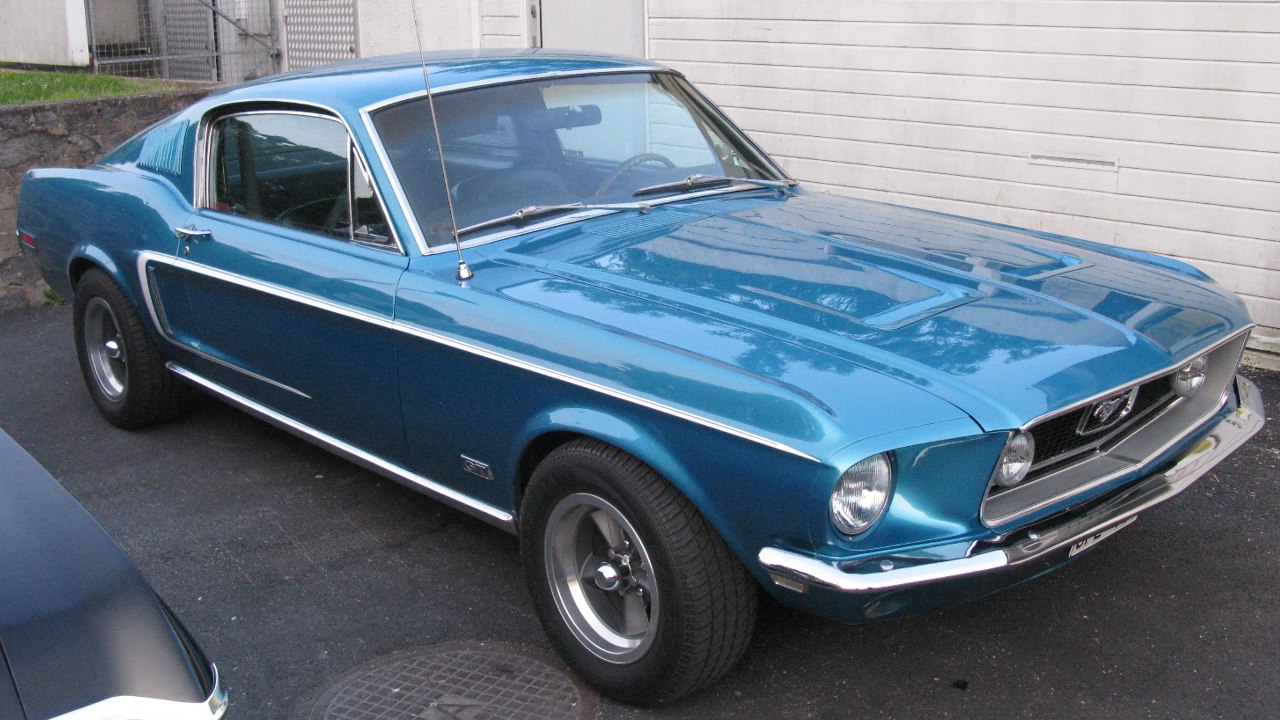
The Ford Mustang in particular loomed large in adolescent imagination. Commentators looking back on the period describe the Ford Mustang as “king of the streets” for those who grew up in the 1980s and 1990s, with “High” school “Ceasars” gravitating to the model as a symbol of local dominance. Earlier Mustangs also lingered in memory, such as a 1968 Mustang GT fastback in Highland Green that one owner proudly recalls, and another enthusiast referencing a 1966 Mustang GT with a 289 V8 and 3‑speed manual. These stories, tied to specific engines like the “289” and vivid colors like Highland Green, show how even older Mustangs still cast a long shadow over 1980s campuses, where a rumbling exhaust note could turn heads faster than any varsity jacket.
Fox‑body Fords and IROC Camaros: the new‑school performance crowd
While the leftovers from the muscle‑car era remained popular, the 1980s also produced its own generation of performance icons that quickly filtered into student lots. The Fox‑body Ford Mustang, especially in GT 5.0 form, became a defining presence, combining relatively attainable pricing with strong straight‑line performance. Enthusiasts looking back on “Cars of the 80s that were iconic” single out the Ford Mustang GT 5.0 as one of the standout models of the decade, placing it alongside more exotic machinery. That reputation translated directly to high school culture, where the 5.0 badge on a fender signaled that a classmate had something serious under the hood, even if the car was a few years old by the time it reached student hands.
On the General Motors side, the Chevrolet Camaro evolved into a similar symbol of adolescent aspiration. Retrospectives on high school parking lots from the period insist that no 1980s scene felt complete without a Chevrolet Camaro IROC or a C4‑generation Corvette somewhere near the front row, often belonging to the student whose parents were most willing to indulge a performance habit. Broader lists of “Most Collectible American Cars Of The” 1980s highlight the 1981 Chevrolet Camaro Z28, noting a Top Speed of 108 M P H and referencing auction platforms like Bring a Trailer, which underscores how even relatively modest performance figures by modern standards have not dimmed the car’s cultural glow. Personal recollections from former students reinforce this picture, with one person recalling that in “Dec” of their high school years they drove a “71” Camaro SS, occasionally swapping it for a parents’ Honda when the Chevrolet was being worked on, a detail that neatly captures the blend of pride and practicality that defined teenage car ownership.
Economy boxes and hand‑me‑downs: the real majority
For every Mustang GT or Camaro SS, there were rows of modest compacts and economy cars that actually carried most students to class. The 1980s saw a wave of small, fuel‑efficient models that were cheap to buy used and even cheaper to run, making them ideal for parents handing over keys to a teenager. Retrospective rankings of small cars that “defined the 1980s” point to models like the Chevrolet Chevette as emblematic of this category, a basic hatchback that appeared in large numbers and rarely attracted attention unless it refused to start on a cold morning. These cars lacked the glamour of V8 muscle, but they were the workhorses of the lot, their presence so ubiquitous that many former students only remember them in hindsight.
First‑person accounts from classic‑car enthusiasts underline how often teenagers alternated between aspirational performance cars and more humble transportation. One former student recalls that while they had a “71” Camaro SS during senior year, part of the time it was in the garage, so they relied on the parents’ Honda instead, especially during “Sophomore” year when sharing a car was the norm. Another discussion of what young adults in the 1980s actually drove contrasts the dream of owning a Camaro with the reality of ending up in a sagging 1974 Mercury, framed with the blunt admission that “Actually” getting the desired car was rare. These stories, peppered with references to “Fast” little machines that generated speeding tickets, show how the average teenager’s experience involved compromise, with hand‑me‑downs and economy models forming the backbone of daily life even as posters of more glamorous cars hung on bedroom walls.
Imports, exotics, and the cars that lived on posters
Beyond domestic muscle and economy cars, the 1980s also introduced a wave of Japanese and European models that reshaped teenage fantasies, even if they were less common in the student lot. Enthusiasts reflecting on “Cars of the 80s that were iconic” mention the Toyota MR2, Mazda RX‑7, and other Toyota performance models alongside the Ford Mustang GT and Lamborghini Countach, indicating that compact, agile imports had earned a place in the decade’s automotive pantheon. These cars, often lighter and more nimble than their American counterparts, appealed to students who valued handling and technology as much as raw displacement, even if only a few lucky classmates actually drove them to school.
At the very top of the pyramid sat the true exotics, which almost never appeared in high school parking but dominated teenage imagination. Discussions of the “best 1980s classic car” highlight machines like the Ferrari 288 G T O, Lamborghini Countach, Rolls Royce Corniche Convertible, Ferrari 328 and 308, Porsche 911 Turbo, and high‑end Mercedes models, with specific metrics like “288 G,” “328,” “308,” and “911” cited as shorthand for their legendary status. These cars were more likely to be seen in magazines or on bedroom posters than in the faculty lot, yet they shaped how teenagers judged everything else on four wheels. When a classmate rolled in with a well‑kept Corvette or a particularly sharp Camaro IROC, the comparison point in many minds was not another used domestic, but the Ferrari or Lamborghini that had become the era’s visual shorthand for success.
Generational context and the nostalgia of the lot
More from Fast Lane Only