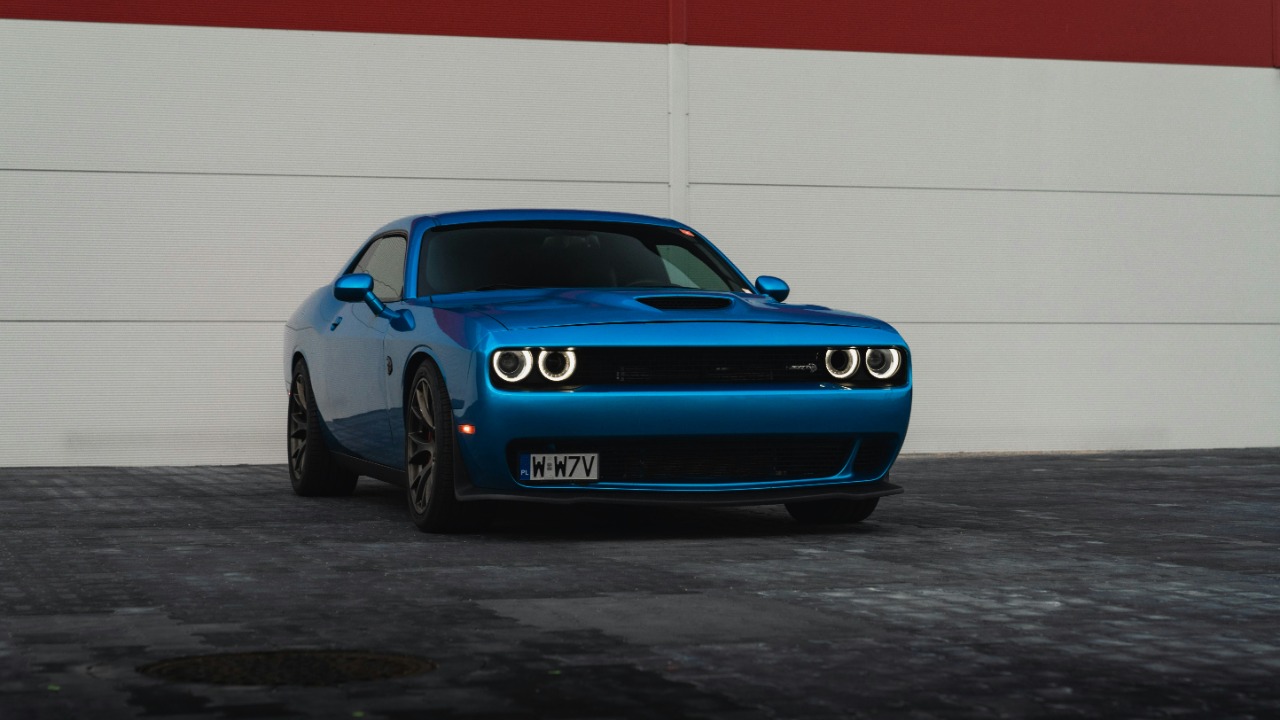
The Dodge Challenger SRT Demon 170 is the rare car that treats the rulebook as a starting point rather than a boundary, delivering drag-strip numbers that would have sounded like fantasy in a street machine only a few years ago. It is sold with plates in mind, yet its performance is so extreme that traditional definitions of “road legal” start to look flimsy beside it. I see it as a rolling stress test of how far factory engineering can push a production car while still fitting inside the letter of the law.
On paper, the Demon 170 is a showroom model; in practice, it behaves like a purpose-built race car that just happens to carry registration tags. That tension, between legal status and real-world usability, is what makes this Challenger more than another high-horsepower headline. It is a case study in how modern performance blurs the line between commuter traffic and competition staging lanes.
The factory drag car that still wears a license plate
The core paradox of the Demon 170 is simple: it is engineered as a drag weapon, yet it rolls out of the dealership as a road car. Officially, the answer to whether it is allowed on public roads is a straightforward “Yep,” and that clarity matters because the car is explicitly described as the meanest internal-combustion factory drag racer while still being sold as a street-legal Challenger. That dual identity is not a marketing flourish, it is baked into the way the Dodge Challenger Demon 170 is positioned for buyers who want a car that can idle in traffic and then annihilate a timing slip.
Underneath that legal status sits a package that reads like a tech sheet from a dedicated drag program. The car is built around a supercharged V8 tuned to deliver a claimed 1025 horsepower on E85, a figure that turns the usual muscle-car hierarchy on its head and puts the Demon 170 in conversation with electric hypercars rather than traditional pony cars. That output is highlighted in enthusiast coverage that invites fans to Remember the sheer shock of seeing a showroom Challenger crack four digits on pump-accessible fuel, and it is the foundation for everything else the car does.
How the Demon 170 bends the rulebook without breaking it

To understand why this car feels like it is stretching the definition of “street legal,” it helps to look at how sanctioning bodies react to its performance. In the world of organized drag racing, if a car breaks into certain elapsed times, safety rules kick in that require additional equipment such as roll cages and parachutes. Reporting on the Demon 170 notes that if a car breaks into those thresholds, it can be sidelined by the NHRA for being too fast, which is exactly the territory this Challenger occupies when it is unleashed on a prepared strip.
That tension is not theoretical. Coverage of the car’s debut explains that the 2023 Dodge Challenger Demon 170 is already treated as too quick for standard quarter-mile competition, with its capability pushing it into a zone where, without the required safety hardware, it is effectively banned from typical NHRA quarter-mile drags. In other words, the same car that can legally trundle through a school zone is, in stock form, too fast for the very drag-racing framework its engineering targets.
Street legal on paper, limited by physics in practice
The Demon 170’s legal status on public roads sits alongside a more nuanced reality about how and where it can be driven. Earlier guidance around the Demon line made clear that the car is not intended for every condition, with documentation warning that customers should not drive the Demon on the highway or in very cold or wet weather where hydroplaning is a risk. That caution, captured in a form that spelled out the car was not intended for highway use, underscores how a vehicle can satisfy regulatory boxes while still demanding a level of respect that goes beyond ordinary commuter cars.
Driving impressions of the earlier Dodge Demon help explain why that warning matters. Testers have emphasized that, While completely street legal, the Dodge Demon is designed to deliver maximum performance on the dragstrip, and that focus means the car constantly nudges the limits of traction and driver skill. One account describes how the Demon is tuned to push the limits on both track and street, a reminder that while the paperwork says “legal,” the experience behind the wheel is closer to managing a race car than a daily driver.
From Demon to Demon 170: escalating power and shrinking margins
The Demon 170 does not emerge in a vacuum; it is the culmination of a progression that started with the original Demon’s 840 horsepower and has now leapt into four-figure territory. That escalation is captured in detailed spec rundowns that describe how, With more power than ever before and astonishing acceleration that would rival electric hypercars, the Demon 170 is the most extreme evolution of the Challenger platform. Those same rundowns note that only a limited number of the Demon 170 will be made, which turns each car into both a collectible and a rolling test of how far the factory can push the envelope.
Engineering details reinforce that this is not just a power bump but a comprehensive drag-focused rework. Reports on the 2023 model explain that The Challenger SRT Demon 170 comes with a ton of drag-racing modifications, from its suspension tuning to its tire setup, all optimized for explosive launches. At the same time, those same reports underline that The Challenger SRT Demon 170 is street-legal, positioning it as a more extreme sibling to the already wild Challenger SRT Demon and the Challenger SRT Hellcat Redeye Widebody. The result is a car that narrows the margin between controllable performance and outright overkill.
“Isn’t legal” versus “is legal”: the semantics of speed
The way enthusiasts talk about the Demon 170 often reflects the confusion between regulatory legality and practical restrictions. Some coverage frames the car with the provocative line that The Dodge Demon 170 Isn’t Legal, But Not In The Way You May Think, a nod to the fact that the car’s quarter-mile performance pushes it into a category where racing organizations impose limits even as road laws still recognize it as a production vehicle. That same analysis notes that, Interestingly enough, the Dodge Demon 170 is still considered a street car even when its elapsed times are too fast at 8.91 seconds for typical bracket rules, which is why interestingly the debate around its legality often comes down to context.
That context also shapes how owners can actually use the car. On a public road, the Demon 170 is bound by the same speed limits and traffic rules as any other vehicle, which means its headline numbers are largely theoretical outside of a track. On a sanctioned strip, however, those same numbers trigger safety thresholds that can sideline the car unless it is modified beyond its factory configuration. The result is a machine that is both fully compliant with road regulations and, in some settings, functionally “illegal” to run at its full potential, a contradiction that captures how the Demon 170 bends the idea of street legal without quite snapping it.