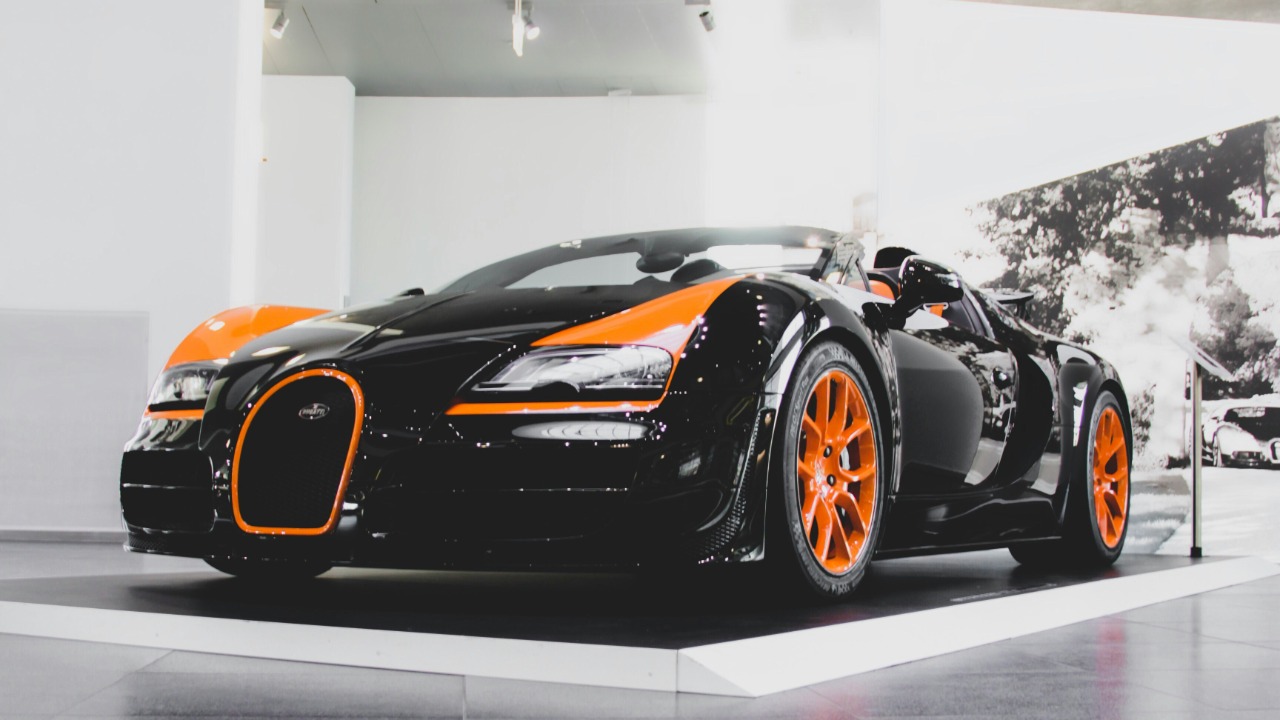
The Bugatti Veyron did not simply raise the bar for fast road cars, it redrew the limits of what physics would allow on public tires and tarmac. By turning abstract numbers about power, drag and downforce into something a driver could actually control, it became the rare machine that feels less like transportation and more like a rolling experiment in applied science.
Two decades after its debut, the car still reads like a thought experiment made real: a 1,000‑plus‑horsepower grand tourer that can cruise in comfort, then touch race-car speeds and survive the forces involved. I see the Veyron as the moment when hypercar engineering stopped chasing tradition and started treating the road car as a problem in pure mathematics.
The audacious brief that rewrote the rulebook
The Veyron began with an almost unreasonable demand from the top of the Volkswagen Group: build a road car that was more powerful and faster than anything else, yet as usable as a luxury coupe. Ferdinand Karl Piech, then described as a gifted engineer and serving as CEO of the Volkswagen Group, sketched an 18‑cylinder concept and insisted the finished car should be more powerful than anything else on the road. That ambition set the tone: this would not be a slightly sharper supercar, it would be a clean-sheet attempt to bend road-car physics to a single will.
From that starting point, the project evolved into what even sympathetic observers describe as a technical moonshot. The Bugatti Veyron was framed as a technical masterpiece that required engineers to do things that had never been done before in automotive development, from packaging a vast engine to managing unprecedented heat and aerodynamic loads. When the first production cars arrived, they did more than meet the original sketch; they created what Bugatti later described as an entirely new category of performance car, a claim echoed in the company’s own reflection that two decades ago Bugatti unleashed a vehicle that obliterated existing boundaries.
The W16 heart and the numbers that defied belief
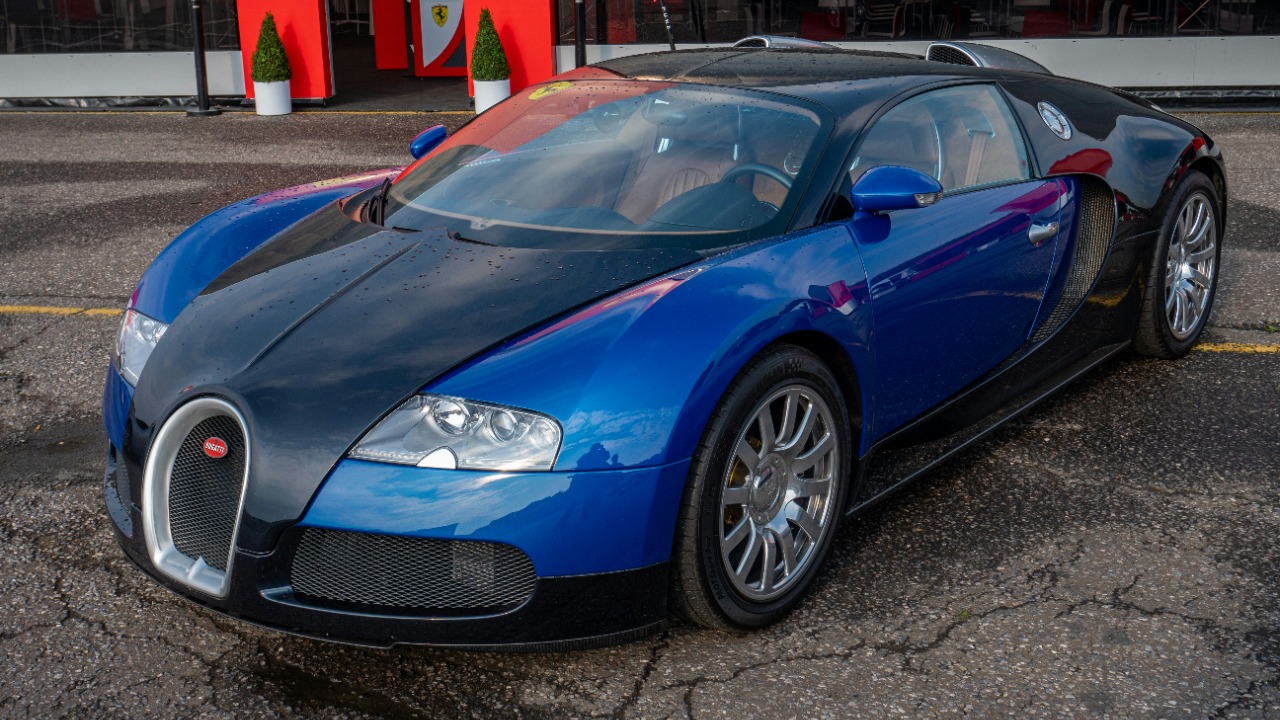
At the center of the Veyron’s physics experiment sits its engine, a powerplant that reads like a spec sheet from science fiction. The Veyron features an 8.0‑litre, quad‑turbocharged, W16 cylinder engine, effectively two narrow‑angle V8s joined together so that only four camshafts are needed. That configuration was not chosen for novelty; it was the only way to package the required displacement and turbocharging in a car that still had to carry two people and their luggage at triple-digit speeds.
Power figures that once belonged to drag strips suddenly became part of a road car’s everyday vocabulary. Bugatti’s own account of the top-speed run notes that the car delivered 1,001 PS and 1,250 newton metres of torque to reach 407 km/h, figures that forced engineers to rethink everything from lubrication to cooling. The starting point for the vehicle, however, was the engineering marvel that would propel the Veyron to previously unreachable speeds, and that in turn demanded drivetrain engineering capable of harnessing the output without shredding gears or tires.
Drivetrain, chassis and the art of containing forces
Delivering that power to the ground required a transmission and driveline that looked more like race hardware than grand-tourer equipment. Bugatti describes how the gearbox was arranged longitudinally ahead of the W16 engine and designed as a dry sump unit, a layout chosen to keep the center of gravity low and ensure oil supply under extreme acceleration. The 1,001 PS output and 1,250 newton metres of torque were distributed by a newly developed seven‑speed dual‑clutch gearbox, a system that had to shift seamlessly even as the car accelerated harder than almost anything else on the road.
Packaging that drivetrain meant rethinking the entire underbody. One detailed account of the engineering notes the use of a transmission unit constructed in within the motivate of the entrance‑axle differential, along with slicing‑edge all‑wheel‑drive hardware and a formidable air brake to stabilize the car under deceleration. The chassis itself relied on a carbon‑fiber‑reinforced cabin molded integrally with fuel tanks and rear structure, so that the occupants were carried within a rigid safety cell tied directly to the engine and rear suspension.
Aerodynamics, braking and the fight against air
At the speeds the Veyron was targeting, air stops being an invisible medium and becomes a structural load that can twist bodywork and unstick tires. Drag-racing analysis makes clear that at speeds that can exceed 200 miles-per-hour, air can exert many hundreds of pounds of force on a race car body, which is why even straight‑line machines rely on front spoilers and rear wings. The Veyron’s engineers had to tame similar forces while still delivering stability, comfort and cooling for a road car that might sit in traffic one moment and approach 400 km/h the next.
Bugatti’s own description of the final Veyron Grand Sport Vitesse La Finale notes that Bugatti engineers had to push the limits of physics and do things that had never been done before in automotive development, including active aerodynamics that changed ride height and wing angle depending on speed. The 2010 Bugatti Veyron 16.4 Grand Sport, for example, relied on its rear air brake and spoiler for almost a third of the Veyron braking force from high speed, a figure that underlines how much of the car’s stopping power came from managing airflow rather than simply fitting larger discs.
From prototype pain to a new era of hypercar physics
The Veyron that finally reached customers was the product of years of painful iteration, much of it focused on making the car stable and predictable at the edge of its envelope. Bugatti’s retrospective on its development highlights how Chassis 5.0 helped shape the legendary Veyron, serving as a rolling laboratory to prove that a car was capable of such speed while still being controllable. Engineers used that prototype to refine suspension geometry, aero balance and cooling, turning a theoretical 400‑km/h machine into something that could be handed to customers without a race team in tow.
By the time Bugatti celebrated the end of the production run, the company was clear that the project had forced it to invent solutions that would later filter into other models. At the Geneva International Motor Show, Bugatti explained that in the process of creating the Veyron, Bugatti developed completely new technical solutions, some of which later appeared in the Grand Sport Vitesse in 2012. That lineage matters because it shows how the Veyron’s extreme physics problems, once solved, became the foundation for a new generation of hypercars rather than a one‑off stunt.
The Veyron’s legacy in the age of 300‑mph dreams
The Veyron’s influence is clearest in the cars that followed it, particularly Bugatti’s own Chiron, which pushed the same ideas even further. When the Chiron set a 304.77‑mph record, engineers described how, with great power, they were forced to install sufficient aerodynamic devices and structural reinforcements simply to keep the car stable and the tires intact. Tire technology became so critical that to a Bugatti Chiron owner, the tires are the only reason theirs is the fastest street‑legal production car, since they must withstand enormous centrifugal forces for up to 10 minutes at that velocity.
The Veyron also helped normalize aerospace‑grade braking and materials in road cars that chase extreme speed. Audi’s carbon‑ceramic brake system, for instance, is designed for extreme performance and can withstand temperatures over 1,000 degrees at speeds that push beyond 200 mph, a capability highlighted in a feature on Audi braking technology. That kind of hardware, once reserved for fighter jets and race prototypes, now feels like a logical extension of the path the Veyron set, where solving for physics at the limit became the central mission rather than an afterthought.