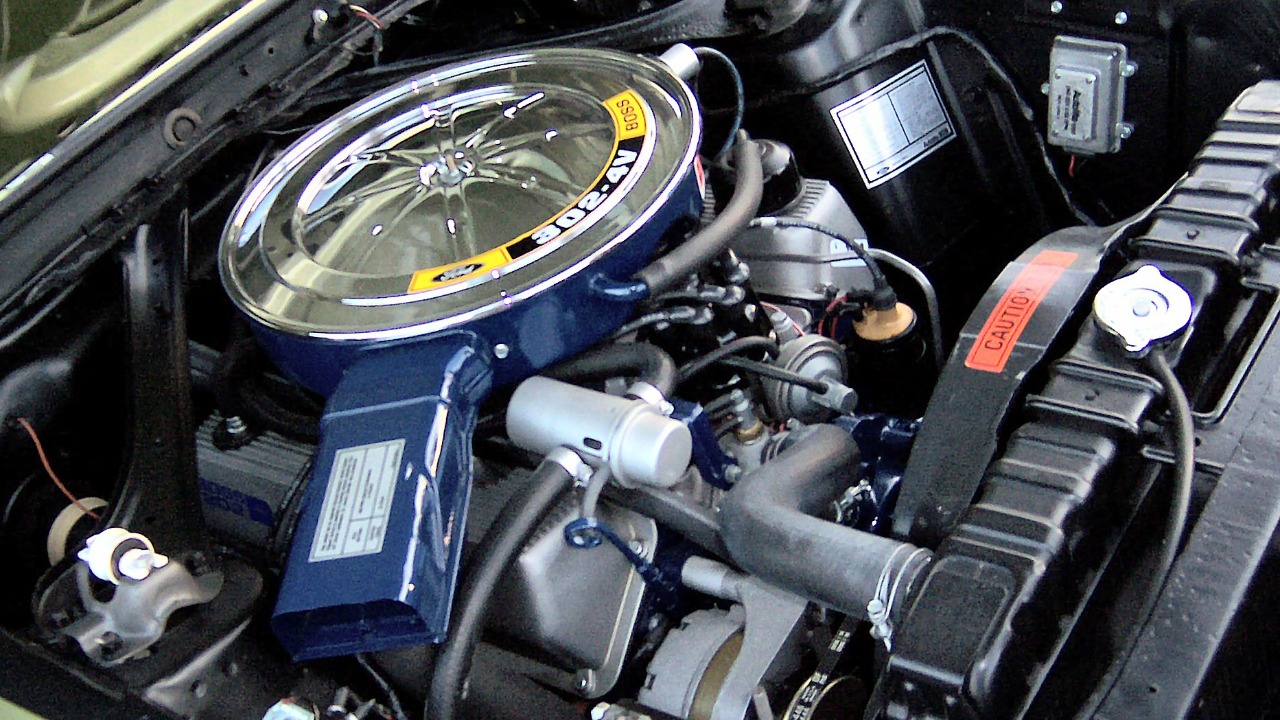
The story of Ford performance usually skips straight from the flathead era to the modern Coyote V8s, leaving a whole generation of clever, underrated engines in the shadows. Among them is a small-displacement Ford V8 that quietly powered a handful of sedans and intermediates, surprised on the street, and hinted at the brand’s NASCAR ambitions without ever getting the poster-car treatment. It never had the brute numbers of a big-block, yet it routinely embarrassed larger rivals and helped shape how Ford tuned its road cars for real-world pace rather than brochure bragging rights.
That forgotten motor matters again in an age obsessed with spec sheets and viral drag races. Its legacy lives on in how modern engineers chase usable torque, how tuners think about gearing and weight, and how enthusiasts reassess the sleepers that punched well above their official ratings.
How Ford’s quiet V8 hot rod slipped through the cracks
Ford’s muscle-era narrative usually fixates on halo cars and the biggest engines, but some of the sharpest engineering went into more ordinary sedans. One such four-door, described as a factory sleeper with clear NASCAR roots, paired a compact body with a high-winding small-block V8 that shared architecture with Ford’s stock-car programs. The car wore conservative sheetmetal and family-car trim, yet under the hood sat hardware that had been proven on high-speed ovals.
That mix of anonymity and intent helps explain why the engine itself faded from view. The sedan lacked the flamboyant stripes and spoilers that turned contemporaries into collectible icons. Buyers who wanted an obvious performance statement gravitated to coupes and fastbacks, even if the subtler four-door could match them on a back road. The V8 at its heart therefore did its best work without much fanfare, tuned for midrange pull and durability rather than headline-grabbing displacement.
Contemporary rivals followed a similar pattern. The AMC Rebel Machine, for example, took a relatively modest platform and stuffed in a big engine to challenge Detroit’s established heroes, as documented in coverage of the Rebel Machine. Ford’s approach with its sleeper sedan was more restrained on the outside but just as serious mechanically. The forgotten V8 benefited from lessons learned in long-distance racing, with breathing, lubrication, and gearing all optimized for sustained high-speed work that most owners would never see.
Over time, the market’s memory narrowed to the biggest badges and the most extreme option codes. Cars that looked ordinary, even if they carried sophisticated small-blocks, were driven hard, modified, and eventually scrapped. The engine’s reputation survived mostly in specialist circles: stock-car historians, drag racers who remembered how well the combination responded to tuning, and a handful of enthusiasts who understood that power-to-weight and gearing could outweigh sheer cubic inches.
From sleeper V8 to modern benchmark for “punching above its weight”
The core achievement of that overlooked Ford V8 was simple: it delivered more real-world pace than its spec sheet suggested. That idea has become a recurring theme in performance culture, from rally-bred imports to modern off-roaders, and it helps explain why the engine’s philosophy resonates again.
Subaru followed a similar template with the 2002 WRX, whose turbocharged flat-four made modest peak numbers but, as one detailed look at the 2002 WRX notes, routinely outperformed larger-displacement rivals thanks to torque delivery, gearing, and chassis balance. The WRX did in the early 2000s what Ford’s sleeper sedan had done decades earlier: it showed that a right-sized engine matched to a well-tuned platform could embarrass heavier, flashier cars.
Modern truck testing tells the same story in a different segment. On the punishing Ike Gauntlet towing route, a comparison of Ford vs GMC highlighted how power delivery, transmission logic, and cooling capacity matter as much as raw output when hauling at maximum weight. Trucks with smaller engines but smarter calibration often matched or beat bigger powertrains on the climb, echoing the way Ford’s compact V8 once held its own against larger big-blocks in real-world conditions.
Off-road builders have embraced the same principle. A custom build of the Tank 300 focused on gearing, traction aids, and cooling rather than chasing extreme power figures, resulting in a rig that tackled demanding terrain more effectively than its output might suggest. The lesson is identical to what Ford’s engineers learned with their small-block sedan: efficiency, traction, and durability can turn a modest spec sheet into something that feels far more potent in use.
In motorsport, this concept is almost a requirement. The long partnership between Penske and Porsche, revisited in an analysis of the Penske Porsche program, showed how meticulous integration of chassis, engine, and strategy could allow a package that looked outgunned on paper to fight for wins. Ford’s forgotten V8 grew out of that same culture of optimization. It was designed to operate efficiently within its limits, with a focus on sustained performance rather than one-off dyno glory.
What sets the Ford example apart is how directly that racing mindset filtered into an otherwise unassuming road car. The sedan’s engine used components and tuning strategies that traced back to oval-track development, including attention to oil control and airflow that allowed it to live at high rpm. For family buyers, those details translated into a car that felt relaxed at highway speeds and surprisingly eager when pushed. For enthusiasts, they meant a platform that responded well to basic modifications, from carburetor swaps to exhaust and ignition upgrades.
Why this obscure Ford V8 speaks to 2026 enthusiasts
Today’s performance market is split between high-dollar halo cars and a growing interest in lightly tuned daily drivers. The small Ford V8 that once powered an unassuming sedan fits squarely into the second camp. It shows how thoughtful engineering can make a relatively ordinary car genuinely engaging without resorting to excess.
There is also a cultural appeal. Enthusiasts have grown more interested in underdog stories and forgotten nameplates, as seen in the renewed attention around cars like the Rebel Machine and early turbocharged imports. The Ford sedan with its NASCAR-bred V8 fits that narrative perfectly. It offers the satisfaction of owning something that requires explanation, a car whose performance story is told in anecdotes rather than auction prices.
The engine’s balance of size, output, and durability also aligns with current concerns about sustainability and running costs. While no carbureted V8 is frugal by modern standards, the principle of right-sizing powertrains rather than chasing extremes feels more relevant than ever. Manufacturers now look for ways to combine smaller engines with clever gearing, forced induction, and lightweight construction. That philosophy, in spirit, is exactly what Ford pursued when it slipped a tuned small-block into a family sedan and let the results speak for themselves.
For collectors and builders, the appeal is practical as well as romantic. Period-correct parts remain accessible, the engine architecture is well understood, and the cars that carried it have not yet climbed into unattainable price territory. That combination makes the forgotten V8 an attractive foundation for restomods that keep the original character while adding modern brakes, suspension, and safety upgrades.
Where the legacy of Ford’s underrated V8 goes next
The next chapter for this overlooked engine is likely to unfold in garages and small shops rather than corporate design studios. As more enthusiasts seek out sleepers and historically significant but undervalued cars, the sedan that once hid a NASCAR-influenced V8 is poised for rediscovery. Documentation that highlights its competition links, along with surviving factory build sheets and period road tests, will help reframe it as more than just another old four-door.
More builds are likely to lean into the engine’s original strengths instead of replacing it outright. That could mean carefully refreshed small-blocks with subtle internal upgrades, paired with modern fuel delivery and ignition for reliability, all wrapped in stock-appearing bodies. The goal mirrors what off-road builders have done with platforms like the Tank 300 and what tuners did with the early WRX: preserve the core character while sharpening the edges.
More from Fast Lane Only
- Unboxing the WWII Jeep in a Crate
- 15 rare Chevys collectors are quietly buying
- 10 underrated V8s still worth hunting down
- Police notice this before you even roll window down
*Research for this article included AI assistance, with all final content reviewed by human editors