Pontiac’s history is usually told through loud V8s and bright graphics, but one of its most interesting cars arrived with neither. In the late 1960s a quiet experiment in engineering slipped into showrooms, was ignored by most buyers, and then disappeared from price guides for years. That same overlooked Pontiac has since become a magnet for collectors who care less about stripes and more about what is hiding under the hood.
The story of that car, and of the engine that defined it, tracks how the collector market is learning to value innovation as much as nostalgia. What began as a cost‑cut compact now sits in climate‑controlled garages, prized not for raw speed but for being decades ahead of its time.
The overhead-cam gamble that Detroit forgot
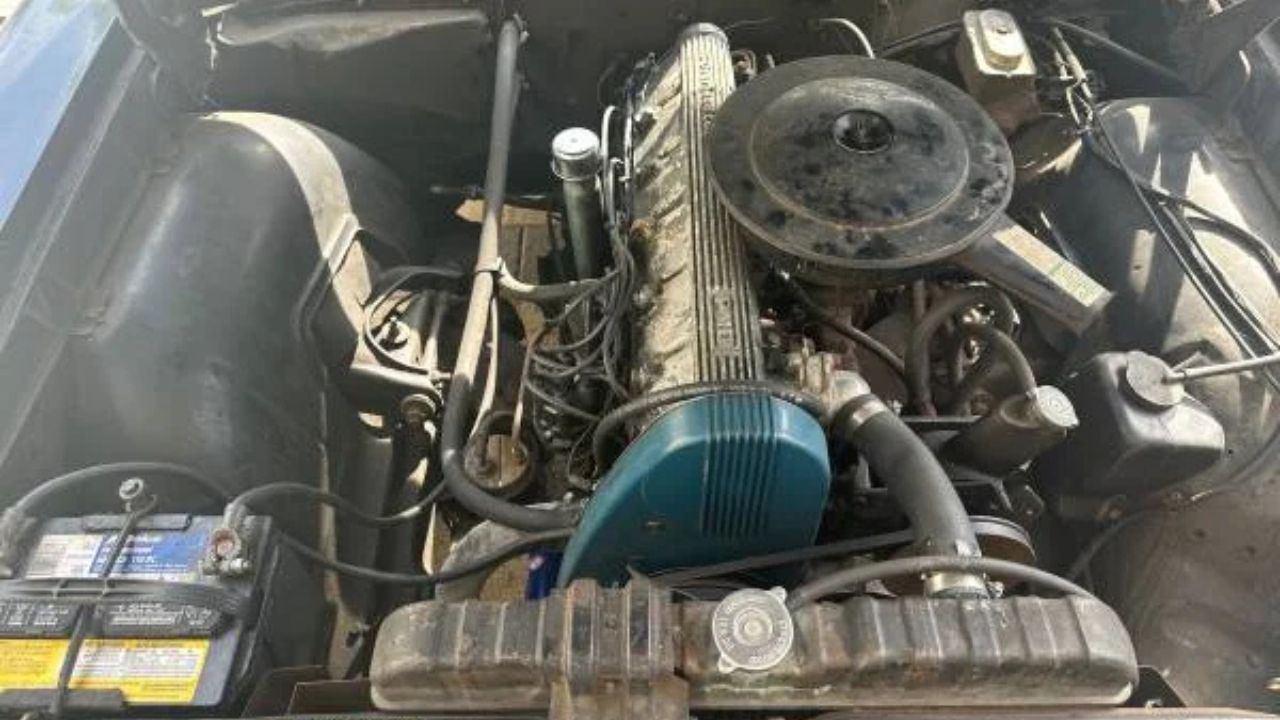
The “forgotten” Pontiac is not a single model so much as a family of cars built around one radical idea. For the 1966 model year, Pontiac developed an overhead camshaft inline‑six, a powerplant that broke sharply with Detroit’s usual pushrod formula. The engine appeared in the Tempest and LeMans, then in the new Firebird, wrapping a very modern heart in otherwise familiar sheetmetal.
Rather than the typical cam‑in‑block layout, the new six used a belt‑driven camshaft mounted in an aluminum housing on top of the cylinder head. Pontiac engineers aimed for smoother revs and better breathing at high rpm, qualities more often associated with European sport sedans than with American intermediates. The design also introduced features like a high compression ratio and, in its hotter versions, a four‑barrel carburetor and performance‑tuned cam profile that pushed output well beyond what buyers expected from a six.
Contemporary marketing tried to sell the engine as a sophisticated alternative to a small V8, but showroom traffic told another story. Muscle car shoppers wanted cubes and simple service, not a belt‑driven cam and engineering diagrams. Dealers often steered buyers toward familiar V8 options, which were easier to explain and usually paired with flashier trim packages.
In practice, the overhead‑cam six remained a niche choice. Production numbers stayed modest, and when Pontiac’s corporate priorities shifted back toward high‑volume V8s, the experiment ended after only a few years. For decades afterward, even detailed Pontiac histories gave the engine only passing mention, despite later assessments that the overhead‑cam six had introduced ideas Detroit would not fully embrace until much later.
From overlooked option code to cult favorite
The shift from forgotten hardware to sought‑after collectible did not happen overnight. For a long time, used‑car shoppers treated these Pontiacs like any other six‑cylinder base models. Many were driven hard and discarded, or had their unusual engines pulled in favor of easy‑swap small‑block V8s. Survivors with their original powertrains intact quietly dwindled.
A turning point came when enthusiasts started to reassess 1960s engineering with fresh eyes. As import performance grew in the 1990s and 2000s, the idea of a high‑revving, overhead‑cam six no longer seemed foreign. Younger collectors, raised on Japanese and European multi‑cam engines, recognized familiar thinking in Pontiac’s old design. What once looked like an oddball now read as a domestic preview of modern powertrains.
Specialists also highlighted how much bespoke hardware Pontiac had created for the project. The unique cylinder head, timing setup, and valvetrain meant that the engine was not just a tweaked version of an existing six but a ground‑up effort. That level of investment for a short‑run option impressed historians and helped reposition the cars from “cheap six” to “engineering milestone.”
On the auction side, the pattern followed a familiar curve. Clean V8 GTOs and Firebirds climbed first, pulling the entire brand upward. As prices for those halo models rose beyond reach, attention drifted to adjacent variants. Enthusiasts who still wanted a period‑correct Pontiac but could not justify a premium for a big‑block car began to look at six‑cylinder examples, especially those with the overhead‑cam option and original documentation.
Clubs and online forums accelerated the change. Owners shared data on production totals, option combinations, and surviving cars, demonstrating just how few unmodified examples remained. That scarcity, combined with the engine’s technical story, created the ingredients for a cult following. What had been an obscure option code on a build sheet became a bragging point at shows.
Why this obscure Pontiac speaks to collectors now
The newfound respect for these cars reflects a broader change in how enthusiasts assign value. Traditional American muscle collecting often focused on displacement, straight‑line speed, and visual drama. The overhead‑cam Pontiacs offer none of the usual cues. Their appeal lies instead in engineering curiosity, period context, and the sense of owning a roadgoing prototype.
For many collectors, the draw is that these cars bridge two eras. They sit at the tail end of Detroit’s horsepower race, yet their engine architecture looks forward to the efficiency‑minded designs that would dominate later decades. That dual identity makes them attractive to both traditional muscle fans and those who approach cars as industrial design artifacts.
There is also a generational element. Enthusiasts who grew up with overhead‑cam fours and sixes in everyday cars do not see the Pontiac layout as exotic or intimidating. To them, the risk lies more in parts availability than in basic technology. That shift lowers the psychological barrier to ownership compared with earlier decades, when a belt‑driven cam under a domestic hood felt alien.
At the same time, the cars still carry the visual language of classic Detroit iron. A Firebird or LeMans with the overhead‑cam six looks nearly identical to its V8 sibling from the curb. That combination of familiar styling and unusual mechanicals lets owners enjoy the presence of a 1960s Pontiac while telling a different story when the hood is raised.
Market behavior suggests that collectors increasingly reward that kind of story. Provenance, engineering significance, and rarity now compete with raw performance as reasons to pay a premium. The overhead‑cam Pontiacs check all three boxes. They represent a bold but brief engineering detour, they survive in relatively small numbers, and they offer a talking point that even seasoned muscle car fans do not always expect.
Preservation, parts, and the road ahead
The future for these cars depends on two practical questions: how many can be preserved, and how hard they are to keep running. Because so many lost their original engines, the pool of authentic examples is finite. Collectors who own numbers‑matching cars have become increasingly protective, often choosing careful preservation over heavy modification.
Parts support remains a challenge. The engine’s unique top end means that some components cannot be substituted from other Pontiac sixes or V8s. Owners rely on a mix of new‑old‑stock pieces, small‑batch reproduction runs, and creative repair techniques. As interest grows, specialty suppliers have begun to treat the overhead‑cam six as a viable niche, but the ecosystem is still fragile compared with mainstream V8 support.
That fragility may actually reinforce the cars’ appeal. Knowing that an engine requires research, networking, and mechanical sympathy creates a sense of stewardship. Owners often describe themselves less as drivers and more as caretakers for a piece of experimental history. The community that has formed around the cars tends to share technical knowledge freely, since every successful repair helps preserve the group’s shared asset.
Looking ahead, the cars also occupy an interesting position in a collector world that is slowly pivoting toward electrification. As new performance vehicles move away from internal combustion, historically significant engines gain symbolic weight. The overhead‑cam Pontiac six, with its blend of efficiency ambitions and performance intent, fits neatly into that narrative as an early attempt to rethink how power could be made cleaner and smoother without abandoning character.
Values are unlikely to match the most coveted GTOs or Trans Ams, which benefit from broader name recognition and racing pedigree. Yet the trajectory points upward. As more collectors discover how advanced the engineering really was, and as surviving examples become better documented, the cars are moving from curiosity to recognized subcategory within the Pontiac world.
More from Fast Lane Only
- Unboxing the WWII Jeep in a Crate
- 15 rare Chevys collectors are quietly buying
- 10 underrated V8s still worth hunting down
- Police notice this before you even roll window down
*Research for this article included AI assistance, with all final content reviewed by human editors