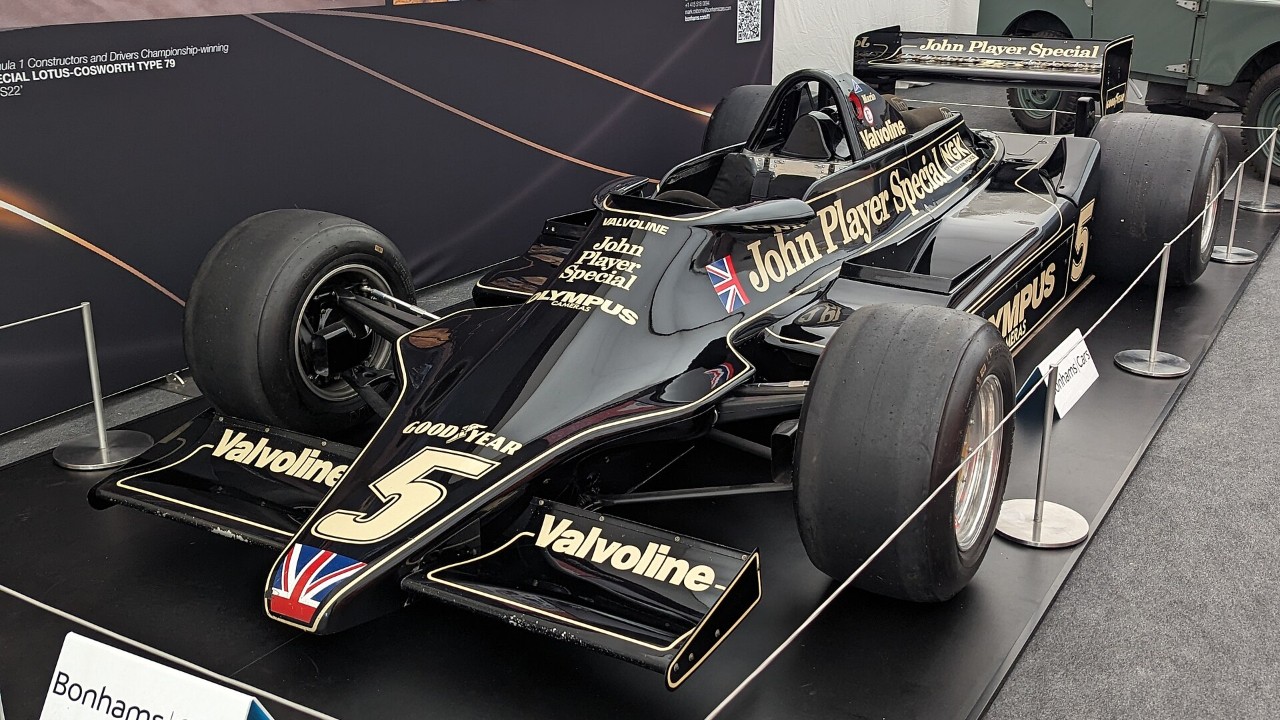
The Lotus 79 won six Formula 1 Grands Prix in 1978 and made Mario Andretti world champion. It did that by treating the whole car as a wing turned upside down. Rivals spent the next season catching up.
Lotus had already tried the idea on the Type 78 a year earlier. The 79 took it much further. Andretti won five races in the black and gold car, and teammate Ronnie Peterson won one more.
Together, the two drivers finished first and second in the championship. Lotus also took the constructors’ title.
How the Lotus 79 used ground effect
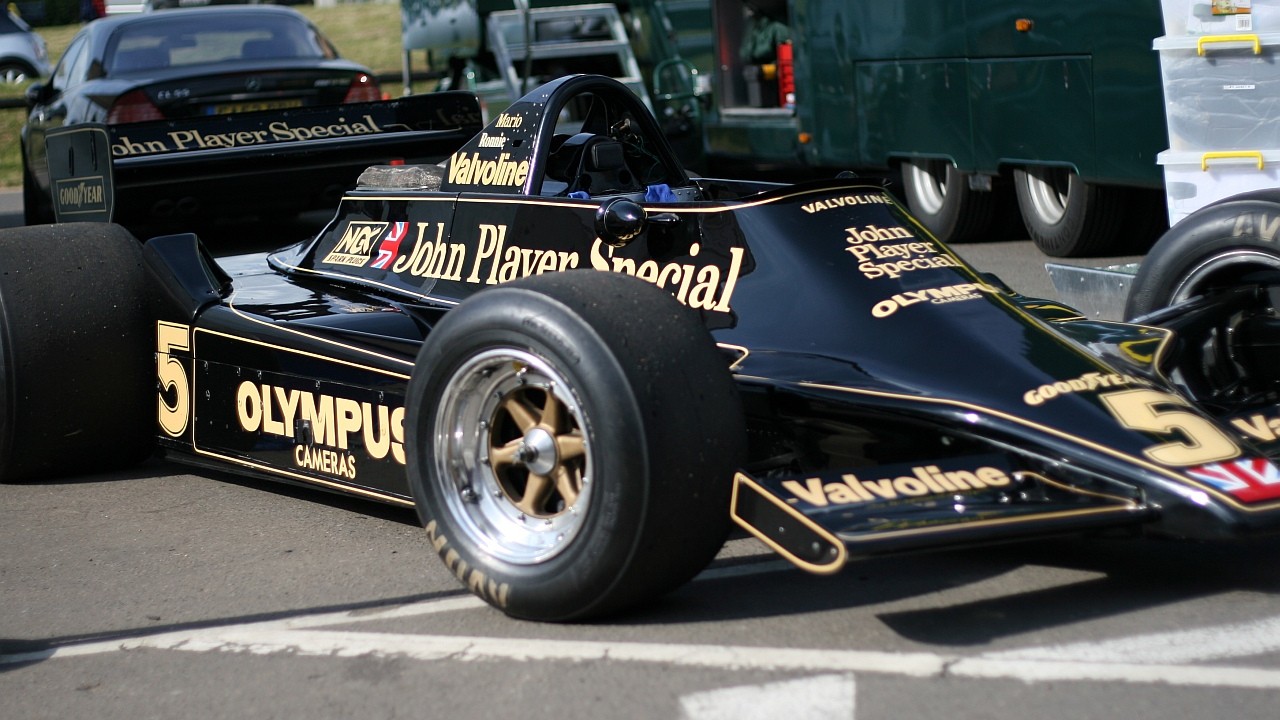
Lotus explains the principle on its own heritage page for the Type 79. A normal wing lifts an airplane off the ground. Instead, Lotus shaped the 79’s sidepods like an inverted wing, so the air pulled the car down toward the track.
Long, narrow skirts hung from the bodywork and touched the road. Because they sealed the sides, they kept outside air from leaking in under the car. That created a low-pressure zone beneath it, which held the Lotus to the track through corners.
Motor Sport magazine adds a detail from the paddock. According to Paul Fearnley’s history of the 79’s debut, Lotus copied the sliding “board in a box” skirts that Harvey Postlethwaite had designed for the Wolf WR5. In addition, the stronger ground effect demanded stiffer springs as the car developed.
Andretti already understood the principle when the new car arrived, Motor Sport says, because he had driven the 78. However, the idea was hard to get right. Motor Sport notes that the S-shaped skirts on the later Type 80 jammed.
Who designed it, and what powered it
Colin Chapman led the project at Team Lotus. A Supercars.net history of the car names Martin Ogilvie, Tony Rudd and Peter Wright as part of the team that worked on the ground-effect scheme. By comparison, Ralph Bellamy had drawn the earlier Type 78, according to Motor Sport.
Meanwhile, the engine was nothing exotic. The 79 used the Cosworth DFV. Peter Wright called it a “bog standard DFV” in Motor Sport’s account. Supercars.net lists a Hewland FG400 gearbox and says the engine was red-lined at just over 10,000 rpm.
That matters to the story. The engine was off the shelf, so the 79’s advantage came from its shape. In other words, Lotus won 1978 with airflow.
The Lotus 79 debut at Zolder
The car first raced in March 1978 at the non-championship International Trophy at Silverstone, according to Motor Sport. Its World Championship debut came at the Belgian Grand Prix at Zolder.
Andretti took pole there by eight-tenths of a second, Motor Sport says. Then he led from start to finish and won by about 10 seconds. Lotus notes that Peterson finished second in his older Type 78 after a slow pit stop.
That set the pattern for the season. Lotus says the Type 79 went on to score several one-two finishes, the last of them at the Dutch Grand Prix.
Six wins, one title
Andretti won the Belgian, Spanish, French, German and Dutch Grands Prix in the 79. Peterson won the Austrian Grand Prix in his, according to the car’s race record on Wikipedia. Supercars.net counts the same split: five wins for Andretti in the 79 and one for Peterson.
Lotus won two other races that year, but not with this car. Motor Sport says Andretti and Peterson each scored one 1978 win in the older Type 78. So the 79’s own total is six, exactly as Lotus counts it.
Andretti finished the year as world champion, with Peterson runner-up 13 points behind, according to Lotus. Lotus still calls the car “Black Beauty” on its heritage page today.
What happened in 1979
The 79 raced on into 1979, but its edge was gone. Lotus says rivals had built their own ground-effect cars by then. The team switched to dark green Martini colors, and Carlos Reutemann joined Andretti.
That color change was a milestone of its own. In fact, Lotus says the 1979 car was the first Team Lotus Formula 1 car in green since early 1968. Still, the new paint could not bring back the advantage the black car had enjoyed a year earlier.
Meanwhile, Lotus waited on its next design, the Type 80. Even so, the 79’s 1978 record still stands in the Lotus books: six Grands Prix, the drivers’ title for Andretti and the constructors’ championship with 86 points.
More from Fast Lane Only
- Unboxing the WWII Jeep in a Crate
- 15 rare Chevys collectors are quietly buying
- 10 underrated V8s still worth hunting down
- Police notice this before you even roll window down
This article was created with the help of AI and was reviewed and edited by Fast Lane Only editors before publication.