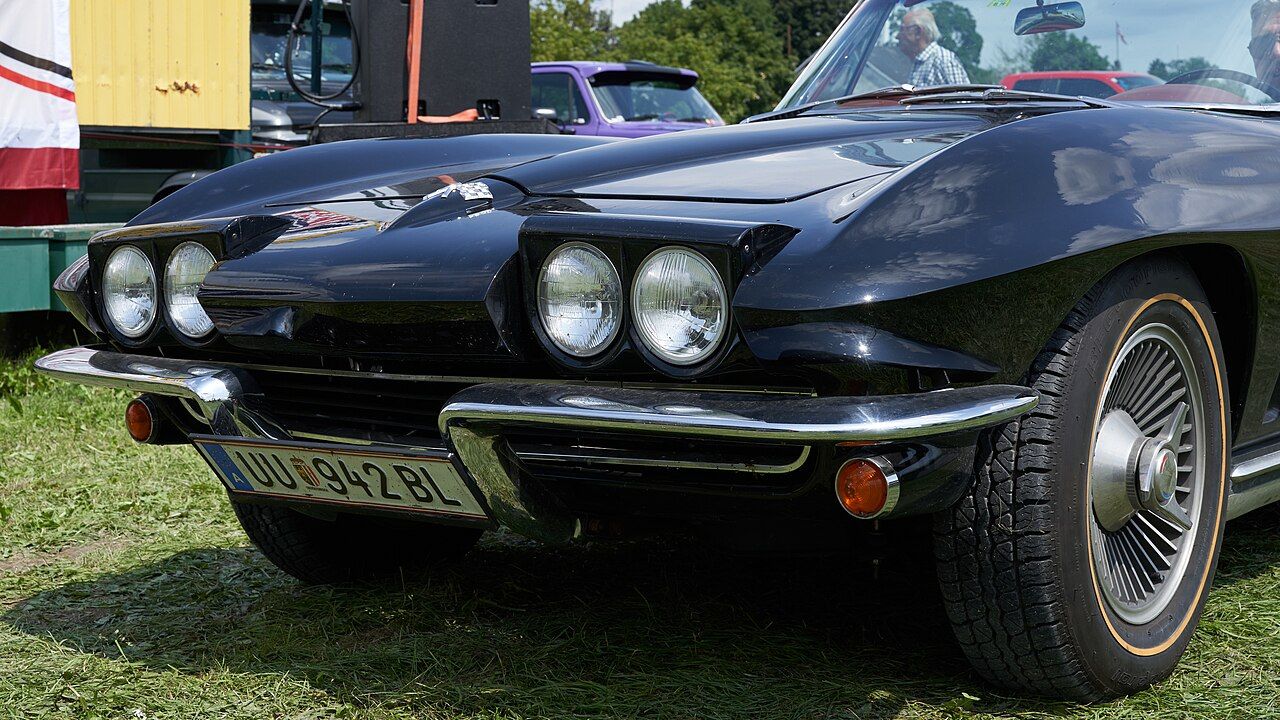
Pop-up headlights once defined some of the most iconic cars ever built. From sleek Japanese sports coupes to American and European performance machines, they gave vehicles a dramatic, almost living expression. When the lights rose from the bodywork, the car felt transformed. Yet today, they have almost completely vanished. The official explanations—safety regulations, cost, and aerodynamics—only tell part of the story. The real reason is a mix of engineering compromise, changing crash laws, and shifting automotive priorities that quietly made them impractical.
What replaced them wasn’t just a different design choice. It was a full shift in how cars are engineered from the ground up.
The idea that made pop-up headlights so attractive
Pop-up headlights became popular in the 1960s and 1970s because designers wanted a way to create low, aerodynamic front ends without sacrificing lighting requirements.
At the time, regulations required headlights to be a specific height and shape, which clashed with the emerging trend of wedge-shaped sports cars. The solution was simple but clever: hide the headlights inside the body and expose them only when needed.
Cars like the Mazda RX-7 and the Chevrolet Corvette C4 used pop-up headlights to achieve a smooth nose while still meeting legal lighting requirements.
For designers, it was a perfect compromise between aesthetics and regulation.
Aerodynamics were only part of the story
One of the most common explanations for pop-up headlights is aerodynamics. When closed, they allowed a smooth front surface with reduced drag.
But in reality, the aerodynamic advantage was often smaller than enthusiasts assume. Many pop-up headlight mechanisms created slight gaps, uneven surfaces, or bulky housings underneath the skin. In some cases, fixed aerodynamic headlamp covers achieved similar results without mechanical complexity.
The real advantage was visual design freedom, not just airflow efficiency.
Crash safety rules changed everything
The most important factor in the disappearance of pop-up headlights was evolving crash safety regulations.
Modern pedestrian safety standards require vehicle front ends to be more forgiving in impacts. Pop-up mechanisms introduce rigid components, hinges, and cavities that complicate crash absorption design.
As safety testing became stricter, engineers found it increasingly difficult to integrate pop-up systems without compromising structural integrity or adding weight.
Fixed headlights allowed more predictable energy absorption zones and simpler compliance with global safety standards.
The hidden engineering problem: reliability
Pop-up headlights rely on motors, gears, linkages, and electrical systems. While simple in concept, they add multiple failure points to a part of the car that must work every time.
Over time, exposure to moisture, dirt, and temperature changes caused common issues such as misalignment, sticking mechanisms, and motor burnout.
Even when reliability was acceptable, manufacturers began questioning whether the added complexity was worth it for a feature that had no functional benefit beyond styling.
Cost pressure quietly killed them
As automotive production scaled globally, cost efficiency became a dominant design factor.
Pop-up headlights required:
- Additional motors and actuators
- Reinforced housings
- Complex sealing systems
- Extra assembly steps
Fixed headlights eliminated all of this. They could be installed as modular units, reducing manufacturing time and warranty risk.
In an industry where small cost differences matter across millions of vehicles, pop-up systems became difficult to justify.
Aerodynamics evolved beyond pop-ups
One of the most overlooked reasons pop-up headlights disappeared is that modern cars no longer need them for aerodynamic compliance.
Advances in lighting technology, particularly compact projector lenses and LED systems, allow designers to create low-drag front ends without moving parts.
Instead of hiding headlights mechanically, engineers simply integrated them into sculpted housings that meet airflow and safety requirements at the same time.
This removed the original reason pop-ups existed in the first place.
Lighting technology made them obsolete
Early headlight regulations required large sealed-beam units that limited design flexibility. Pop-up headlights solved this restriction by hiding the bulky components.
But as lighting technology evolved—first with composite headlamps, then HID systems, and finally LEDs—headlight units became smaller, flatter, and more adaptable.
Modern systems can be shaped to fit almost any design without requiring concealment.
Once headlights stopped being visually restrictive, pop-ups lost their purpose.
Pedestrian safety became the final push
Modern pedestrian impact standards require vehicles to minimize hard points on the front fascia. Pop-up headlights introduce structural components that are difficult to fully soften or deform safely.
Fixed, flexible headlight assemblies allow engineers to design controlled crumple zones and reduce injury risk in collisions.
As global regulations aligned around pedestrian safety, pop-up systems became increasingly incompatible with new requirements.
The design culture also shifted
In the 1980s and early 1990s, pop-up headlights symbolized futuristic design. But automotive styling eventually moved toward more integrated, continuous surfaces.
As brands adopted a global design language focused on consistency and recognizability, animated features like pop-up headlights were seen as unnecessary complexity.
Even sports cars began favoring permanent, sculpted lighting signatures over mechanical theatrics.
Why enthusiasts still miss them
Despite their disappearance, pop-up headlights remain deeply nostalgic because they added personality to motionless cars. A parked vehicle could still feel expressive when the lights were raised or lowered.
That sense of interaction between machine and driver is rare in modern design, where most features are static or digital.
Cars like the Mazda RX-7 and the Chevrolet Corvette C4 are still remembered partly because of that mechanical drama.
The real reason they disappeared
The hidden truth is that pop-up headlights didn’t fail because of one problem. They disappeared because every major automotive trend moved against them at once.
Safety regulations demanded smoother, more forgiving front ends. Lighting technology made concealment unnecessary. Manufacturing efficiency punished complexity. And design language shifted toward permanence over motion.
Once all of those forces aligned, pop-up headlights no longer fit into modern automotive development.
When engineering beauty meets practical reality
Pop-up headlights were a perfect example of engineering creativity solving a temporary problem in a very elegant way. They existed in a narrow window where regulations, technology, and design goals overlapped just right.
As soon as that window closed, they became an unnecessary complication in a world that no longer needed them.
Today, they remain one of the most beloved reminders that sometimes the most iconic automotive features are not the ones that last—but the ones that briefly made perfect sense.
More from Fast Lane Only
- Unboxing the WWII Jeep in a Crate
- 15 rare Chevys collectors are quietly buying
- 10 underrated V8s still worth hunting down
- Police notice this before you even roll window down
*Research for this article included AI assistance, with all final content reviewed by human editors