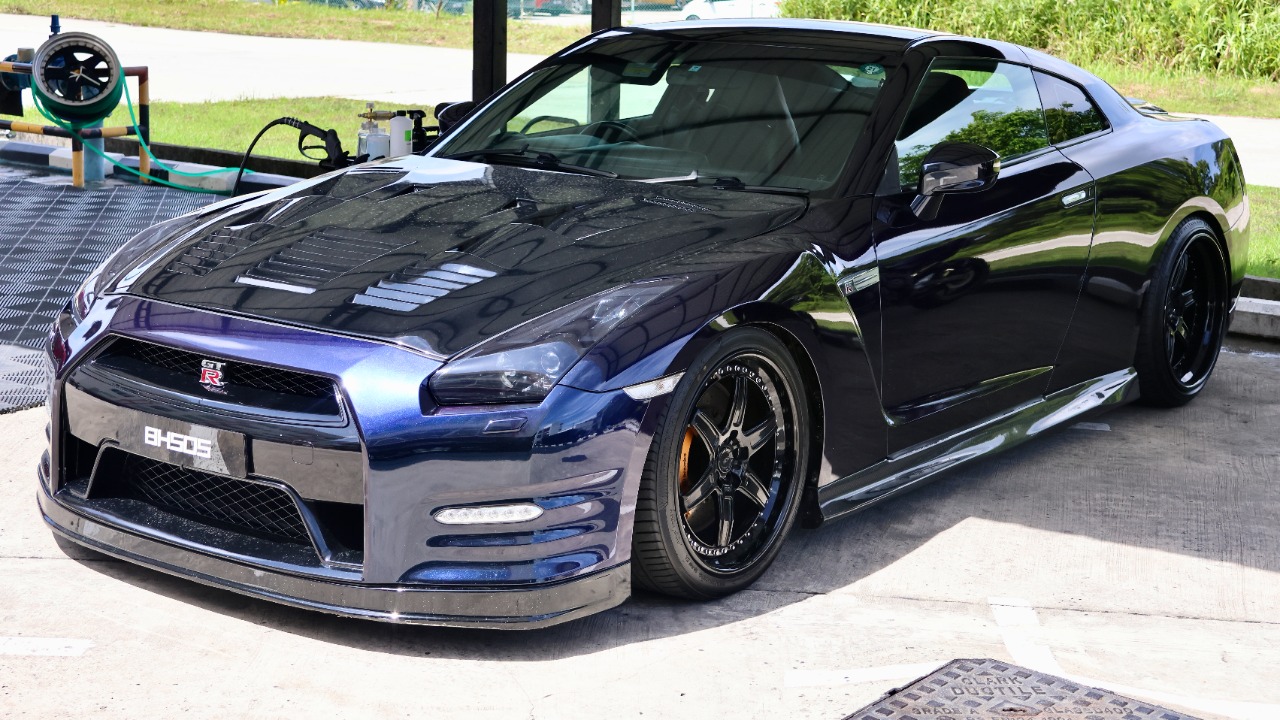
The Nissan GT-R R35 arrived as a numbers car, but it stayed relevant because it kept bending those numbers to its will. Across more than a decade, it turned a hand-built V6 into a platform that could humble supercars in stock form and chase four-figure dyno sheets in the hands of tuners. The result is a machine that did not just chase horsepower headlines, it quietly reset what road-legal performance could look like.
To understand how the R35 rewrote the horsepower rulebook, I have to start with the engine that made it possible, then follow the trail from factory development to the wildest builds on the planet. Along the way, the same core ingredients keep resurfacing: meticulous engineering, conservative official outputs, and a chassis that seems to invite ever more power without losing its composure.
The VR38DETT: a supercar killer hiding in plain sight
The heart of the R35 story is the VR38DETT, a 3.8 litre twin turbo V6 that was engineered from day one to punch far above its spec sheet. Rather than chasing displacement, Nissan focused on efficiency and durability, building an engine that could live comfortably at high boost and high load. Each unit is hand assembled, which gives the powerplant an almost race engine level of attention before it ever leaves the factory.
That philosophy is clear in the way the VR38DETT uses advanced construction, including plasma sprayed cylinder liners and a block and head package designed to keep temperatures and friction under control even when the turbos are working hard. Those details help explain why the engine quickly earned a reputation as a supercar killer, capable of humbling far more exotic machinery around the track. The same traits that make it devastating in stock form also give tuners a deep well of headroom to explore.
Factory power: conservative numbers, explosive performance
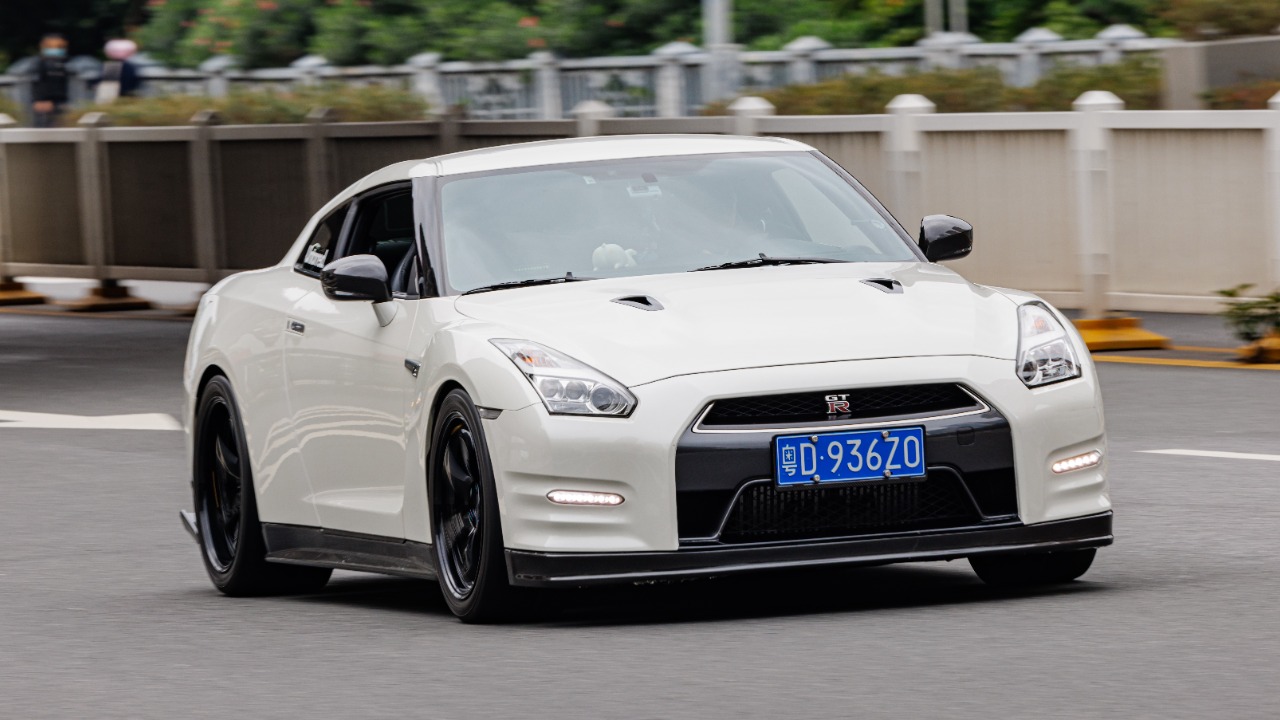
From the factory, the R35 never chased the most outrageous headline figure, yet its official outputs have always told only part of the story. At the heart of the latest Nissan GT-R lies a hand assembled 3.8-litre VR38DETT twin turbocharged V6, producing 565 horsepower in standard guise and 600 hp in the NISMO edition. Those figures are impressive on paper, but the way the car deploys them, with all wheel drive traction and rapid dual clutch shifts, is what made the GT-R feel like it was bending physics for everyday drivers.
NISSAN itself highlights that the current GT-R offers up to 565 Horsepower and 467 Lb-ft of Torque, and instead of a large engine thirsty for fuel, it relies on that compact twin turbo V6 to deliver supercar pace. In Nismo trim, the R35 pushes further, with the Nismo GT-R (Nissan R35) described as having a staggering 600 horsepower at its disposal, a figure that helps explain why it is counted among the most revered supercars of the modern era. In practice, those conservative factory ratings became a baseline that owners and tuners quickly learned they could exceed.
Nismo Edition: the factory’s own horsepower escalation
The Nismo Edition represents the moment Nissan itself leaned into the GT-R’s tuning potential and turned it into an official product. Rather than a cosmetic package, it is treated as The Nissan Supercar, with They pouring a massive amount of research, engineering, and testing into development. Under the hood, the Nismo Edition uses a more aggressively tuned version of the VR38DETT, revised turbochargers, and track focused calibration to sharpen every response.
That work translates into a car that not only adds power but also delivers it with startling immediacy, which is why the Nismo Edition is credited with a zero to sixty time of 2.5 seconds. The way the factory Nismo GT harnesses its output shows how far Nissan was willing to push its own platform, and it set a template for how much performance could be extracted while retaining full road legality and warranty support. The official description of the Nismo Edition as The Nissan Supercar underlines how the brand saw this model as a halo for its engineering capabilities.
From 600 hp to 3,500 bhp: the tuner arms race
Once the aftermarket got comfortable with the VR38DETT, the R35 became a canvas for some of the most extreme builds in the world. What began as bolt on upgrades and mild tunes quickly escalated into full engine builds, upgraded internals, and enormous turbochargers. The same robustness that allowed the stock engine to run hard on track also meant it could be reinforced and pushed to power levels that would have seemed absurd when the car first launched.
The clearest example of that escalation is the Extreme Turbo System Nissan R35 built for Gidi, which has been described as the World’s Most Powerful Nissan GT with a claimed 3500 bhp. Under the skin of Gidi’s Extreme Turbo System Nissan, virtually every component has been reworked to handle the strain, turning the car into an absolute monster that still traces its lineage back to the original VR38DETT block. That build, highlighted as the World’s Most Powerful Nissan GT, shows how far tuners have been able to stretch the platform, taking the R35 from a 565 horsepower road car to a 3500 bhp drag weapon while retaining the same basic architecture.
How the R35 changed expectations for road-legal speed
What makes the R35’s horsepower story so significant is not just the peak numbers, but how accessible that performance became. At the heart of the latest GT-R, the hand assembled VR38DETT gives the Nissan GT a foundation that can be enjoyed in daily driving yet scaled up for serious track work. At the heart of the latest GT-R (Nissan GT-R) lies that same 3.8-litre VR38DETT twin turbocharged V6, producing 565 horsepower in standard guise and 600 hp in the NISMO edition, which means even the showroom versions sit in territory that used to be reserved for limited run exotics.
As a result, the R35 helped normalize the idea that a road legal car could deliver supercar acceleration, run lap times that embarrassed more expensive rivals, and still offer four seats and usable luggage space. With a staggering 600 horsepower at its disposal in Nismo GT form, and a platform that tuners have pushed to 3500 bhp, the Nissan R35 has shown that the gap between road car and race car can be much narrower than it once was. In that sense, the GT-R did more than chase horsepower records, it reset the expectations of what a modern performance car could be, from the first time Each owner felt the turbos hit to the latest builds that keep rewriting what is possible.