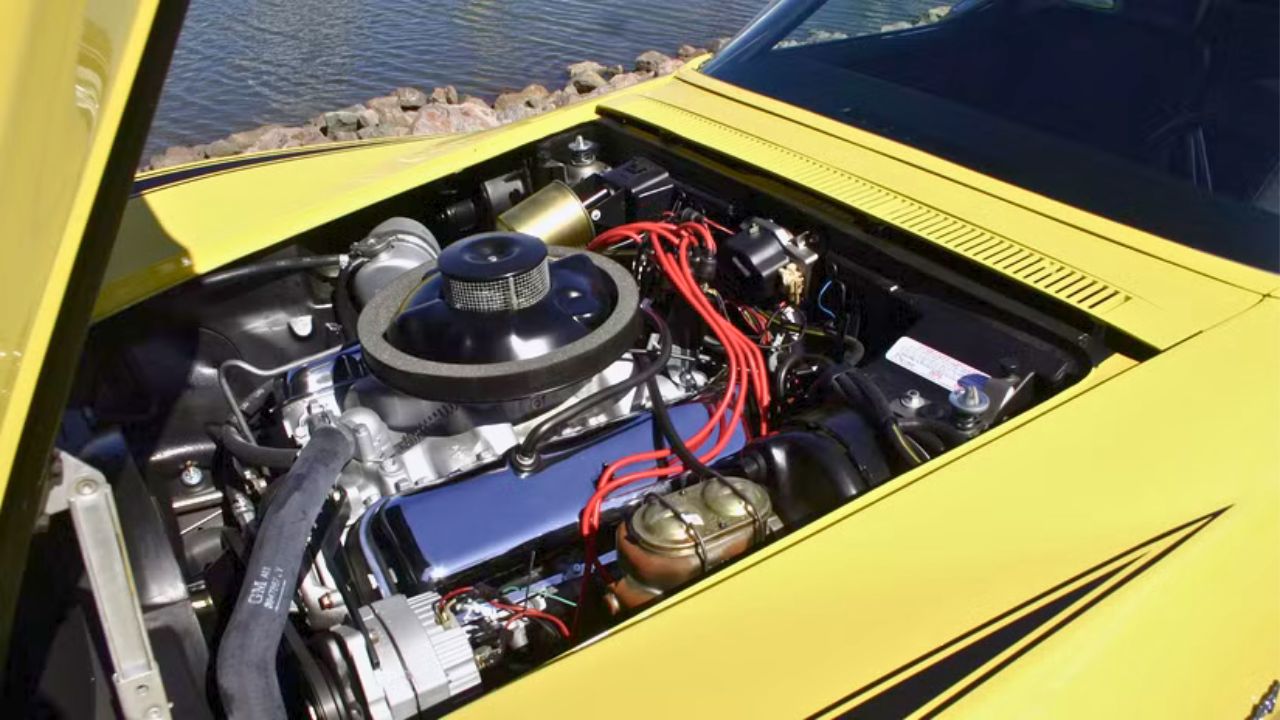
When people talk about legendary big-block Corvettes, the conversation usually starts with the L88. That engine already had a terrifying reputation thanks to massive horsepower, brutal road manners, and race-ready engineering. But hidden even deeper in Chevrolet history was something even rarer — the 1969 ZL1 Corvette engine package. While the Camaro ZL1 became famous among muscle car fans, the Corvette version quietly slipped into automotive mythology. Many enthusiasts spent decades barely knowing it existed, which only added to the mystery surrounding one of Chevrolet’s wildest creations.
The late 1960s were the peak of America’s horsepower wars. Automakers battled for street dominance with giant V8 engines, aggressive styling, and quarter-mile bragging rights. Chevrolet was already pushing limits with the Corvette, but the ZL1 program went even further. This was not a comfortable sports car built for casual cruising. It was essentially a race engine wrapped inside a Corvette body and somehow approved for public roads.
What made the ZL1 engine so special
The heart of the ZL1 story was its incredible 427 cubic-inch V8 engine. Officially rated at 430 horsepower, the real output was believed to be far higher — likely around 500 horsepower or more in factory form. Chevrolet intentionally underrated the engine because insurance companies were already panicking over rising horsepower numbers, and racers liked keeping real performance figures quiet.
What separated the ZL1 from the already fearsome L88 was its aluminum construction. Instead of using a traditional iron block, Chevrolet engineers created a lightweight aluminum version that dramatically reduced weight over the front wheels. That change improved handling, acceleration, and overall balance. In simple terms, the Corvette became even faster and sharper while carrying less weight.
The engine itself was extremely advanced for its era. It featured aluminum cylinder heads, a high-performance camshaft, solid lifters, and race-inspired internal components designed for maximum performance at high RPM. This was not the kind of engine built for smooth grocery runs or quiet highway cruising. It wanted to run hard, loud, and fast.
Even starting the car could feel dramatic. The idle was rough, fuel consumption was terrible, and the engine demanded serious attention from the driver. It behaved more like a race car than a luxury sports coupe.
Why almost nobody bought one
The biggest problem with the ZL1 Corvette was simple: cost.
To get the ZL1 engine in 1969, buyers first had to order the expensive L88 performance package. After that, they needed to pay thousands more for the aluminum-block ZL1 option itself. The final price pushed the Corvette into territory occupied by exotic European sports cars, which felt almost absurd for a Chevrolet at the time.
Worse yet, buyers paid all that money for a car with almost no comfort features. Air conditioning was unavailable. Radios were often deleted. The engine required high-octane fuel and constant attention. Driving one daily would have felt like living with an angry thunderstorm trapped under the hood.
Most customers simply walked away. Dealers struggled to justify the cost, and only the most hardcore performance enthusiasts even considered ordering one. That extreme rarity eventually turned the ZL1 Corvette into one of the most desirable muscle cars in existence.
The incredibly tiny production numbers
Part of what makes the 1969 Corvette ZL1 so legendary is just how few were built. Experts generally agree only two factory-produced ZL1 Corvettes officially existed. That tiny production number instantly placed the car among the rarest Corvettes ever created.
Because documentation from the era was limited and confusing, rumors about additional ZL1 Corvettes floated around for years. Some enthusiasts believed more were secretly produced, while others questioned whether the cars existed at all. Over time, historians and collectors confirmed the factory-built examples were very real, which only increased their mystique.
Today, surviving ZL1 Corvettes are treated more like priceless museum pieces than ordinary collector cars. They rarely appear in public, and when they do, crowds gather immediately. The combination of extreme rarity, racing pedigree, and raw performance turned the ZL1 into a holy grail for Corvette collectors.
A driving experience that bordered on insanity
Modern performance cars are fast, but they are also packed with stability control, traction systems, and electronic safety aids. The 1969 ZL1 Corvette had none of that. Drivers got massive horsepower, skinny tires, and pure mechanical chaos.
Contemporary reports described the car as brutally quick with explosive acceleration that demanded total concentration. The lightweight aluminum engine made the front end feel more responsive, but the car still behaved like a barely tamed muscle machine. At full throttle, the Corvette delivered violent power with almost no electronic interference to save careless drivers.
The sound alone became legendary. The ZL1’s aggressive camshaft and high-performance exhaust produced a deep, angry roar that sounded closer to a race car than a traditional street Corvette. Even at idle, the engine announced itself loudly.
Fuel economy barely mattered. Comfort barely mattered. The ZL1 existed for one reason: speed. In many ways, it represented the absolute peak of the muscle car era before emissions regulations and insurance crackdowns started choking horsepower across the industry.
Why the ZL1 Corvette still fascinates collectors today
Part of the ZL1 Corvette’s appeal comes from its mystery. Unlike more famous muscle cars that appeared in magazines and commercials constantly, the ZL1 almost disappeared into the shadows. That secrecy made enthusiasts even more obsessed with uncovering its story.
Collectors also appreciate how extreme the car was for its time. Chevrolet essentially built a race-ready aluminum big-block Corvette during an era when most performance cars still relied heavily on heavy iron engines and basic suspension setups. The ZL1 pushed engineering boundaries in ways many competitors could not match.
Today, these Corvettes are worth staggering amounts of money whenever they appear at auction. Their value comes not only from rarity, but from what they represent: an era when American automakers built outrageously powerful cars with very few compromises.
The 1969 Corvette ZL1 was expensive, impractical, difficult to drive, and wildly excessive. Naturally, that is exactly why enthusiasts still love it more than fifty years later.
More from Fast Lane Only