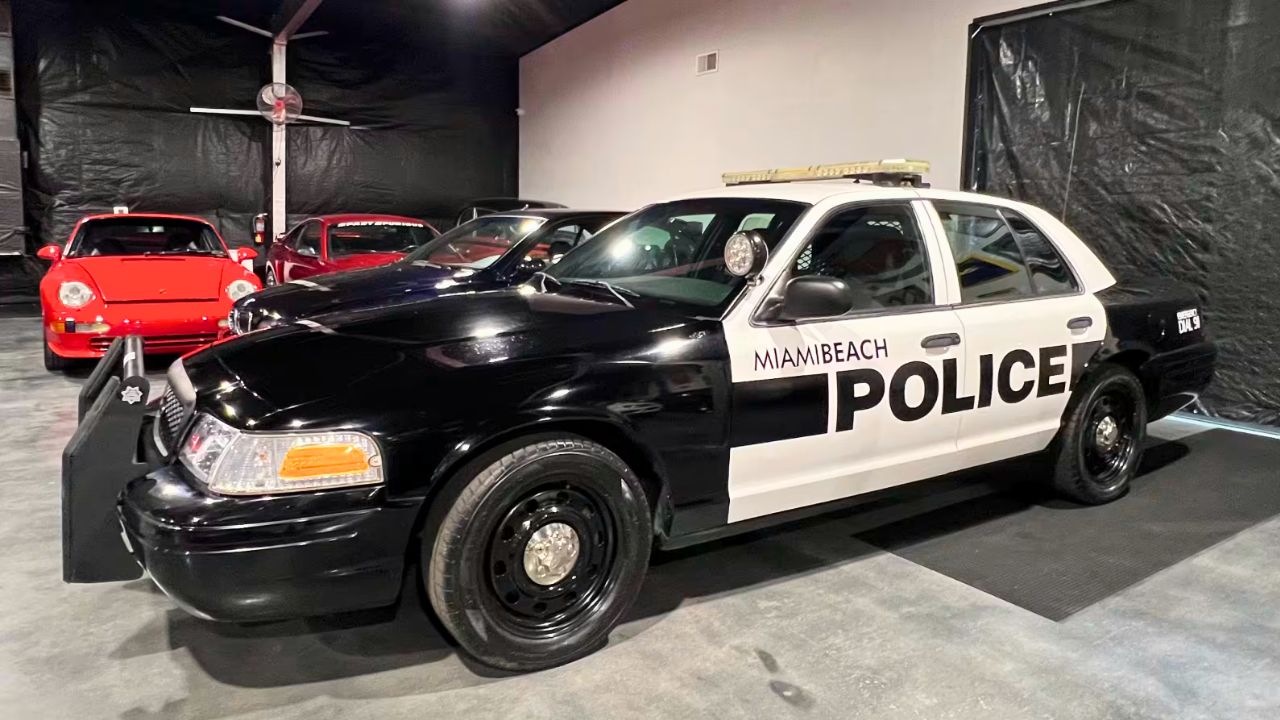
For decades, the Ford Crown Victoria Police Interceptor became the king of police cruisers across America. From big cities to tiny rural towns, these sedans handled pursuits, traffic duty, long idle hours, and rough daily punishment that would destroy most civilian cars. While people often remember the Crown Vic for its tough body-on-frame construction and durable V8 engine, one of the biggest reasons it survived police work so well was its heavy-duty engine cooling system.
Police vehicles live brutally hard lives compared to normal commuter cars. A civilian sedan might spend most of its time cruising calmly on highways. A police interceptor, meanwhile, could idle for hours in summer heat, launch into sudden high-speed chases, jump curbs, and then immediately return to sitting still with emergency lights blazing. That constant cycle of stress creates enormous heat under the hood.
Ford understood early that ordinary cooling systems simply would not survive those conditions reliably.
Police duty created extreme heat problems
Heat is one of the biggest enemies of engine longevity. The harder an engine works, the more heat it produces, and police vehicles spend huge amounts of time under heavy load. Long idle periods are especially brutal because airflow through the radiator decreases while the engine continues generating heat.
During a pursuit, temperatures climb even faster. The engine, transmission, power steering system, and air conditioning all work aggressively at once. Add hot weather into the mix, and cooling becomes absolutely critical.
Many civilian cars are designed around average driving habits. Police interceptors are not average. Officers could spend entire shifts with engines running continuously. In some departments, Crown Victorias barely shut off for days at a time. That kind of nonstop operation demanded a far stronger cooling setup than what regular buyers received.
Without upgraded cooling systems, overheating would become a constant problem, especially during high-speed chases or prolonged idling.
Ford engineered the Police Interceptor differently
The Crown Victoria Police Interceptor received several heavy-duty cooling upgrades specifically designed for law enforcement use. Larger radiators helped dissipate heat more efficiently, while upgraded cooling fans improved airflow during long idle periods when natural airflow disappeared.
Ford also equipped many Police Interceptors with heavy-duty engine oil coolers and transmission coolers. Those systems helped regulate temperatures in components that normally suffer during aggressive driving. Automatic transmissions especially generate enormous heat under pursuit conditions, and excessive transmission temperatures can quickly destroy internal parts.
The cooling system upgrades worked together as part of a larger durability package. Police models also received stronger suspension components, reinforced frames, upgraded brakes, and heavy-duty electrical systems capable of powering radios, lights, computers, and other police equipment simultaneously.
This combination helped the Crown Vic survive punishment that most civilian sedans could never tolerate for long.
Reliability mattered more than speed
One reason police departments loved the Crown Victoria was because it stayed dependable under stress. Officers needed vehicles that would start every shift, survive long hours, and continue functioning during emergencies. An overheated engine during a pursuit was not just inconvenient — it could become dangerous.
Ford prioritized reliability over flashy engineering gimmicks. The Crown Vic’s 4.6-liter modular V8 was not the most powerful engine on the road, but it was durable and relatively simple to maintain. Pairing that engine with robust cooling systems helped create a police car capable of absorbing incredible abuse.
Departments also appreciated how easy the cars were to repair. Cooling components remained straightforward and accessible compared to more complicated modern systems. Mechanics could service the cars quickly, reducing downtime and keeping fleets operational.
In many ways, the heavy-duty cooling system represented Ford’s overall philosophy with the Police Interceptor: keep it simple, keep it durable, and make sure it survives real-world punishment.
Idling was one of the biggest challenges
Many people assume high-speed pursuits created the most stress on police cars, but constant idling often proved just as difficult. Police cruisers regularly sat motionless for long periods while officers completed paperwork, monitored traffic, or responded to scenes.
At idle, airflow through the radiator drops significantly because the car is not moving. Meanwhile, electrical equipment, air conditioning, and the running engine continue generating heat. In hot climates especially, temperatures under the hood could rise rapidly without proper cooling support.
Ford’s upgraded fans and cooling capacity helped prevent overheating during these extended idle periods. The system was designed specifically around the unusual realities of police work rather than ordinary commuting patterns.
That extra durability also benefited used-car buyers later on. Retired Crown Victorias often continued serving as taxis, security vehicles, or cheap commuter cars long after leaving police duty. Their heavy-duty cooling systems helped them survive second and even third careers surprisingly well.
Why modern enthusiasts still respect the Crown Vic
Even though newer police vehicles eventually replaced the Crown Victoria, the car still holds legendary status among enthusiasts, mechanics, and former officers. Much of that respect comes from how durable the platform proved under brutal conditions.
The heavy-duty cooling system played a major role in that reputation. Ford engineered the Police Interceptor to survive heat, stress, and nonstop operation without constant failures. That approach helped the Crown Vic become one of the longest-serving and most beloved police vehicles in American history.
Modern police vehicles may be faster and packed with advanced technology, but many enthusiasts still admire the old Crown Victoria because of its toughness and simplicity. It was not glamorous, and it was not especially sophisticated. But it handled abuse day after day with the stubborn reliability of an old workhorse that refused to quit.
For police departments, that mattered far more than flashy performance numbers.
More from Fast Lane Only