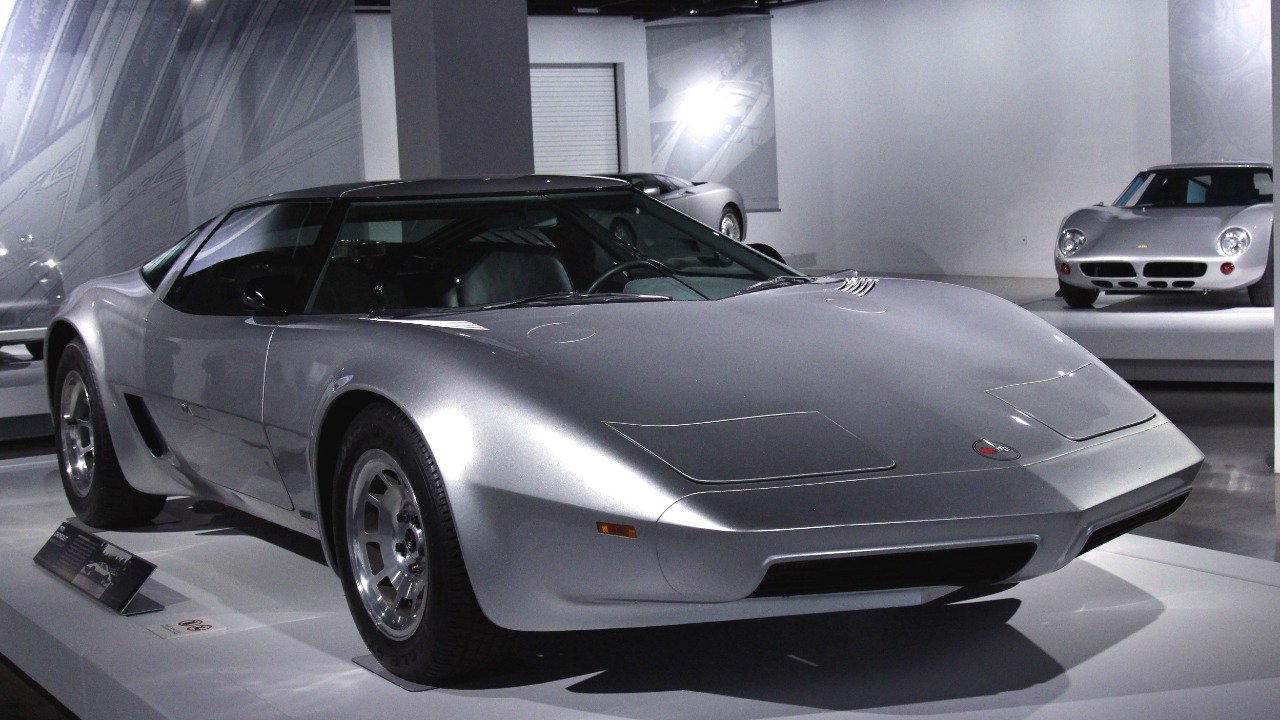
The 1970 Chevrolet Aerovette was an ambitious prototype that promised to redefine American sports cars. Despite its remarkable design and advanced technology, it never made it to production, largely due to factors that went beyond mere engineering challenges. The story of the Aerovette is a compelling mix of innovation, market dynamics, and corporate politics that ultimately kept this groundbreaking vehicle from hitting the streets.
The Visionary Concept of the Aerovette
The Aerovette was not just another concept car; it was a bold statement of Chevrolet’s vision for the future of sports cars. With its sleek, aerodynamic design, the Aerovette drew heavily on the principles of aerodynamics to enhance both aesthetics and performance. The body was characterized by a low profile and sharp lines, designed to minimize drag, which was a significant consideration for a high-performance vehicle. The iconic split-window design, reminiscent of the earlier Corvettes, was updated to create a more cohesive and modern look, indicating Chevrolet’s intention to merge style with speed.
In the context of Chevrolet’s performance lineage, the Aerovette was a significant step forward. It aimed to elevate the Corvette brand by incorporating cutting-edge design elements that would appeal to a new generation of sports car enthusiasts. The boldness of the Aerovette’s design can be seen as a reflection of the era’s automotive aspirations, where manufacturers were pushing boundaries to create vehicles that not only performed exceptionally but also looked like works of art. The Aerovette was poised to become a symbol of American ingenuity, combining the spirit of competition with innovative design.
Technological Innovations
The Aerovette showcased several technological innovations that set it apart from its contemporaries. One of the standout features was its unique quadralink suspension system, which was designed to improve handling and ride quality significantly. This system allowed for better wheel control during cornering, thereby enhancing the driving experience. In a time when performance was becoming increasingly important, the Aerovette’s suspension system was a forward-thinking solution that aimed to compete with European rivals like the Porsche 911 and Ferrari 246.
Another radical departure from traditional Corvette designs was the mid-engine layout of the Aerovette. While the typical Corvette had a front-engine configuration, the mid-engine setup offered improved weight distribution and handling dynamics. This design choice was not just a gimmick; it was an engineering solution aimed at maximizing performance on the track and the street. The mid-engine layout would later influence future Corvette models, but at the time, it represented a significant shift in Chevrolet’s approach to sports car design.
Moreover, the Aerovette was ahead of its time in terms of materials and manufacturing techniques. The use of advanced composites and lightweight materials was intended to reduce weight and improve fuel efficiency without compromising performance. These innovations were part of a broader trend in the automotive industry during the 1970s, where manufacturers began to explore new technologies to meet both performance and regulatory demands. However, the costs associated with these new materials posed challenges for mass production, which ultimately affected the Aerovette’s fate.
Market and Economic Factors
The early 1970s were a turbulent time for the American automotive industry. A significant shift towards fuel efficiency and economic considerations began to reshape consumer preferences. The 1973 oil crisis further intensified these changes, leading to a dramatic increase in fuel prices and a growing demand for more economical vehicles. This shift posed a considerable challenge for high-performance cars like the Aerovette, which were often viewed as gas guzzlers that did not align with the new market realities.
Amid these economic pressures, Chevrolet was also grappling with its financial health. The company needed to make strategic decisions about which projects to prioritize, and the Aerovette, with its high production costs and uncertain market appeal, became a lower priority. The management team had to weigh the potential return on investment against the backdrop of a changing automotive landscape. As the market turned towards compact and fuel-efficient cars, the Aerovette’s ambitious performance goals started to seem misaligned with consumer demand.
Corporate Politics and Internal Challenges
Behind the scenes, the decision-making processes within General Motors (GM) played a crucial role in the Aerovette’s fate. The company’s internal structure was complex, and leadership changes often led to shifts in project prioritization. As different executives took the helm, their visions for the company sometimes clashed with ongoing projects like the Aerovette. These conflicts created an environment where innovative designs could be sidelined in favor of more immediate, revenue-generating vehicles.
Additionally, there were significant conflicts between design teams and upper management regarding the Aerovette’s future. While the engineers and designers were passionate about pushing the envelope with the Aerovette, executives were increasingly focused on the bottom line. The disconnect between the creative vision of the engineers and the pragmatic concerns of the corporate executives made it difficult for the Aerovette to gain traction as a viable production model. As priorities shifted, the Aerovette was ultimately left behind, overshadowed by more conventional offerings.
The Legacy of the Aerovette
Although the Aerovette never reached production, its legacy is still felt in the automotive world today. The design elements and technological innovations introduced in the Aerovette would influence future Corvette models, particularly in the development of mid-engine configurations. The Corvette C8, which debuted in 2020, can be seen as a direct descendant of the Aerovette’s pioneering spirit, illustrating how ideas can resurface years later under different circumstances.
The Aerovette continues to captivate car enthusiasts and collectors alike. Speculation about what could have been if the Aerovette had gone into production fuels ongoing interest in the prototype. Car shows and enthusiast gatherings often feature discussions about its design and technology, ensuring that the Aerovette remains a topic of conversation among automotive aficionados. Furthermore, it has become a symbol of what happens when ambition meets the harsh realities of market conditions and corporate strategy.
Additionally, comparisons with other automotive prototypes reveal a common fate among many ambitious projects that never saw the light of day. Just as the Aerovette was sidelined, other vehicles like the Pontiac Banshee and various Ford prototypes also failed to reach production despite their innovative designs. This reflects a broader trend in the automotive industry where visionary concepts often struggle against practical constraints.
Conclusion: A Prototype Ahead of Its Time
The Aerovette encapsulated the innovation and ambition of the era, serving as a reminder of what might have been in the world of American sports cars. Its advanced features and forward-thinking design were a testament to Chevrolet’s commitment to pushing boundaries, even if the market was not ready to embrace such a radical departure from tradition. The lessons learned from the Aerovette’s development continue to resonate in the automotive industry, illustrating the delicate balance between innovation, market demand, and corporate strategy.
As I reflect on the Aerovette’s place in automotive history, I can’t help but feel a sense of nostalgia for a time when manufacturers dared to dream big. The Aerovette’s enduring allure is a testament to its design and engineering brilliance, reminding us that sometimes, the most groundbreaking ideas are the ones that remain just out of reach. Whether in car shows or collector circles, the Aerovette will likely continue to inspire discussions about innovation, ambition, and the ever-evolving landscape of the automotive world.
More from Fast Lane Only
- Unboxing the WWII Jeep in a Crate
- 15 rare Chevys collectors are quietly buying
- 10 underrated V8s still worth hunting down
- Police notice this before you even roll window down
*Research for this article included AI assistance, with all final content reviewed by human editors.