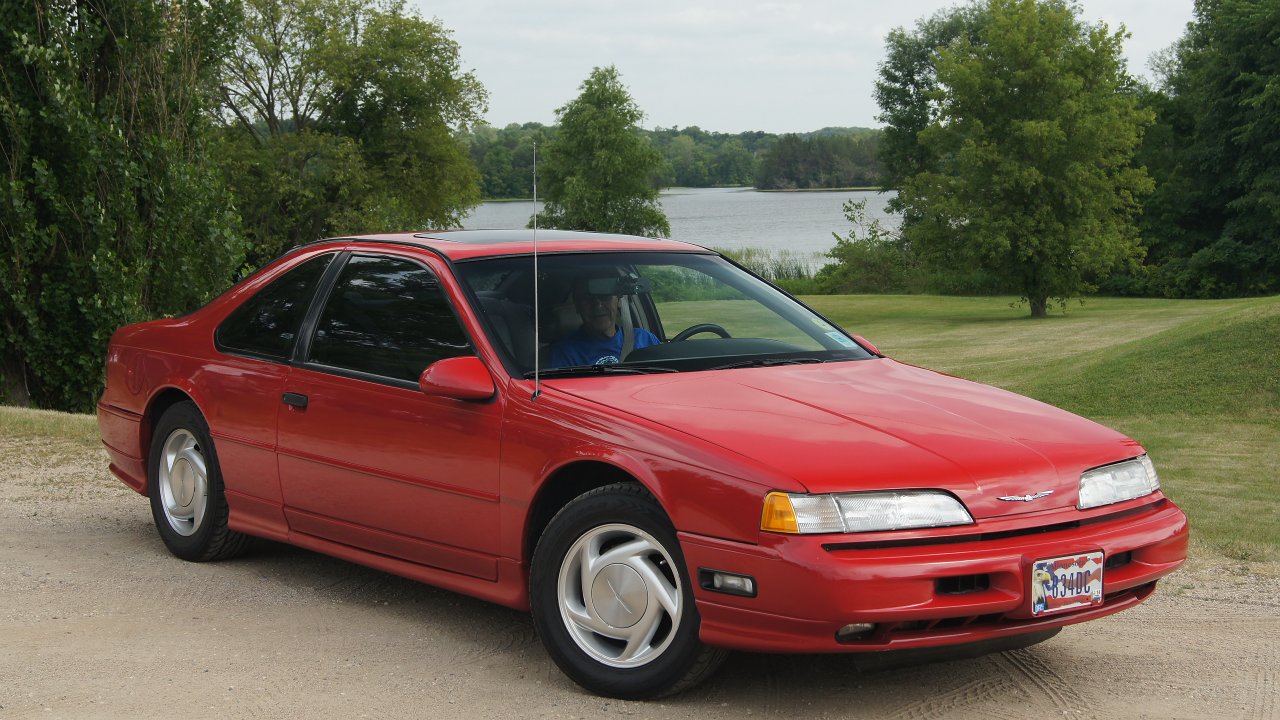
The Ford Thunderbird Super Coupe occupies a strange space in modern car culture, remembered by enthusiasts as a sophisticated, supercharged grand tourer but often overlooked in the broader collector market. For shoppers today, the key questions are simple: which years actually carried the Super Coupe badge, and what kind of money does it take to buy one now. I want to walk through the production timeline, explain what made these cars distinct, and then ground current price expectations in real listings and expert commentary.
Production years: when Ford built the Thunderbird Super Coupe
The Thunderbird Super Coupe was a product of the tenth-generation Thunderbird, and the performance variant ran from the 1989 model year through 1995. That 1989 to 1995 window is consistently identified as the full run of the Ford Thunderbird Super Coupe, with the car positioned as a higher-tech, supercharged alternative to the standard Thunderbird during those years. A detailed buyer’s guide aimed at shoppers specifically calls out the “1989 ~ ’95 Ford Thunderbird Super Coupe” as the scope of the model, and pairs it with the related “1989 ~ ’90 Mercury” performance sibling, which helps confirm that the SC’s life was tied tightly to that early part of the tenth-generation platform.
Enthusiast coverage of the tenth-generation Thunderbird reinforces the same timeline, describing the “1989–1995 Ford Thunderbird Super Coupe” as a discrete chapter in the car’s history and treating those years as a self-contained performance era. One long-form profile of the car’s history and engineering repeatedly frames the SC in that 1989 to 1995 bracket, while also noting that the broader tenth-generation Thunderbird continued with other trims and powertrains. Taken together, these sources leave little ambiguity: if a car is being advertised as a Thunderbird Super Coupe outside the 1989 to 1995 model years, that claim is unverified based on available sources.
What made the Super Coupe different from other Thunderbirds
Within that 1989 to 1995 window, the Super Coupe distinguished itself from ordinary Thunderbirds with a mix of powertrain, chassis, and styling upgrades that aimed squarely at the personal luxury and performance market of the time. The SC used a supercharged version of Ford’s 3.8 liter V6, paired with either a manual or automatic transmission, to deliver stronger acceleration than the base cars. A detailed buyer’s guide for the Ford Thunderbird Super Coupe emphasizes that it was engineered as a more serious driver’s car than the standard models, and it groups the SC with the 1989 ~ ’90 Mercury performance variant as part of a shared supercharged platform. That pairing underscores how Ford treated the SC as a halo configuration rather than just another trim line.
Chassis technology was another major differentiator. Contemporary analysis of the 1989–1995 Ford Thunderbird Super Coupe highlights its fully independent suspension, electronically adjustable shocks, and adaptive, speed-sensitive steering, all of which were advanced features for a domestic coupe of the period. The same reporting notes that the SC carried sportier bumpers and side skirts, which visually separated it from more sedate Thunderbirds while also hinting at its upgraded hardware. Later commentary on the car’s driving experience points out that, by today’s standards, the raw performance numbers may not seem dramatic, but a well-kept SC still does not feel slow or dull, especially when its suspension and steering systems are functioning as intended.
How the market views the Thunderbird Super Coupe today
Three decades after the first Super Coupe reached showrooms, the market still treats the car as a niche choice rather than a mainstream collectible, which has kept prices relatively accessible. A feature on the 1989–1995 Ford Thunderbird Super Coupe published on Mar 17, 2025, explicitly frames the car as an enthusiast’s used car bargain, arguing that the combination of supercharged power, sophisticated suspension, and period styling has not yet translated into the kind of price surge seen with some other performance coupes from the same era. That assessment is echoed in a separate profile that describes the SC as “misunderstood muscle,” suggesting that its blend of comfort and performance never quite fit the traditional muscle car narrative and therefore did not attract the same speculative attention.
Real-world usage stories also shape how the market perceives these cars. One detailed account from Jun 27, 2018, describes how owner Kurt Kreisz drove his 1992 Thunderbird Super Coupe 500 miles from St. Louis with his wife and three children on board, then put the car on display at a major enthusiast event. That kind of anecdote reinforces the idea that the SC is still viewed as a usable, long-distance cruiser rather than a fragile, garage-only collectible. When a car is known for covering 500 miles in family-hauler duty and then rolling straight into a show field, it tends to attract buyers who want a drivable classic, which in turn helps keep values grounded in practicality instead of pure speculation.
Current asking prices and real-world listings
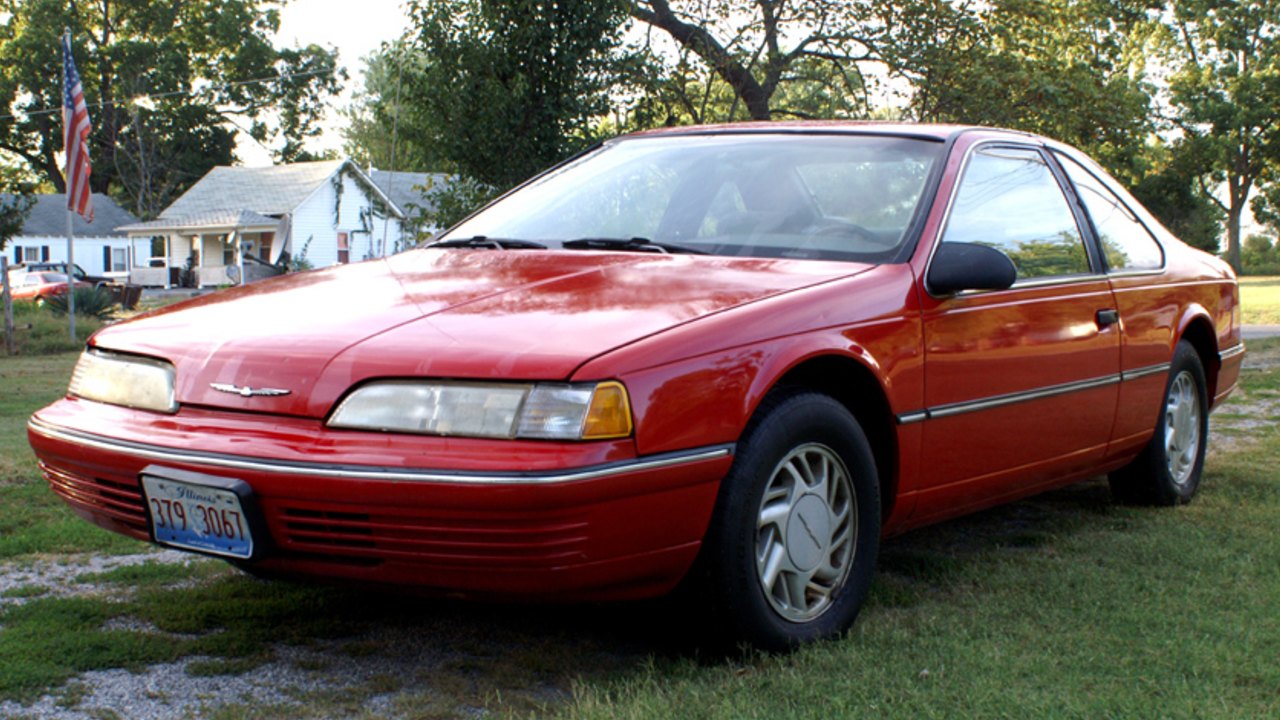
To understand what buyers are actually paying, it helps to look at live listings and price guides rather than just enthusiast sentiment. A nationwide used-car marketplace that tracks the Ford Thunderbird Super Coupe RWD currently shows an example listed at $9,995 with an estimated payment of $181 per month and a “No Rating” status, which suggests limited transaction data for that specific configuration. That single listing does not define the entire market, but it does anchor expectations: clean, running SCs are still trading in the four-figure to low five-figure range rather than commanding the kind of money associated with blue-chip collectibles. The “No Rating” label also hints at relatively low volume, which is consistent with the SC’s modest production numbers and niche appeal.
Broader shopping platforms that specialize in enthusiast vehicles show a similar pattern. A dedicated storefront focused on the Thunderbird Super Coupe aggregates listings that range from project-grade cars to well-preserved examples, with asking prices typically clustering in the same general band as the $9,995 benchmark. While individual sellers may aim higher for low-mileage or heavily documented cars, the overall spread still reflects a market where most buyers can enter without five-figure budgets that start with a “3” or a “4.” That aligns with the Mar 17, 2025 analysis that positions the 1989–1995 Ford Thunderbird Super Coupe as a used car bargain, and it reinforces the idea that the SC remains one of the more attainable supercharged performance coupes from its era.
What to watch for if you are shopping a Super Coupe
Price is only part of the equation, because the Thunderbird Super Coupe’s complexity can turn a cheap purchase into an expensive project if a buyer is not careful. The Ford Thunderbird Super Coupe buyer’s guide, labeled as version 4.0 and aimed at people unfamiliar with the 1989 ~ ’95 Ford Thunderbird Super Coupe and the 1989 ~ ’90 Mercury counterpart, stresses that these cars have specific weak points and maintenance needs that differ from ordinary Thunderbirds. The presence of supercharging, electronically adjustable suspension, and other advanced systems means that deferred maintenance can be costly to correct, and some parts are less common than those for base models. For that reason, a lower asking price on a neglected SC may not represent better value than a more expensive, well-documented example.
Enthusiast reporting on the 1989–1995 Ford Thunderbird Super Coupe also notes that, while a well-kept SC will not feel slow or boring, the key phrase is “well-kept.” Cars that have had their adaptive, speed-sensitive steering or electronic shocks disabled or replaced with cheaper components can lose much of the character that made the SC special in the first place. At the same time, the story of Kurt Kreisz driving his 1992 Thunderbird Super Coupe 500 miles with a full family load shows what a properly maintained car can still do in real-world conditions. For shoppers, the lesson is straightforward: prioritize maintenance records, functioning factory systems, and structural condition over cosmetic upgrades, and treat any unusually low price as a signal to investigate rather than a reason to rush.
For buyers and enthusiasts trying to pin down the Thunderbird Super Coupe’s place in the market, the picture that emerges is clear. Ford built the Super Coupe from the 1989 through 1995 model years, and those cars combined supercharged power with advanced chassis technology and subtle styling changes that still stand out today. Yet the market continues to treat them as affordable, usable performance coupes, with live listings such as the $9,995, $181 per month example and a range of enthusiast-focused ads keeping values within reach of ordinary shoppers. As long as that balance holds, the 1989–1995 Ford Thunderbird Super Coupe will remain one of the more intriguing ways to buy into period-correct performance without paying collector-grade prices, provided buyers respect the car’s complexity and shop with their eyes open.