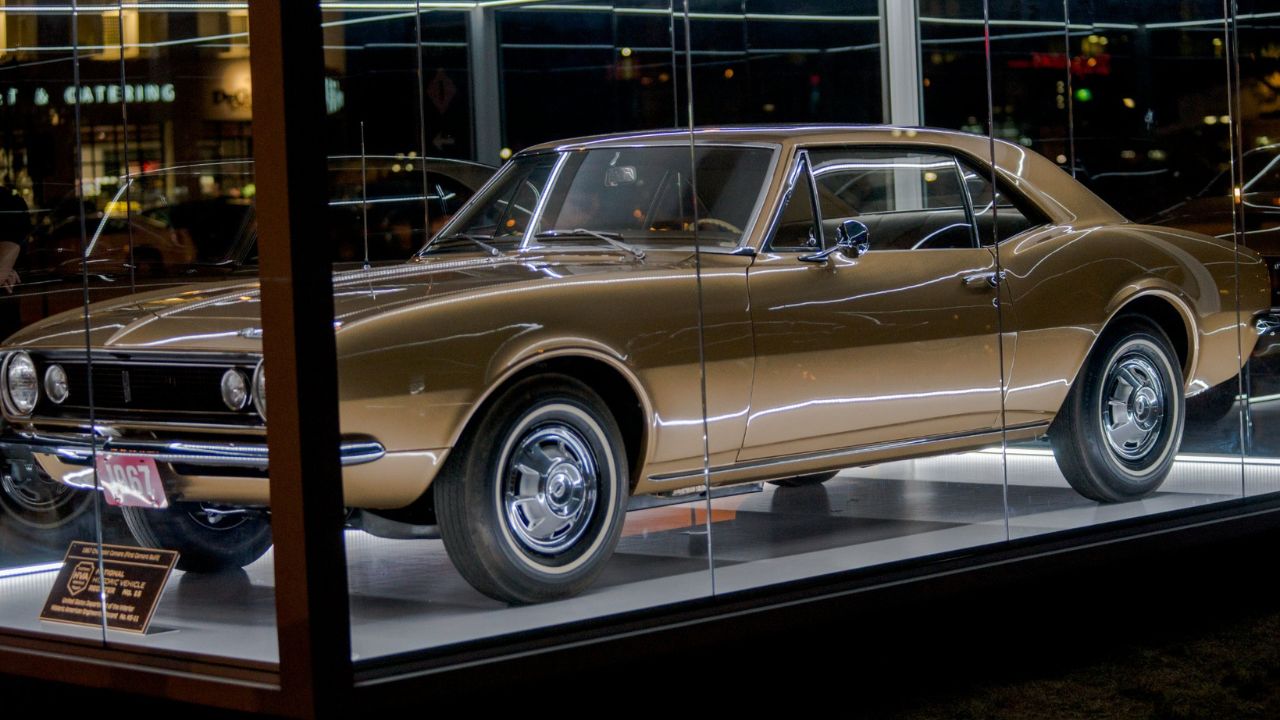
The 1967 Chevrolet Camaro already arrived with plenty of attitude. It was Chevy’s answer to the wildly successful Ford Mustang, and buyers immediately embraced its aggressive styling, V8 power, and endless performance options. But behind closed doors, General Motors engineers were experimenting with something even more radical — a Camaro prototype so extreme that the company eventually decided it was simply too much for public release.
While muscle car fans often focus on famous production models like the Z/28, COPO, or Yenko Camaros, there were several secret development projects happening during the late 1960s that never reached dealerships. One of the most fascinating involved an ultra-high-performance 1967 Camaro prototype designed to push the platform far beyond what most drivers — and probably GM executives — considered reasonable.
This forgotten project blended racing ambition, massive horsepower, and experimental engineering into a machine that reportedly terrified even experienced test drivers.
GM wanted the Camaro to dominate everywhere
By the mid-1960s, the muscle car wars were escalating quickly. Ford had already scored massive success with the Mustang, while Chrysler and Pontiac were building increasingly powerful street machines. Chevrolet wanted the Camaro to succeed not just in sales, but in racing and performance reputation as well.
That pressure led engineers to explore extreme performance packages almost immediately after the Camaro debuted. Some prototypes focused on road racing capability, while others explored drag-strip dominance. The most radical versions combined lightweight components, aggressive suspension tuning, and engines far more powerful than what regular buyers typically handled.
One rumored 1967 Camaro development mule reportedly received an experimental all-aluminum big-block setup paired with aggressive gearing and stripped-down weight-saving modifications. In an era before modern traction control or advanced tire technology, that much power inside a relatively compact muscle car created serious challenges.
The car was reportedly unbelievably fast in straight-line testing. It was also reportedly difficult to control once the throttle hit the floor.
Too much power for the chassis
One major issue facing early high-horsepower muscle cars was balance. Manufacturers kept adding bigger engines faster than suspension, brakes, and tire technology could realistically keep up. The result was often a car that accelerated violently but became unpredictable at high speeds.
The extreme Camaro prototype apparently highlighted those problems perfectly.
Test drivers allegedly complained about severe wheelspin, unstable handling, and frightening high-speed behavior. The lightweight front-end setup improved acceleration, but it also made the car feel twitchy under hard driving conditions. Add massive horsepower and narrow 1960s-era tires into the equation, and the result became a machine that demanded constant attention.
Chevrolet engineers reportedly loved the prototype’s raw speed but worried about how ordinary drivers would handle something so aggressive. Insurance companies were already beginning to panic over rising horsepower numbers across Detroit, and GM executives understood that releasing an ultra-extreme Camaro could create serious public relations headaches if accidents followed.
In many ways, the prototype may simply have arrived too early. Modern performance tires and electronic driver aids could likely tame such a setup today, but in 1967, it bordered on mechanical chaos.
Racing ambitions complicated everything
Another reason the project reportedly stalled involved racing politics inside General Motors itself.
During the 1960s, GM officially maintained a corporate ban on direct factory-backed racing efforts, even while engineers quietly continued developing high-performance vehicles behind the scenes. That strange contradiction forced many performance projects into murky territory where cars were developed unofficially or disguised as experimental research.
The extreme Camaro prototype may have crossed a line that executives no longer felt comfortable defending internally. It reportedly blurred the gap between production muscle car and full race machine so heavily that GM feared unwanted attention from regulators, insurance groups, and safety advocates.
At the same time, Chevrolet already had multiple Camaro performance programs moving forward, including the Z/28 package created for Trans-Am racing homologation. From a business perspective, GM may have decided the company simply did not need another ultra-expensive, difficult-to-market halo model creating extra controversy.
Shelving the project quietly became the easiest solution.
The legend grew because so little survived
Part of what makes the 1967 Camaro prototype so fascinating today is how little official information exists. Like many experimental GM projects from the era, documentation was limited, scattered, or intentionally buried. Prototypes often changed hands internally, got dismantled, or disappeared entirely after testing concluded.
That secrecy helped turn the car into muscle car folklore.
Over the years, collectors and historians uncovered fragments of information through engineering notes, insider interviews, and whispered stories from former GM employees. Some believe elements of the prototype eventually influenced later Camaro performance development. Others think the project was simply too extreme to evolve into anything practical.
Either way, the mystery surrounding the car only made enthusiasts more obsessed with it.
The late 1960s produced countless outrageous muscle cars, but even among that horsepower madness, this prototype apparently stood out as unusually aggressive. When experienced engineers and test drivers start describing a vehicle as excessive, you know the thing was probably an absolute animal.
Why muscle car fans still love stories like this
Part of the appeal comes from imagining what could have been. The muscle car era represented a unique moment in automotive history when manufacturers pushed boundaries with very few restrictions. Engineers experimented constantly, sometimes creating vehicles so powerful and unpredictable they scared the people building them.
That sense of danger became part of the mythology.
Today’s performance cars are faster, safer, and far more refined. But many enthusiasts still romanticize the raw, imperfect brutality of 1960s muscle machines. A shelved Camaro prototype with too much horsepower and barely controlled engineering chaos fits perfectly into that legend.
It also reminds people how close some automakers came to releasing truly outrageous cars before insurance pressures, emissions regulations, and safety concerns changed the industry forever.
The 1967 Camaro prototype may never have reached production, but its story still captures everything enthusiasts love about the golden age of American muscle: giant engines, risky ideas, corporate secrecy, and just enough insanity to make executives nervous.
More from Fast Lane Only