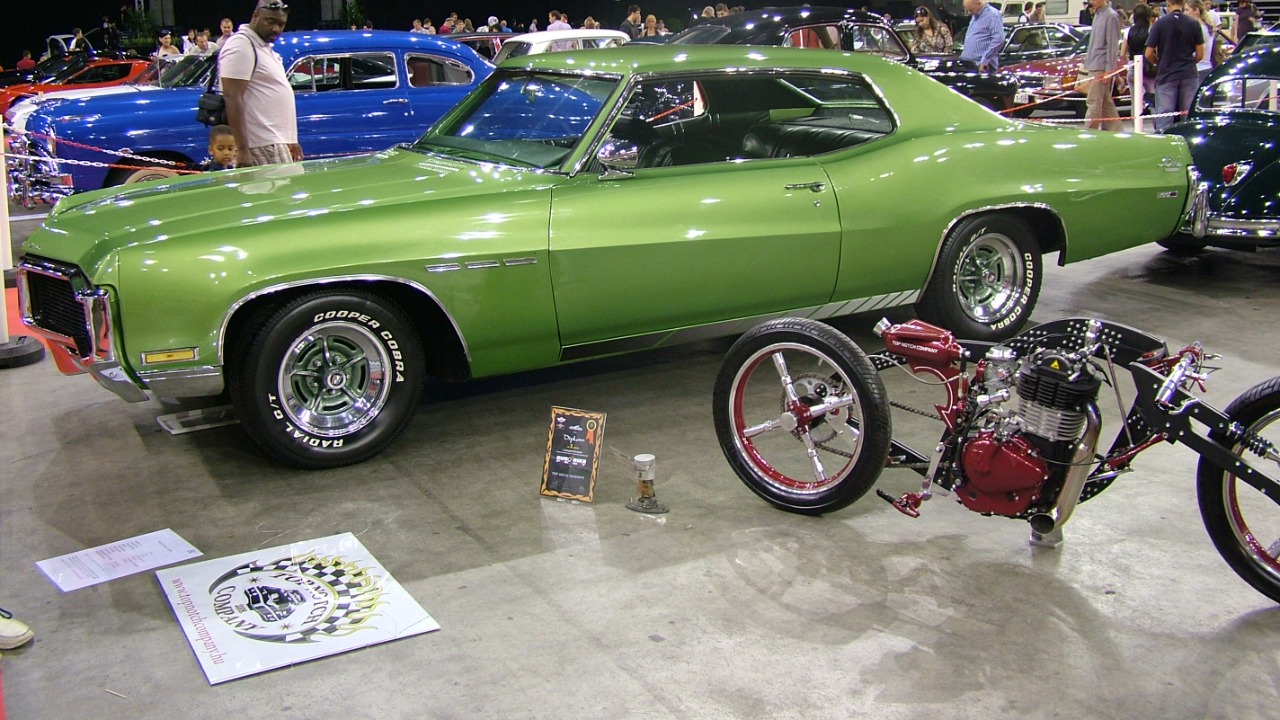
Some cars become legends because they were fast, flashy, or famously quirky. Others earn their reputation the slow way—one uneventful commute at a time—until you look up and realize they’ve outlasted the hype machines. The quietly impressive one in question is the Buick LeSabre, a car that spent years being ignored by the cool kids and adored by people who just wanted it to start every morning.
If you’ve ever seen one gliding through a parking lot like it owns the place (without ever looking like it’s trying to), you already know the vibe. Big, comfortable, kind of anonymous. And, as it turns out, stubbornly hard to kill.
A car everyone saw, but nobody really talked about
The LeSabre was everywhere for decades, which is part of why it became invisible. It blended into neighborhoods, airport pickup lanes, and slow-moving highway traffic like it was part of the scenery. People didn’t brag about owning one; they just… owned one, for a long time.
That “appliance” reputation wasn’t glamorous, but it was powerful. When a car doesn’t demand attention, you pay attention to other things—like whether it actually breaks. And for a lot of owners, the surprising answer was: not much.
The secret sauce: simple engineering and proven hardware
Reliability isn’t magic, even if it feels like it when you’re comparing repair bills with a neighbor. The LeSabre’s real trick was using familiar, well-understood parts for years, with gradual improvements instead of risky reinvention. You got a car designed to be maintained by regular shops with regular tools, not a rolling science experiment.
Many of the most dependable LeSabres came from the late 1990s through the mid-2000s, when the formula was especially dialed in. The front-wheel-drive layout was common, the packaging was straightforward, and the mechanicals were the kind that mechanics had seen a hundred times. It wasn’t exotic, but it was durable—like the cast-iron skillet of American sedans.
The 3800 V6: the engine that wouldn’t quit
Ask anyone who’s spent time around old Buicks what made them so tough, and the same answer pops up fast: the 3800 V6. In many LeSabres, this engine was the beating heart of the whole “runs forever” mythos, except it’s not really a myth. It had a reputation for taking mileage like it was a suggestion, not a limit.
It wasn’t the most advanced engine on the planet, and it didn’t need to be. It was tuned for smoothness and everyday torque, not racetrack bragging rights. Owners often describe the experience as “boringly competent,” which is basically the highest compliment a commuter car can get.
Comfort that encouraged owners to keep it
Reliability stats are one thing, but real-world longevity also depends on whether people want to keep the car once it’s paid off. The LeSabre helped itself here with a plush, easygoing driving experience. Soft ride, roomy cabin, and seats that felt more like living-room furniture than sporty buckets.
That comfort mattered because it reduced the itch to replace it. When a car is quiet, relaxed, and doesn’t punish you on rough roads, you forgive its lack of drama. And when it’s also not draining your wallet, you start thinking, “Why would I get rid of it?”
Not perfect, just dependable in the ways that count
Calling the LeSabre “one of the most reliable” doesn’t mean it was flawless. Like any aging vehicle, it had its known weak spots, and some model years and configurations were better than others. The difference is that many of its issues were predictable, fixable, and rarely catastrophic if you stayed on top of basic maintenance.
That’s the kind of reliability people actually feel: fewer surprise breakdowns, fewer complicated repairs, and more days where the car simply does its job. It’s not glamorous, but it’s the difference between “I’m late because my car died” and “I’m late because I hit snooze.”
Why it got forgotten while other cars got the spotlight
The LeSabre’s problem, if you can call it that, was branding. It didn’t have the youth-market appeal of sport compacts, the cachet of luxury badges, or the rugged image of trucks and SUVs. It was a big American sedan in an era when the cultural spotlight was moving elsewhere.
Even within its own family of cars, it was the sensible pick rather than the exciting one. That meant it didn’t become a poster car, and it didn’t star in many daydreams. But the people who owned them often tell the same story: it just kept going, even when they weren’t particularly nice to it.
The used-car afterlife: cheap, ignored, and still running
One of the strangest things about dependable cars is how often they become undervalued. Because the LeSabre was so common, used prices often stayed low, especially once styling moved on and sedans fell out of fashion. That created a quiet second career as the ultimate “just need transportation” car.
You could find them in driveways with faded paint and a slightly crooked grille, still doing daily duty. They became the hand-me-downs, the college commuters, the backup cars that somehow became the main car again. When something lasts long enough to be passed around like that, it’s making a pretty convincing argument.
How owners unknowingly proved the point
Here’s the funny part: the LeSabre’s reputation grew because people treated it like it didn’t matter. It was the car that got the cheapest gas, the longest oil-change intervals, and the most shrugged-off warning lights. And yet, many of them still kept showing up to work the next morning.
That’s not a recommendation to neglect maintenance, obviously. But it does say something about how forgiving the platform could be. Plenty of cars look good on paper; fewer can survive years of real life.
What reliability looked like back then—and why it still matters
Reliability in that era wasn’t about over-the-air updates or sensor arrays; it was about solid fundamentals. Engines that didn’t overheat under pressure, transmissions that didn’t turn every hiccup into a crisis, and parts availability that didn’t require an archaeological dig. The LeSabre fit that world perfectly.
And today, when people are hunting for affordable used cars that won’t surprise them with a four-figure repair, that old-school dependability has a certain charm. It’s not trendy, but it’s reassuring. The LeSabre didn’t become a hero in the loud way—just in the steady, everyday way that actually keeps life moving.
More from Fast Lane Only