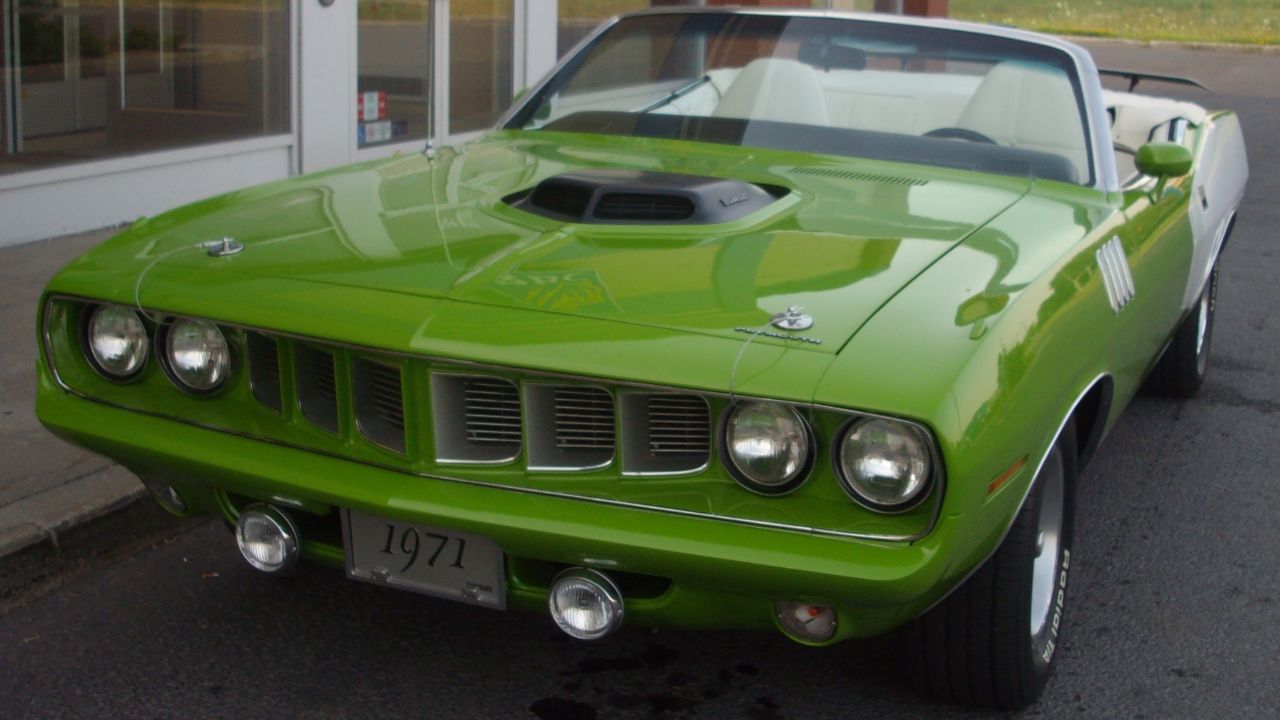
The 1971 Plymouth Hemi ’Cuda Convertible sits at the absolute top of the Mopar collector world. Produced in incredibly small numbers during the final years of the original muscle car era, the car combined brutal 426 Hemi performance with open-top styling, creating one of the rarest and most valuable American performance cars ever built.
Plymouth created the Hemi ’Cuda during the peak of the muscle car wars
When Plymouth introduced the 1971 Plymouth Hemi ’Cuda Convertible, Detroit’s horsepower battles were reaching their final and most aggressive stage. Manufacturers were still competing for street dominance even as emissions regulations and insurance pressures began threatening the muscle car market.
Built on the dramatic E-body platform shared with the Dodge Challenger, the Hemi ’Cuda featured aggressive styling, wide proportions, and unmistakable road presence. Under Chrysler performance strategy, the car represented the absolute top of Plymouth’s muscle car lineup.
The legendary 426 Hemi made the car truly ferocious
At the heart of the 1971 Plymouth Hemi ’Cuda Convertible sat Chrysler’s legendary 426 Hemi V8 engine, one of the most feared performance engines of the muscle car era. Officially rated at 425 horsepower, the massive big-block delivered towering torque and explosive acceleration.
Inside Chrysler engineering circles, the 426 Hemi already carried a fearsome reputation from drag racing and NASCAR competition. Installed inside the convertible E-body platform, the engine transformed the Hemi ’Cuda into one of the most intimidating street machines available in America.
Extremely low production numbers made the car legendary
Part of what elevated the 1971 Plymouth Hemi ’Cuda Convertible into collector royalty was its extraordinary rarity. By 1971, rising insurance premiums, emissions concerns, and shrinking demand for expensive high-performance cars dramatically reduced sales across the muscle car industry.
As a result, Plymouth produced only a tiny number of Hemi ’Cuda convertibles. The combination of limited production and high-performance specifications created one of the rarest factory muscle car configurations ever offered during the classic Detroit horsepower era.
The convertible body made the car even more desirable
Unlike standard hardtop muscle cars, the 1971 Plymouth Hemi ’Cuda Convertible added open-air driving to an already outrageous performance package. The convertible design amplified the car’s dramatic appearance and helped distinguish it from countless other muscle cars produced during the same period.
For enthusiasts of Chrysler performance history, the combination of a convertible body and a race-bred Hemi engine represented the ultimate expression of Mopar excess. Few vehicles better captured the unapologetic spirit of early 1970s American performance culture.
Auction prices eventually turned the car into a collector icon
As the muscle car collector market exploded decades later, the 1971 Plymouth Hemi ’Cuda Convertible emerged as one of the most valuable American cars ever sold at auction. Collectors recognized the car as a near-perfect combination of rarity, performance, and historical significance.
Within the world of Plymouth enthusiasts, owning a genuine Hemi ’Cuda Convertible became a symbol of elite collector status. The car’s values climbed into extraordinary territory as surviving examples became increasingly difficult to acquire.
Today the Hemi ’Cuda Convertible represents the peak of Mopar history
Modern enthusiasts still view the 1971 Plymouth Hemi ’Cuda Convertible as one of the ultimate expressions of the original muscle car era. Its combination of rarity, raw power, and dramatic styling continues attracting admiration from collectors around the world.
For fans of Chrysler and Mopar performance, the car symbolizes a brief moment when Detroit manufacturers pushed horsepower and style to incredible extremes before regulations permanently changed the industry. That legacy is exactly why the Hemi ’Cuda Convertible became true Mopar royalty.
More from Fast Lane Only