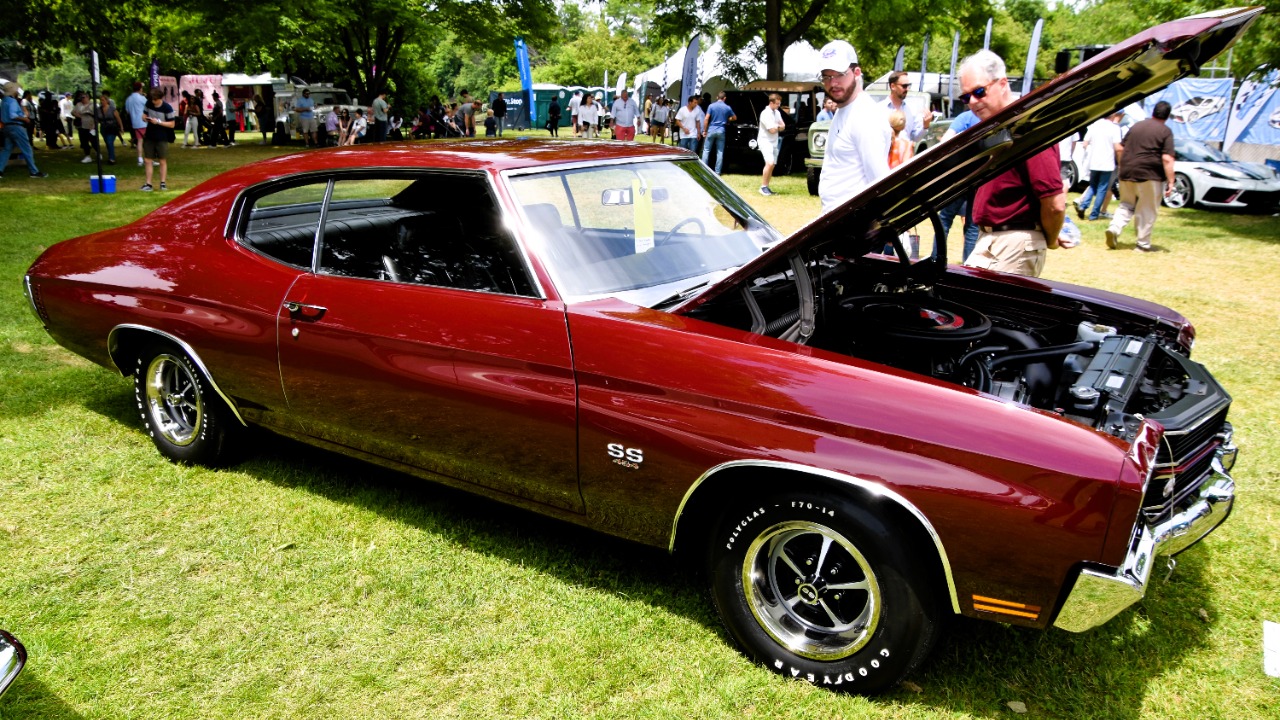
Every so often, a car becomes valuable not because it was planned that way, but because it wasn’t. A small batch slips out with the “wrong” combination of parts, a rule gets bent on the line, or a midyear change lands in just the right place at the wrong time. In GM history, one of the cleanest examples is the 1970 Chevrolet Chevelle SS 454 built with the LS6 package.
On paper, it was just another option code. In reality, it was a factory-approved loophole that put a near-race engine into a street car, and the window for getting one was short. Not many were made, fewer survived unmodified, and today it’s the kind of model that can stop a conversation in a parking lot.
The “slip” wasn’t an accident, it was timing
When people say a rare model “slipped through production,” they often imagine a mistake, like someone grabbing the wrong parts. With the LS6 Chevelle, it’s more like a perfect storm: early-1970 muscle car demand, GM’s option structure, and looming insurance and emissions pressure. The result was a car that felt like it belonged to a wilder era, even though it arrived right as that era was closing.
GM didn’t exactly hide the LS6, but it also didn’t build the Chevelle line around it. It was expensive, it was overkill for most buyers, and it wasn’t the sort of thing dealers could move easily in every market. So the combination of high price, limited appetite, and a short runway made it rare almost by default.
What made the LS6 different (and why it matters now)
The headline feature was the 454-cubic-inch V8, but the magic was in the details. The LS6 was the high-output version of the 454, with hardware aimed at making big power the old-fashioned way: airflow, compression, and camshaft. Even among big-blocks, it was the one that made people lean in and say, “Wait, the factory sold that?”
It also came at the end of the peak-horsepower era, which gives it a special kind of nostalgia. Later engines could be quicker in the real world, and modern cars are objectively faster, but that’s not the point. Collectors chase the feeling of a factory car that was just a little too bold for its own good.
A brief production window and a smaller buyer pool
Only a limited number of LS6 Chevelles were built for 1970, and they weren’t distributed evenly. Some dealerships knew exactly what they were and ordered them for the right customers; others hardly saw any. That unevenness feeds the legend, because it creates pockets of stories: someone’s cousin swears one sat on a lot for months, while someone else says a buyer had to call three states away to find one.
Then there’s the survival rate problem, which is real for any high-power muscle car. These cars were driven hard, raced, repainted, re-engined, and generally “improved” in ways that felt normal at the time. Today, originality is the whole game, and that instantly shrinks the population of truly collectible examples.
Why collectors treat it like a unicorn
Collectibility is usually a mix of rarity, desirability, and documentation. The LS6 Chevelle scores on all three: it’s scarce, it has a big reputation, and it’s the kind of car that rewards paperwork. Build sheets, protect-o-plates, matching numbers, correct stampings, and period-correct components aren’t just nerdy details here; they’re value.
There’s also the simple fact that it’s a Chevelle SS, which was already a star in GM’s lineup. The shape is instantly recognizable, the aftermarket support is huge, and it fits into a lot of collections without feeling obscure. In other words, it’s rare enough to be special, but familiar enough that everyone knows why it matters.
The “too perfect to be true” problem: clones and tributes
Any time a model becomes this collectible, the market reacts in predictable ways. Tribute builds and clones pop up, some honestly represented and some… less so. With the LS6, it’s especially tempting because a standard Chevelle can be upgraded to look nearly identical, and the big-block swap has been a weekend dream for decades.
That’s why serious buyers obsess over details that most people would never notice. Engine codes, casting dates, transmission stamps, rear axle codes, and even the way certain brackets are finished can matter. It’s not paranoia; it’s just the cost of shopping in a category where the difference between “incredible” and “incredibly expensive” is proof.
Real-world driving: brutal, loud, and weirdly charming
Part of the LS6 mystique is that it doesn’t pretend to be refined. Big torque, big noise, and a personality that feels like it’s always one throttle-blip away from trouble—fun trouble. The steering won’t feel like a modern sports car, the brakes will remind you you’re in 1970, and the ride can be a little bouncy depending on setup.
And yet, that rawness is the appeal. It’s a time capsule from an era when manufacturers were still willing to let the customer decide how much engine was “too much.” People don’t collect these because they’re sensible; they collect them because they’re a rolling grin.
What pushes values higher (and what can drag them down)
Values tend to climb when a car is both rare and easy to understand, and this one checks both boxes. The most valuable examples are typically well-documented, correctly restored or carefully preserved, and equipped in desirable period combinations. Color, transmission choice, and options like cowl induction can all shift interest, sometimes dramatically.
On the flip side, heavy modifications, missing documentation, or questionable driveline originality can soften demand. That doesn’t mean those cars aren’t fun—some are the best drivers—but the collector premium lives in correctness. If the story can’t be verified, the market usually prices in doubt.
Why the legend keeps growing
The LS6 Chevelle sits in a sweet spot: it’s historically significant, it’s visually iconic, and it represents a last loud note before the industry changed direction. As time goes on, fewer original examples remain, and more people want a piece of that moment. That tension—shrinking supply, steady demand—keeps the spotlight on it.
It also helps that the story is easy to tell at a car meet. Someone asks what it is, and the answer is simple: “It’s the one that somehow made it out of the factory.” Not because it was a mistake, but because for a brief window, the stars aligned and GM’s option sheet got away with something glorious.
More from Fast Lane Only