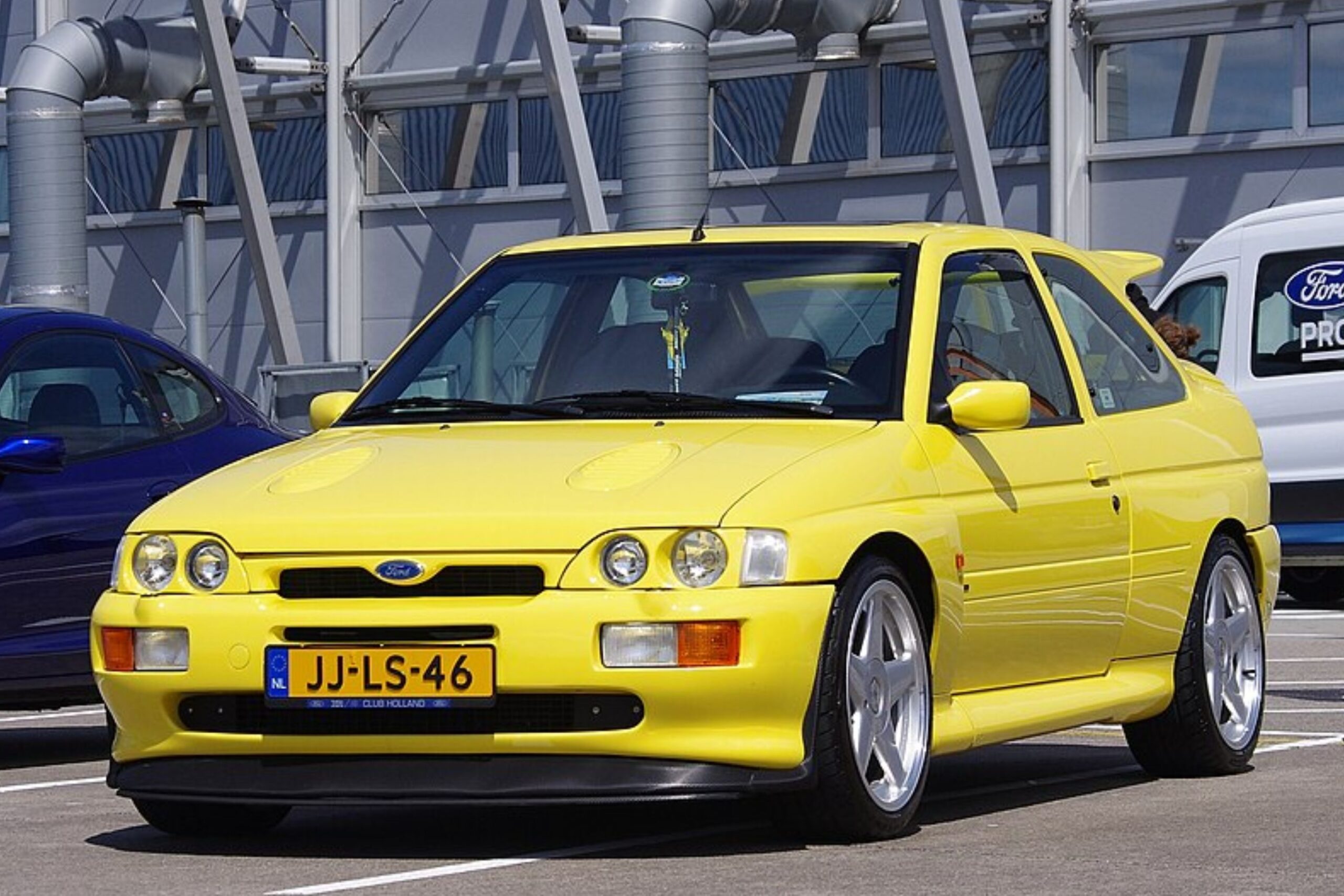
Every so often, a car shows up that feels like it slipped through a crack in the rulebook. It isn’t just quick in a straight line or pretty in photos; it’s the kind of machine that makes drivers recalibrate what “normal” traction and confidence are supposed to feel like. This story starts with a very specific kind of rarity: a small production run built not because marketing demanded it, but because racing rules did.
The result was a road car that carried motorsport DNA in a way that was hard to fake. Not a sticker package, not a commemorative badge, but real engineering choices that changed how it moved down a road and over broken pavement. And yes, it created one of the most capable cars of its era.
A rulebook made it happen
Back when rallying’s top categories were at their wildest, manufacturers had to “homologate” key parts by building a limited number of street-legal versions. In plain terms: if a team wanted a special turbo, drivetrain layout, or bodywork on the rally car, it had to sell a certain number of similar cars to the public. That requirement produced some wonderfully strange showroom specials, the kind that feel like a works car wearing license plates.
This particular production run was small enough to stay special, but big enough to put real hardware on real roads. The goal wasn’t to make the daily commute smoother; it was to make a competition car legal. Owners just happened to benefit from the overbuilt solutions that came with that mission.
All-wheel drive before it was “normal”
Today, all-wheel drive is everywhere—crossovers, sedans, even minivans. But at the time, putting serious all-wheel drive into a performance car wasn’t a checkbox feature; it was a statement. The system didn’t exist to help someone pull away from a snowy parking spot. It existed to turn messy surfaces into traction and make power usable when other cars were still spinning their rear tires into smoke and disappointment.
That capability showed up in the most satisfying way: speed you could actually deploy. The car could dig in on wet tarmac, gritty backroads, and uneven patches that would have unsettled other performance machines. It didn’t make physics disappear, but it sure seemed willing to negotiate.
A turbocharged punch with a personality
The heart of the car was a turbocharged engine tuned for real-world urgency rather than polite smoothness. In that era, turbocharging often came with a bit of drama—quiet, quiet, then a sudden shove that made the horizon feel closer. Drivers learned to anticipate the boost, time their inputs, and enjoy the moment when the car went from “fine” to “seriously?” in a breath.
That peaky character wasn’t a flaw; it was part of the charm and part of the challenge. It rewarded attention, and it gave the car a distinct identity compared with larger, naturally aspirated rivals. You didn’t just drive it; you coordinated with it.
Built to survive rally logic
Homologation cars often carry a subtle toughness that doesn’t show up on a spec sheet. Components are chosen with competition in mind: drivetrains that can take repeated hard launches, cooling systems that won’t panic under sustained load, and suspension layouts designed around control rather than comfort. Even when the street version was softened a touch, the underlying intent stayed obvious.
That’s why this rare run became famous for being more than fast. It was fast in bad conditions, fast when the road got patchy, fast when the driver made a mistake and needed the chassis to help clean it up. People didn’t just buy speed; they bought capability.
The shape wasn’t just for looks
The styling of these cars tends to spark opinions, and that’s half the fun. Boxy arches, purposeful spoilers, and vents that look like they belong on a race service truck are often part of the package. But the visual drama usually has a job: wider tracks for grip, space for bigger tires, and airflow management that matters at speed.
Even the stance tells you what it’s about. It sits like it’s ready to be thrown at a corner and caught on the exit, and it usually can be. It’s the automotive equivalent of wearing hiking boots to a party and somehow pulling it off.
Why it embarrassed “better” cars
On paper, it didn’t always dominate. There were cars with more cylinders, more prestige, and sometimes more outright horsepower. But capability isn’t only about peak numbers; it’s about how often you can use what you’ve got, and how confidently you can do it.
This is where the rare production run earned its reputation. In real weather, on real roads, and in the kind of driving that happens outside of perfect conditions, it could keep pace with or outrun machines that seemed untouchable in magazine fantasies. It was a reminder that traction and balance are performance, not accessories.
Inside, it felt like a compromise—on purpose
These cars rarely tried to be luxurious in the modern sense. The cabin typically leaned functional: supportive seats, clear gauges, and controls you could operate while wearing gloves or adrenaline. You might find some rough edges, a little more road noise than you’d expect, and plastics that weren’t auditioning for a design award.
But that was the deal. The money went into the parts you can’t easily add later: drivetrain layout, suspension geometry, cooling, and structural strength. It’s the kind of interior you forgive because the car keeps its promises everywhere else.
The production run that turned into a legend
Rarity alone doesn’t make a car great; plenty of rare cars are rare because nobody wanted them. What made this production run special was that it was rare for the right reasons. It existed because competition demanded it, and that demand shaped the engineering in a way that still feels honest.
As the years passed, the same traits that made it formidable also made it collectible: the distinctive drivetrain, the rally-bred attitude, and the sense that it came from a moment when manufacturers were willing to build something slightly unhinged to win. Values and nostalgia tend to follow that kind of authenticity. And if you ever see one on the road, you can’t help but look twice—partly out of admiration, partly because you’re wondering what other rulebook loopholes the world is missing right now.
Why it still matters today
Modern performance cars are astonishing, but they’re often polished into perfection by software, layers of modes, and an endless quest for universal appeal. This rare homologation-style run came from a different mindset: build a tool, then let the public have it. That’s why people still talk about it like it’s a benchmark for “usable” performance.
It’s also a reminder that capability isn’t always about having the most power or the fanciest badge. Sometimes it’s about having the right layout, the right grip, and a little bit of racing stubbornness baked into the chassis. The rulebook may have forced the car into existence, but the roads are what made it famous.
More from Fast Lane Only