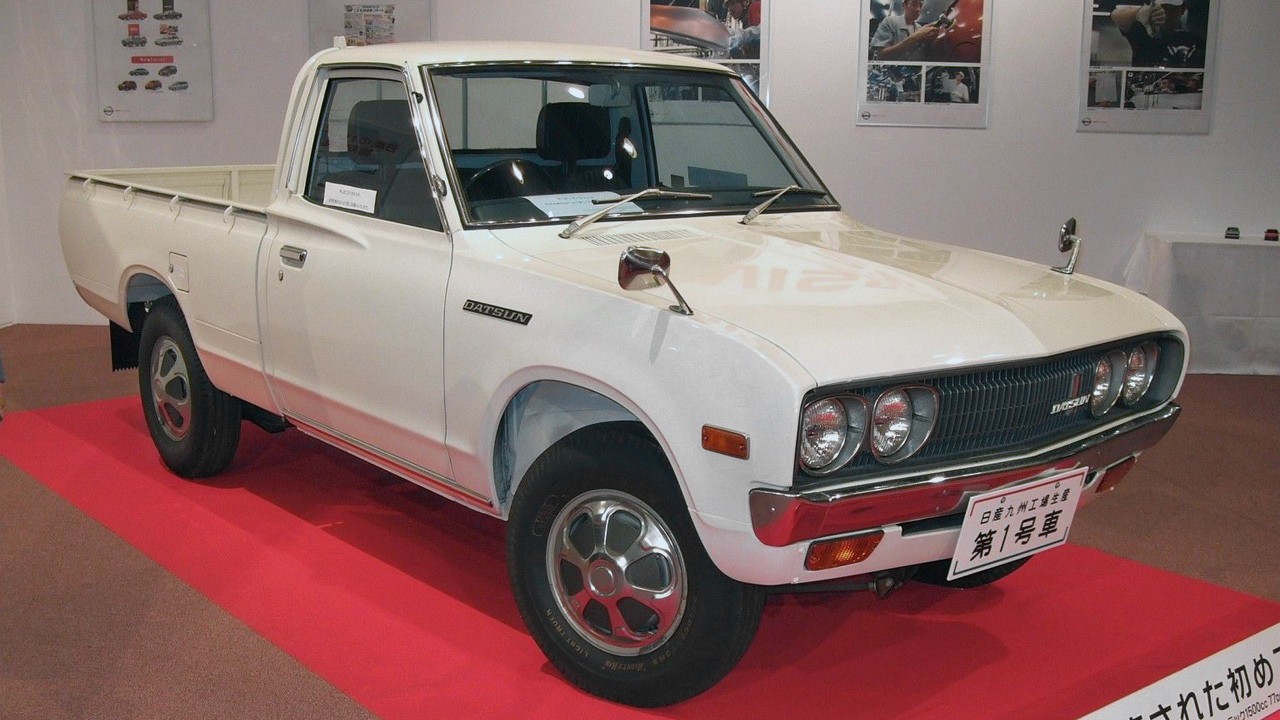
Ford’s compact pickup experiment in the 1970s produced a truck that felt perfectly tuned to its moment yet struggled to find a lasting foothold. The Ford Courier arrived as a small, efficient alternative to the company’s traditional full-size workhorses, then faded from American roads so thoroughly that it now feels like a brief chapter in the brand’s truck history. Although production and sales extended into the early 1980s, the Courier’s identity and influence were firmly rooted in that turbulent decade, which helps explain why it is remembered as a short-lived product of the 1970s rather than a long-running nameplate.
A compact answer to a big-truck legacy
By the time the Courier appeared, Ford already had decades of experience building pickups that defined the American work truck. The first-generation F-Series for Ford trucks in the early 1950s had established a template of rugged, body-on-frame machines that could haul, tow, and endure, a lineage that would eventually produce icons like the Ford Bronco and the heavy-duty W-Series. Those larger models dominated sales and brand identity, but they also left a gap for buyers who wanted something smaller, thriftier, and easier to maneuver in crowded cities or on tight farm lanes.
Ford had experimented with blending car comfort and truck utility before, most notably with the Ranchero, a car-based pickup that evolved through multiple generations and was updated again in the early 1970s. The Ranchero, like Ford’s Australian ute, was designed to help farmers and tradespeople bridge the space between a passenger car and a traditional truck, offering a lower ride height and more refined manners than a full-size pickup. That experiment proved there was demand for more flexible utility vehicles, but it still did not deliver the compact, globally sourced pickup that the changing American market was starting to require.
How Mazda and Ford created the Courier
The Courier emerged from a deepening relationship between Mazda and Ford that had begun with commercial trucks and small pickups. As Mazda and Ford grew closer, Ford started rebadging Mazda’s commercial trucks in Asia, and by the early 1970s the partnership focused on the Mazda B series pickup truck as a foundation for a compact model tailored to North America. Thus, the Mazda-built Ford Courier arrived as a small pickup that could be sold through Ford dealers while leveraging Mazda’s experience with efficient, lightweight trucks.
This collaboration was not a one-off experiment but part of a broader strategy that linked the two companies for decades. Spanning more than thirty years, from 1972 to 2007, the partnership between Ford and Mazda produced four generations of the Courier, with the compact pickup serving different markets around the world. In the United States, however, the Mazda-built Ford Courier would last for two generations before Ford replaced it with its own Ranger compact pickup in the early 1980s, signaling a shift from imported hardware to a homegrown small truck that could carry the brand’s design language and engineering priorities more directly.
The 1970s market that shaped (and limited) the Courier
The Courier’s timing aligned with a decade when American buyers were rethinking what a truck should be. Fuel crises and rising operating costs pushed some drivers away from large V-8 powered pickups and toward smaller, more efficient vehicles. The Courier, with its compact footprint and lighter construction, offered an appealing alternative for people who needed a bed and basic utility but did not require the towing or payload capacity of a full-size F-Series. It slotted into a growing niche of mini trucks that promised lower fuel bills and easier parking without abandoning the open cargo box that made pickups so useful.
Yet the same market forces that created space for the Courier also constrained its long-term prospects. As the decade progressed, Ford continued to refine its larger trucks, updating models like the Ford Bronco and the W-Series while keeping the F-Series at the center of its truck strategy. The Ford Ranchero, which had already been updated again in the early 1970s, showed that Ford was still experimenting with different forms of utility vehicles, but the company’s core investment and marketing energy remained focused on full-size platforms. In that environment, the Courier was important but never central, a supporting player in a lineup dominated by bigger, more profitable trucks.
A truck that lingers in memory more than on the road
Today, the Courier’s limited visibility on American roads reinforces its reputation as a short-lived product of the 1970s, even though its sales continued into the early 1980s. Enthusiasts note that you very rarely see Ford Couriers at all anymore, and spotting one that once served as a Haul rental truck is even more unusual. That scarcity reflects both the modest production volumes compared with full-size pickups and the hard lives many of these compact work trucks led, often used intensively and then discarded rather than preserved.
The Courier’s relative rarity also contrasts sharply with the enduring presence of other Ford trucks from the same era. Restored examples of early F-Series for Ford pickups and classic Ford Bronco models still appear at auctions and shows, and the Ranchero retains a niche following among fans of car-based pickups. Against that backdrop, the Courier feels like a brief, almost experimental chapter, a truck that helped Ford test the compact segment but did not embed itself in the culture the way its larger siblings did. Its disappearance from everyday traffic, despite a production run that extended into the early 1980s, makes it easy to remember the Courier as a truck that barely escaped the 1970s before being overshadowed by what came next.
From Courier to Ranger, and the legacy of a short run
The end of the Courier’s American run was less a failure than a handoff. The Mazda-built Ford Courier would last for two generations before Ford introduced the Ranger compact pickup in the early 1980s, a model that drew on lessons learned from the partnership while asserting a more distinctly Ford identity. The Ranger arrived as a response to the same demand for smaller trucks that had justified the Courier, but it did so with engineering and styling that aligned more closely with the rest of the Ford lineup, helping it become a long-running mainstay rather than a niche offering.
Looking back, the Courier’s legacy lies in how it bridged eras and philosophies inside Ford’s truck program. It connected the heavy-duty tradition of the F-Series and the experimental spirit of vehicles like the Ranchero with a new, globally informed approach to compact pickups shaped by Mazda and Ford working together. Even if the nameplate faded from American showrooms in the early 1980s and is now rarely seen outside of the occasional survivor, its brief prominence in the 1970s and early 1980s helped clear the path for the Ranger and for the broader acceptance of small trucks in a company long defined by big ones.
More from Fast Lane Only