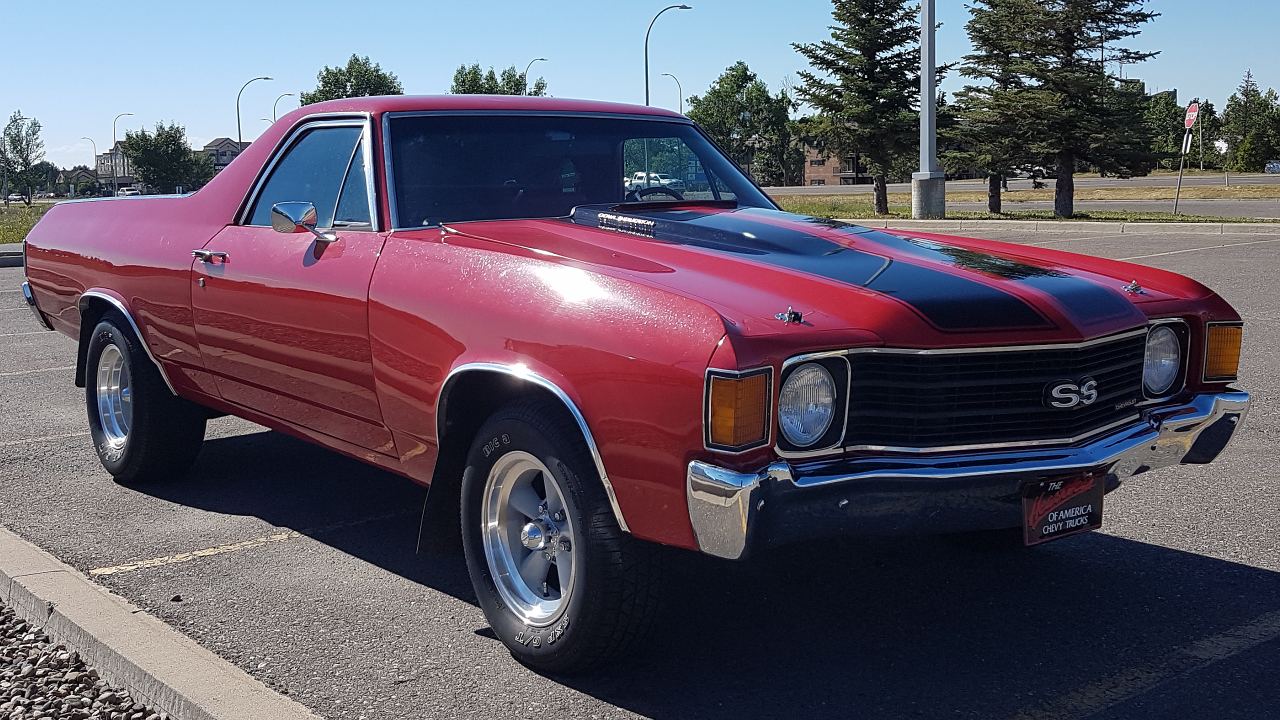
The Chevrolet El Camino SS occupied a strange space in American car culture, part muscle car and part pickup, and it never quite fit into a single box. It wore the aggressive “Super Sport” badge, yet it shared bones with family coupes and carried a bed big enough for lumber. That blend of identities, and the way Chevrolet kept reshaping the formula over time, is what left buyers and even enthusiasts debating exactly what the El Camino SS was supposed to be.
From its early years as a stylish utility to its peak as a big block bruiser and later as a badge-and-trim package, the El Camino SS constantly blurred lines. It was marketed as performance, used as a work tool, and remembered as a cult classic, which is why it still inspires both affection and confusion decades after the last one left the factory.
From workhorse to “Super Sport” experiment
The El Camino began life as a practical answer to drivers who wanted one vehicle that could haul and still look at home in a suburban driveway. By the mid 1960s, that concept had matured into what one period description called “The El Camino Comes of Age,” as Chevrolet tied the car more closely to the Chevelle line and even put the Chevelle nameplate on the front fenders. Underneath, the smaller 115-inch wheelbase and shared chassis meant the El Camino behaved more like a mid-size car than a traditional truck, which set the stage for a performance twist.
That twist arrived with the Third Generation, when Chevrolet treated the El Camino as a genuine muscle machine rather than just a stylish hauler. In this era, a new high performance Super Sport package appeared, and the El Camino SS became available with big block power that mirrored its Chevelle sibling. Contemporary accounts of the Third Generation describe a 1968 El Camino SS 396, often illustrated through period images sourced from places such as Wikimedia Commons, and note that the El Camino grew in size and presence to match its newfound performance role.
Why the SS badge made the El Camino harder to define
Once Chevrolet bolted “SS” onto the tailgate, expectations changed. The Super Sport name had already been established on coupes and sedans, and when it arrived on the El Camino, buyers assumed they were getting a full muscle car experience in a slightly unconventional shell. The SS package initially centered on a big block V8, with reports noting that The SS, described as the “Super Sport” model, launched with a 396-cubic-inch (6.5-liter) engine that delivered serious power for the time. That specification aligned the El Camino SS with the era’s performance icons, even as its silhouette still suggested a light-duty pickup.
Yet the SS treatment did not always mean the same thing from year to year, which added to the confusion. In some periods, The Super Sport label signified a comprehensive performance upgrade, while in others it functioned more like a trim and appearance package. Later discussions among owners highlight how SS badges could be added or deleted, and how companies such as Choo Choo Customs modified base and Conquista models, and even some “SS” versions, to resemble higher-spec cars. That fluid use of the SS identity meant that two El Camino SS models parked side by side might share badges but differ significantly in hardware and intent.
Muscle car numbers, pickup truck silhouette
On paper, the El Camino SS could match many contemporary muscle cars, which only deepened the identity puzzle. Big block versions, including the celebrated SS 454, delivered the kind of straight-line performance that enthusiasts associated with drag strips and boulevard racing. Accounts of the SS lineup emphasize that the earliest Super Sport configuration relied on that 396-cubic-inch engine, while later iterations added even more displacement and torque. In practice, the El Camino SS accelerated like a Chevelle, sounded like a Chevelle, and, in many mechanical respects, was a Chevelle with a bed.
At the same time, the driving experience did not fully match the visual impression of a truck. Contemporary evaluations describe the El Camino as having the dynamics of a nimble sedan combined with the utility of a sizable bed, a combination that some writers have labeled an “identity crisis.” Under the hood, Chevrolet mixed and matched engines across the broader lineup, from small blocks to big blocks, and even non SS El Camino models could be ordered with respectable power. Technical breakdowns of Chevrolet engines from the period note, for example, that an El Camino fitted with a 307 cubic inch V8 used a 3.87-inch bore and 3.7 inch stroke, details that underscore how closely its mechanical menu mirrored that of passenger cars rather than traditional pickups.
Later SS models and the slide into pure branding
By the 1980s, the El Camino SS had shifted away from the raw big block formula and toward a more nuanced blend of style and modest performance. Enthusiast recollections of an El Camino SS from this period describe a unique mix of comfort and sport, with some owners turning to aftermarket upgrades to recapture the muscle car punch of earlier years. In particular, Some drivers opted to install a 350 small block V8 in place of the factory engine, chasing more power and a more aggressive character than Chevrolet itself was willing or able to deliver in the face of tightening regulations and changing market tastes.
As the factory specification softened, the SS badge increasingly signaled image rather than outright speed. Discussions among owners and historians point out that by this stage, SS equipment could be layered onto relatively ordinary El Camino models, and that visual cues such as stripes, wheels, and badging sometimes mattered more than what sat under the hood. This evolution mirrored a broader trend within Chevrolet, where the SS label later appeared on vehicles like The Chevy SS sedan, a car based on the Holden Commodore for the Australian market, which again combined serious performance with understated styling. In both cases, the letters “SS” promised excitement, but the surrounding package did not always match the traditional muscle car template that enthusiasts had in mind.
Why the El Camino SS still defies easy categorization
Looking back, the El Camino SS occupies a niche that even today feels difficult to describe in a single phrase. It was marketed as a performance vehicle, yet its origins lay in the practical desire for a car that could carry cargo without sacrificing comfort. Commentators such as Chris Coleman, identified as a Former Test Driver and Mechanic in the Automotive Industry, have explained that the concept behind the El Camino and similar vehicles was to give buyers a single machine that could handle both work and leisure, a formula that proved popular for years. When Chevrolet layered the SS identity on top of that, the result was a vehicle that could haul building materials during the week and line up at a stoplight with genuine muscle car credentials on the weekend.
That dual purpose is precisely what keeps the El Camino SS so intriguing and so hard to pigeonhole. Modern retrospectives describe The Chevrolet El Camino as a “Timeless Legacy Across Generations” and emphasize its status as a unique American icon, a car that never fully belonged to either the truck or muscle car camps. When writers today evoke mid century automotive culture in America, they often cite the Chevrolet El Camino as a symbol of that era’s willingness to experiment with form and function. The SS variants, with their mix of big engines, sedan like handling, and open beds, crystallize that experiment, which is why enthusiasts still debate whether to file the El Camino SS under performance car, utility vehicle, or something that permanently lives in between.
More from Fast Lane Only