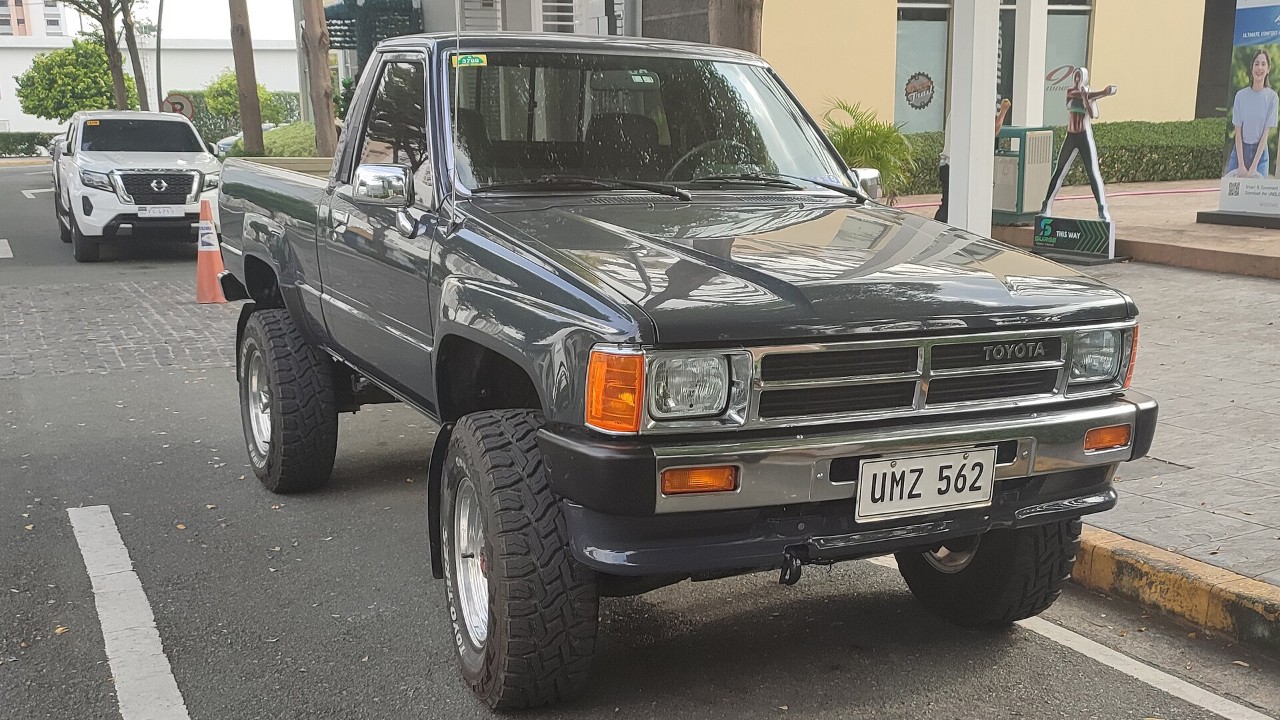
The Toyota Hilux reached Japanese dealers in March 1968, and Toyota UK now counts more than 19 million sold. That’s a lot of trucks doing hard, dirty work. As a result, the name became shorthand for a pickup that just keeps going.
We think that reputation is earned. These are our picks for the Hilux generations that seem nearly impossible to kill, from the 1970s to today.
1. Toyota Hilux (N20)
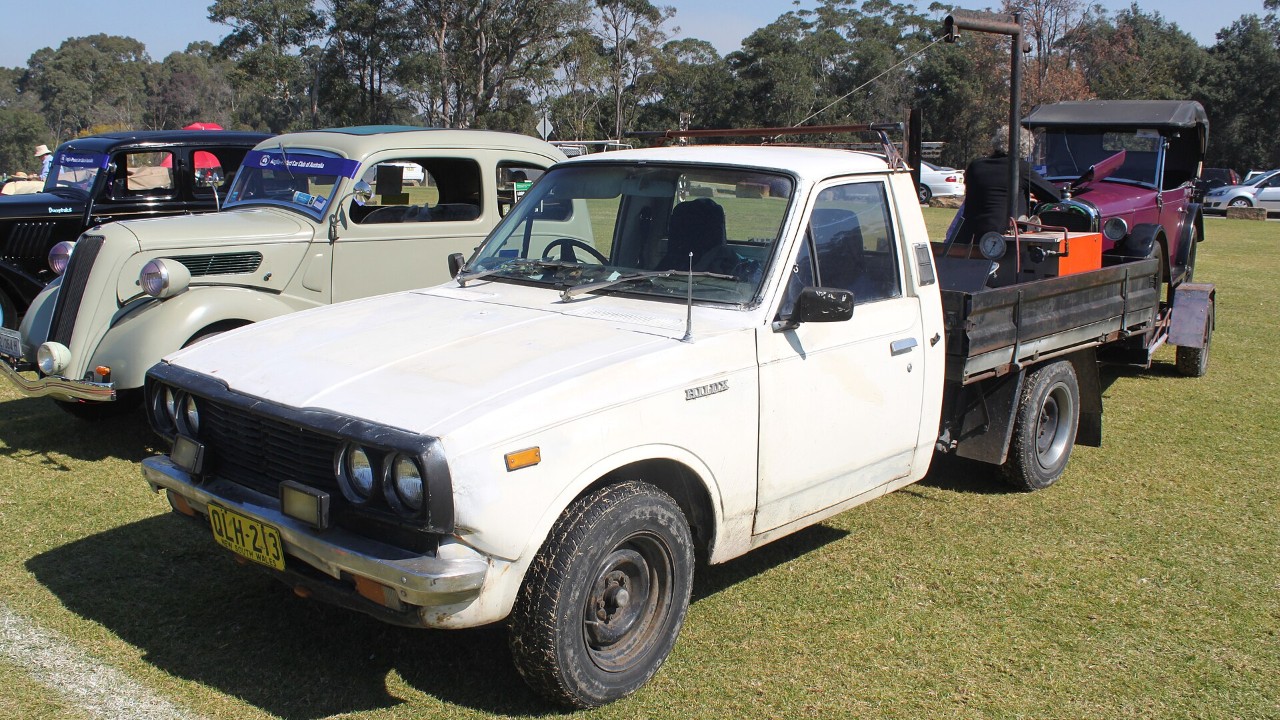
The second Hilux went on sale in May 1972 with slightly longer wheelbases and a more comfortable cab. Toyota also added a dual brake master cylinder and load-sensing brake valves, which were serious kit for a work truck then. By 1975, U.S. buyers could get a 2.2-liter engine and an optional five-speed. However, there was no factory four-wheel drive yet. Simple parts and a stout frame are why we’d still trust one today.
2. 1982 Toyota Hilux Utility (N30/N40)
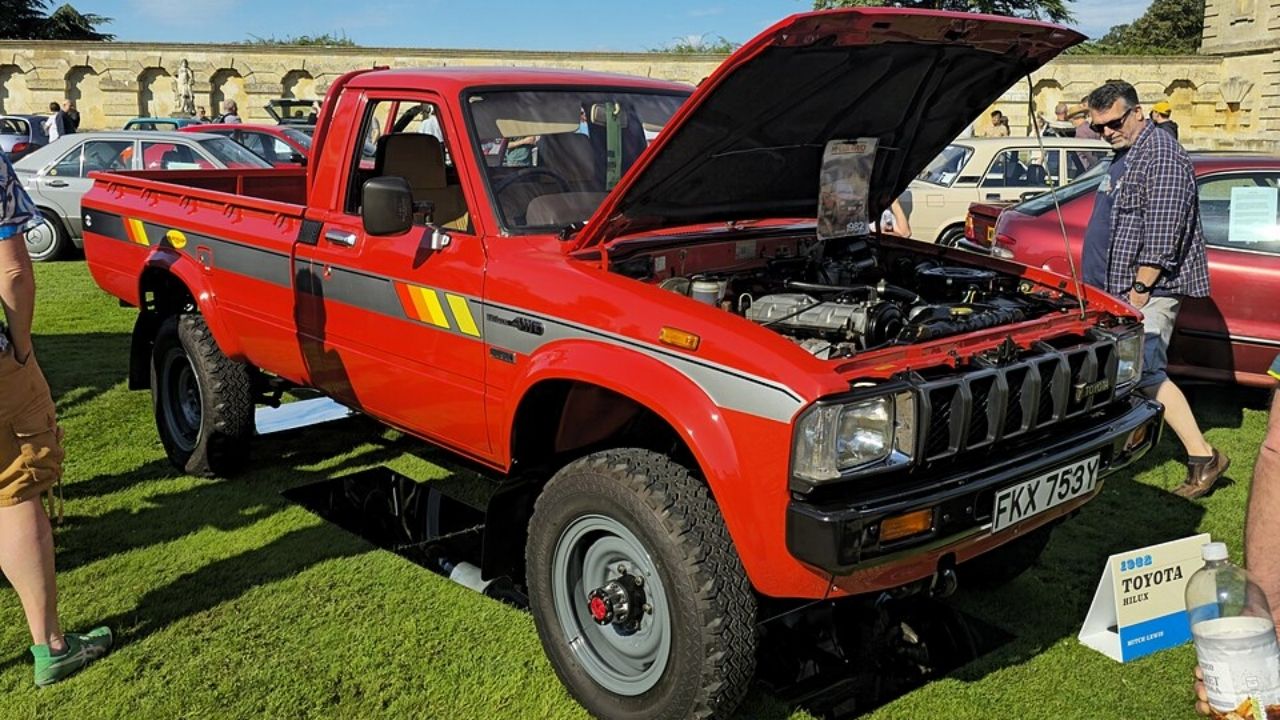
This generation brought the big changes. Toyota launched it in 1978, then added the first factory four-wheel-drive Hilux in 1979. A diesel arrived that same year, and a double cab followed in October 1981. At the front, torsion bars replaced the old coil springs. We’ve already covered how the 1979 Hilux earned global respect. In our view, a 1980s ute like this one is about as close to unbreakable as a cheap truck gets.
3. Toyota Hilux (N50/N60) Camper

If any Hilux proves the point, it’s this one. Toyota UK notes that BBC’s Top Gear tried to “kill” a hard-worked fourth-generation Hilux and failed. Toyota says this generation is easy to spot by its blistered fenders. In 1984, Toyota also used the short-wheelbase 4×4 version as the base for the first 4Runner, sold as the Hilux Surf in Japan. Add a camper body like this one, and you’ve got a getaway truck that refuses to quit.
4. Toyota Hilux (N80)
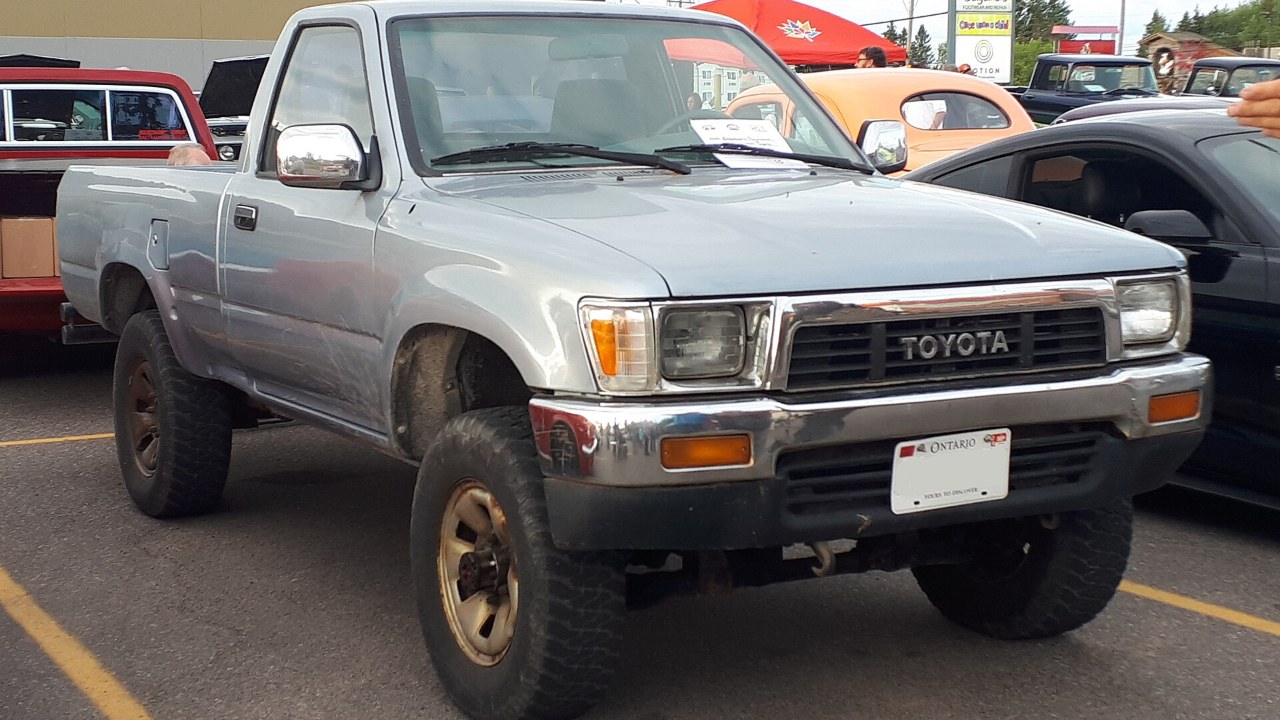
Toyota launched the fifth Hilux in September 1988 and built it around power, sturdiness and comfort. One smart change was a one-piece cargo bed, which Toyota UK says cut the risk of rust. Meanwhile, four-wheel-drive models got arch flares that made them 40 mm wider. In North America, this generation ended when the Tacoma took over. Elsewhere, it carried on, and its sturdy build is why we rate it so highly.
5. 2000 Toyota Hilux Xtra Cab (RZN154R)

In September 1997, Toyota split the sixth Hilux into two lines. One was a basic business truck, while the other was a more comfortable personal pickup. Two months later, an Extra Cab arrived with a body 100 mm wider and two small rear seats. Later, in the U.K., Toyota named a grade “Invincible” in July 2004. Honestly, that badge sums up how we see the whole generation.
6. Toyota Hilux 2700i 4×4 (N170)

That “2700i” badge points to the 2.7-liter four-cylinder gas engine Toyota offered in this generation. It’s a simple, unstressed motor in a body-on-frame truck, and we think that combination explains its long life. Toyota built sixth-generation trucks in several countries, including Japan, Thailand and South Africa. For anyone who wants a gas-powered 4×4 Hilux that keeps going, this is our pick.
7. Toyota Hilux D-4D (AN10)

This was the first Hilux built outside Japan, starting in Thailand in August 2004. It rode on Toyota’s new IMV platform, with a ladder frame described as 45 percent stiffer than before. In the U.K., a 3.0-liter twin-cam D-4D diesel joined the range in January 2007. Better yet, Top Gear drove one to the North Magnetic Pole, which Toyota UK calls a first for any motor vehicle. That’s about as tough as a test gets.
8. Toyota HiLux Crew Cab (AN120)

Toyota launched the eighth generation on May 21, 2015, in Bangkok and Sydney. Its chassis gained 20 percent more torsional rigidity, and Toyota UK lists towing capacity of up to 3.5 tonnes. It was also the first Hilux with optional autonomous emergency braking. A crew cab like this one hauls the family and the gear at the same time. We’ve written before about how the Toyota Hilux earned its reputation in harsh places, and this generation keeps that going.
More from Fast Lane Only