Toyota has built fast hatchbacks before, but the Toyota GR Yaris Morizo RR is something different, a car born from a direct order from the top to build a machine that behaves like a race car on public roads. Rather than chasing abstract performance numbers, it channels the demands of Master Driver Morizo, the racing alter ego of Akio Toyoda, into a compact, highly focused package. The result is a limited‑run hot hatch that treats everyday driving as an extension of the pit lane rather than a commute.
By using a competition program as its template, the Morizo RR shows what happens when corporate hierarchy bends around a single driver’s feel for grip, balance, and feedback. It is not simply a tuned Toyota GR Yaris, but a road‑legal reflection of the car Toyoda drove in the Nürburgring 24 Hours, with its hardware, software, and even its bodywork reworked to satisfy one person’s very specific expectations.
From Nürburgring prototype to showroom special
The Toyota GR Yaris Morizo RR exists because Akio Toyoda, under his Morizo persona, wanted a road car that mirrored the race machine he drove at the Nürburgring 24 Hours. Development centered on translating that endurance racer’s behavior into something customers could buy, rather than starting from a marketing brief or a power target. Official material on the GR Yaris MORIZO RR special edition describes it as a model created with Master Driver Morizo, with an under‑development prototype used to shape future performance models, a clear indication that Toyoda’s feedback loop ran directly into the engineering process.
That race‑to‑road lineage is not a vague inspiration but a concrete blueprint. Reporting on the Morizo RR notes that it receives upgrades based on the race car Toyoda drove in the 2025 Nürburgring 24 Hours endurance race, tying its specification to a specific competition program rather than a generic motorsport heritage claim. The overall philosophy, as described in launch coverage, emphasizes dynamic prowess and driver connection rather than flashy styling or headline power figures, which is consistent with a car tuned around lap‑after‑lap consistency and feel rather than a single dyno run.
A drivetrain tuned for a single driver’s preferences
Under the skin, the Morizo RR’s powertrain and driveline show how far engineers will go when the brief is to satisfy one demanding driver instead of a broad customer clinic. The car remains a compact all‑wheel‑drive hatch, but its engine output, response, and torque delivery have been recalibrated to match the race‑inspired character that Toyoda requested. Video coverage of the 2026 Toyota GR Yarus Marizo RR describes it as a limited edition high‑performance variant of the Yarus developed with direct input from Morizo, reinforcing that the drivetrain changes are not generic upgrades but tailored responses to his track experience.
The all‑wheel‑drive control system illustrates this philosophy most clearly. Rather than retaining the previous Gravel mode, the Morizo RR introduces a new Morizo mode in the AWD system, replacing the former Gravel setting and reshaping how torque is sent to each axle. Reporting on the car explains that this change was made to better reflect the balance and rotation Toyoda preferred during the Nürburgring 24 Hours, effectively encoding his driving style into the car’s software. It is a rare example of a production model whose default behavior in slippery or aggressive driving scenarios is named after, and tuned for, a single individual.
Aero and chassis that prioritize grip over glamour
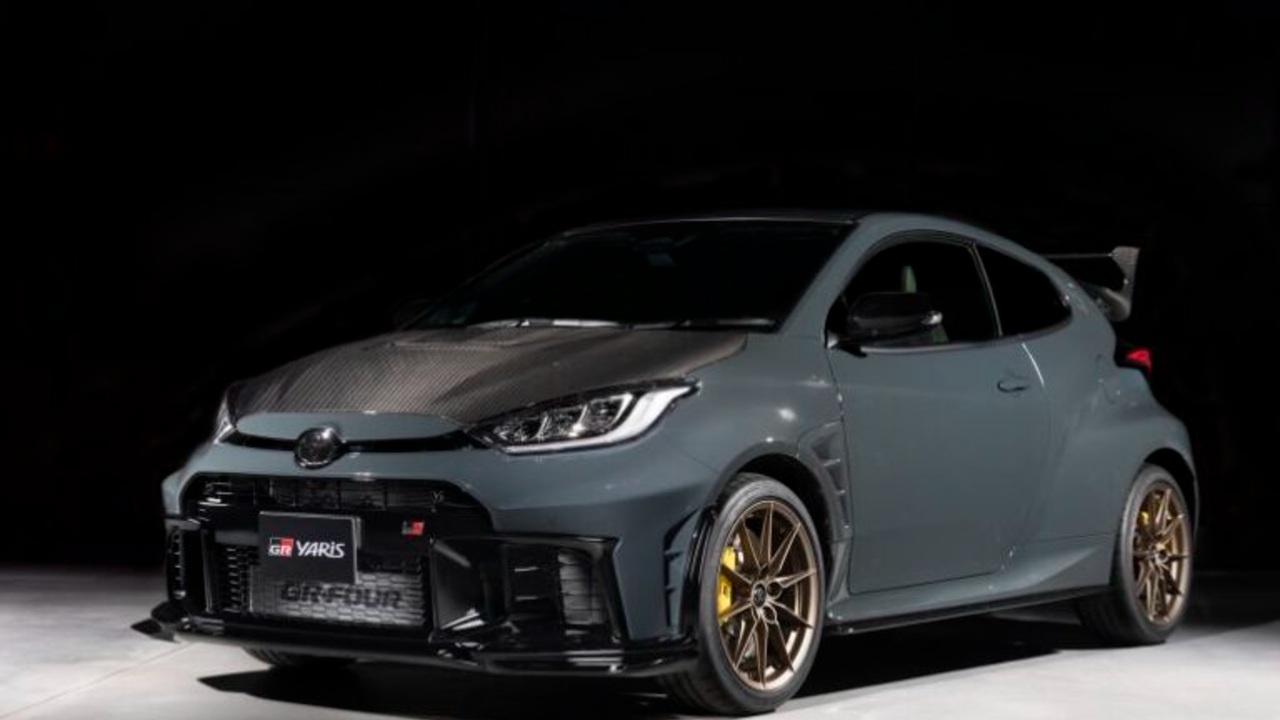
Where many performance specials lean on aggressive styling to justify their price, the GR Yaris Morizo RR uses its bodywork as a functional tool. The car features an exclusive carbon‑fiber rear wing that generates significant downforce, a front spoiler, side skirts, and a carbon‑fiber hood, all of which are listed among its main features in official descriptions. Benefitting from the powerful downforce generated by that exclusive rear wing, the suspension setup has been optimized to keep the car stable at high speed and under heavy load, a direct nod to the demands of endurance racing rather than boulevard posing.
The chassis and tire package follow the same logic. Coverage of the limited‑run 2026 Toyota GR Yaris Morizo RR in Japan notes that The Morizo RR features an exclusive carbon‑fibre rear wing generating significant downforce and rides on Michelin Pilot Sport 4S tyres, a choice that favors consistent grip and feedback over show‑car rubber. Other reports highlight that the car’s signature elements include unique exterior details, including an exclusive body color called Gravel Khaki, but even that paint choice is framed as part of a cohesive, motorsport‑inspired identity rather than a fashion statement. The net effect is a car whose visual aggression is inseparable from its functional purpose on track.
Interior and driving modes built around connection
Inside, the Morizo RR continues to reflect a race‑first mindset, even if the sources focus more on philosophy than upholstery. Launch material shared by Toyota Gazoo Racing emphasizes that the overall philosophy prioritizes dynamic prowess and driver connection, describing a driving experience that Akio Toyoda himself demands. That emphasis suggests a cockpit arranged to keep the driver focused on steering feel, pedal modulation, and visibility, rather than on screens or ambient lighting. The limited‑run nature of the car, highlighted in coverage of the Toyota GR Yaris Morizo RR unveiled in Japan, reinforces the sense that this is a driver’s tool first and a lifestyle object second.
The software that governs the driving experience is equally focused. The introduction of the dedicated Morizo mode in the AWD system, replacing the previous Gravel mode, is more than a menu tweak. Reporting on the car explains that this new setting alters how the car distributes power to favor the balance Toyoda preferred during his Nürburgring stints, effectively turning a drive mode into a codified driving lesson. Other analyses of the GR Yaris Morizo RR stress that it is more than just a GR Yaris with prettier yellow brakes and a unique Gravel‑inspired color, underlining that the changes to modes, response, and feedback are central to its identity, not optional extras.
What the Morizo RR signals about Toyota’s performance future
The GR Yaris Morizo RR is not only a collectible hot hatch, it is also a statement about how Toyota intends to develop performance cars under the guidance of its most visible driver. Official announcements from TOYOTA GAZOO Racing describe the GR Yaris MORIZO RR special edition as part of a broader effort to shape future performance models, with the prototype used to refine ideas that will filter into later cars. That language positions the Morizo RR as a rolling test bed, where lessons from the Nürburgring 24 Hours and from Toyoda’s own seat time can be translated into production‑ready hardware and software.
For enthusiasts, the car demonstrates what happens when a chief executive treats the product line like a personal garage of race‑inspired tools rather than a set of market segments. Coverage of the GR Yaris Morizo RR at the Tokyo Auto Salon notes that the car is track‑bred, exclusive, and, in some markets, not officially available, underscoring its role as a halo rather than a volume seller. Yet the presence of features like the exclusive carbon‑fiber rear wing, the Morizo‑specific AWD mode, and the Gravel Khaki finish in a road‑legal package shows that Toyota is willing to let its most committed drivers, starting with Morizo himself, dictate the direction of its most exciting cars. In that sense, the Morizo RR is less a one‑off indulgence and more a preview of a future where the line between race car and road car continues to blur under executive orders from behind the wheel.
More from Fast Lane Only