The latest escalation in Donald Trump’s tariff strategy has detonated like a shockwave through Britain’s car industry, ripping open vulnerabilities that had only just begun to heal. After years of Brexit disruption and global supply chain strain, UK manufacturers now face a renewed trade conflict that threatens investment plans, export volumes, and the fragile return to growth that had started to emerge.
What makes this moment so destabilising is not only the scale of the tariffs but the whiplash between hostile measures and selective relief. UK automakers find themselves both singled out for preferential access to the United States and simultaneously trapped inside a wider tariff war that is battering global demand and investor confidence.
From tariff truce to fresh turmoil
For a brief period, it appeared that the UK had secured a rare win in Trump’s protectionist landscape. A new bilateral trade arrangement made The UK the only country to obtain a specific reduction in US car export tariffs, cutting duties from 27.5% to 10% on qualifying vehicles and aerospace products. Officials framed the deal as a lifeline that could save manufacturers hundreds of thousands of jobs by restoring competitiveness in a market that accounts for a significant share of British exports.
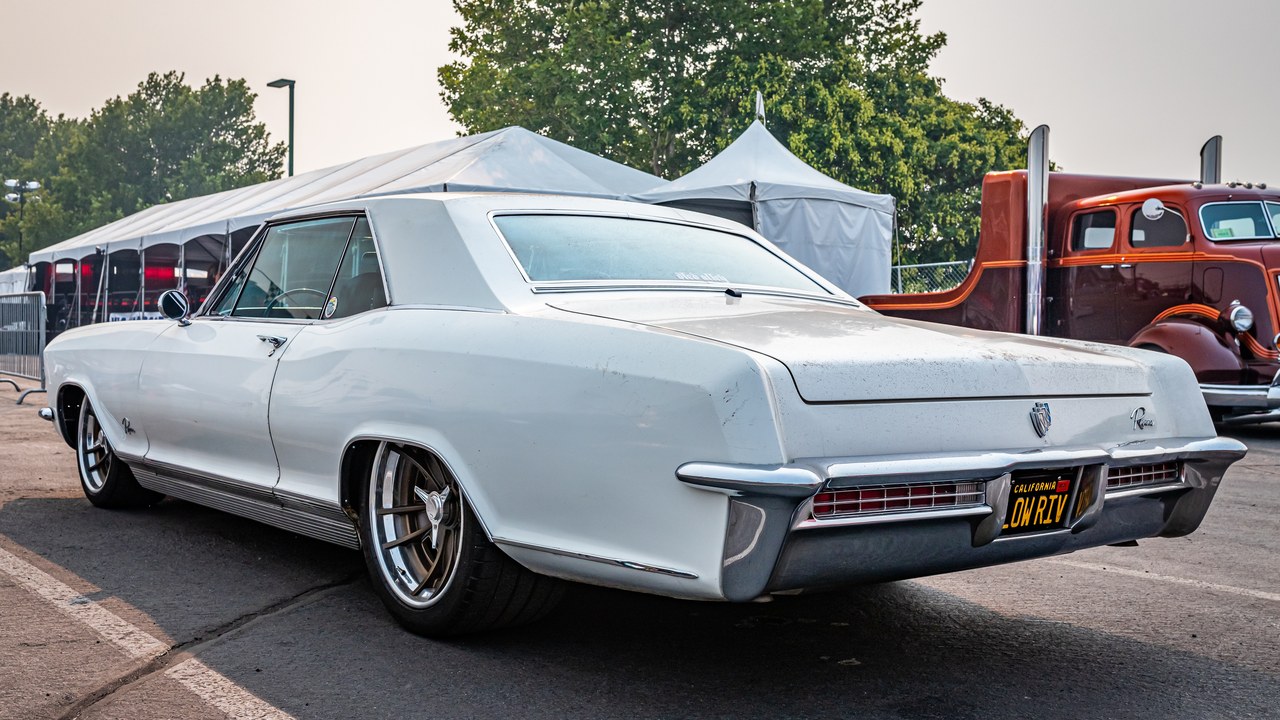
That optimism, however, collided almost immediately with Trump’s broader decision to impose a 25% tariff on a wide range of imported vehicles. Reports of carmaker shares sliding after the 25% move underscored how quickly markets priced in the risk of a full-blown trade war, with figures such as Reeves warning that tit-for-tat barriers are “no good for anyone.” Even as UK-built Jaguars, Minis, and Bentleys gained a relative edge under the bespoke tariff cut, the overall climate of uncertainty around US trade policy began to choke off the very investment the deal was meant to unlock.
Preferential treatment, political backlash
Trump has been unusually explicit about why Britain received special consideration. On Thursday, Trump told reporters he had given UK luxury marques preferential treatment because he was personally partial to Britain’s ultra-luxury cars, a remark that confirmed what many in Detroit already suspected. The carve-out for British exports was less a technocratic adjustment and more a political gesture, one that played well with UK ministers but landed badly with US rivals who saw themselves disadvantaged in their own home market.
US manufacturers quickly made their displeasure known. Ford, General Motors and Stellantis were described as “disappointed” and even “furious” at a United Kingdom trade deal that left Trump’s 25% vehicle tariffs in place while easing the burden on certain parts and materials. Industry critics argued that the arrangement effectively rewarded British producers while US firms continued to absorb higher costs on imported models and components, including parts sourced from Canada and Mexico. The backlash has turned the UK’s apparent diplomatic win into a flashpoint in Washington, where domestic automakers are pressing for either broader relief or a rollback of the UK’s advantage.
UK industry caught between lifeline and liability
For British manufacturers, the new trade architecture is a paradox. On paper, the reduction from 27.5% to 10% on eligible exports should be transformative for a sector that sends 15.9% of its vehicles to the US, the UK’s largest single export destination outside Europe. Combined with the fact that 54.4% of UK-built cars still go to the EU, the American market is vital for maintaining scale in plants from Sunderland to Solihull. The bespoke deal was supposed to stabilise order books and encourage fresh investment in electric vehicle lines and battery supply chains.
In practice, the surrounding tariff war has undermined that promise. UK automotive output has already been under pressure from declining production and EV supply chain issues, and the renewed volatility in US policy has made long term planning even harder. Although recent data suggested that Britain’s manufacturing decline had slowed to pre Trump tariff levels, with factory activity falling at its slowest pace since January and optimism tentatively improving, the latest shock risks reversing those gains. Executives now face a contradictory landscape in which one set of Trump measures offers a lifeline while another set of Trump tariffs threatens to erode demand and raise input costs across global supply chains.
Legal challenges and political theatre
The instability is not confined to economics. Trump’s tariff regime is now entangled in a complex legal battle that could reshape the rules of global trade. Investing has reported that The US Supreme Court is expected to rule on the legality of Trump’s tariffs sometime between March and June, after a lower court found sweeping measures unlawful but left them in place pending appeal. Activists have seized on a recent Appeals Court decision that partially checked Trump’s authority, with social media campaigns using slogans such as “Courts Stop Trump, Who Will Stop Starmer” to link US legal fights with domestic UK political debates over trade and agriculture.
This courtroom drama feeds directly into boardroom risk assessments. If The US Supreme Court ultimately strikes down key elements of Trump’s tariff architecture, the painstakingly negotiated UK deal could be reopened or diluted, while a ruling that upholds the measures would entrench the current patchwork of preferences and penalties. Either outcome carries consequences for British automakers that must decide now where to allocate capital for the next decade. The sense of a “RUDE AWAKENING” for Trump from both UK officials and companies like Ford, amplified in online commentary, reflects a broader recognition that trade policy can no longer be treated as a series of isolated gestures, but as a system whose internal contradictions are starting to collide.
Market whiplash and the road ahead
Financial markets have mirrored this policy turbulence. Earlier speculation about an imminent UK US trade pact was enough to send Tata Motors shares up by about 3%, as investors bet that lower tariffs would boost the value of its British subsidiary, Jaguar Land Rover. That rally now looks fragile in light of the wider 25% tariff shock, which has dragged down carmaker valuations and revived memories of previous sell offs triggered by Trump’s trade salvos. Social media posts noting that Volkswagen is only the latest in a string of major carmakers to announce billions in tariff related losses, alongside General Motors reporting similar hits on a Tuesda update, underline how quickly the costs of protectionism are mounting across the sector.
For the UK, the stakes extend beyond quarterly earnings. The auto industry anchors high value manufacturing regions, supports complex logistics networks, and underpins research into low emission technologies. Government officials have promoted the new trade deal as proof that Britain can still cut bespoke agreements that protect strategic sectors, yet the surrounding tariff war has hurled UK automakers back into a state of near constant crisis management. With Trump signalling no intention of abandoning his hard line approach, and with The US Supreme Court poised to decide whether those powers have legal limits, British carmakers are left navigating a narrow path between opportunity and peril, hoping that the next shockwave does not finally knock them off course.
More from Fast Lane Only