Some V8 engines dominate posters, auctions, and bench‑racing sessions, while others quietly rack up miles in the background, loved by owners but ignored by the wider market. The powerplants enthusiasts cling to are often the ones that mix character, durability, and tunability in a way spec sheets alone cannot explain. When I look at the engines people refuse to give up on, a pattern emerges: they are rarely the headline grabbers, yet they keep starting, revving, and surprising anyone lucky enough to drive them.
From obscure American small blocks to overlooked Japanese and European designs, these V8s sit in that sweet spot where real‑world performance and emotional appeal intersect. They may not carry the auction‑block mystique of a halo 426 or the latest turbocharged wonder, but they have something more enduring: a loyal following that knows exactly what they are worth.
Old‑school American V8s that never got their due
HEMI V8 engine carWhen people talk about classic American power, they jump straight to big names like Hemi and big‑block Chevelle, but some of the most satisfying engines to live with were the quieter players. One of my favorite examples is the Studebaker 289, a compact V8 that delivered a quoted Maximum Power of 275 HP in period and proved that Jan era engineering outside Detroit’s Big Three could still punch hard. In period performance rankings it was overshadowed by larger, flashier mills, yet modern enthusiasts who dig into the Studebaker 289 find a stout bottom end, good breathing, and a willingness to rev that makes it ideal for period‑correct builds.
The same story plays out with small‑block muscle that never quite made the poster wall. The Cutlass with the 350 V8 is a perfect case study, a car that could run a Quarter Mile in 16.2 Seconds in stock trim, which sounds modest until you remember it was a comfortable, affordable cruiser that could still hustle when asked. Owners who know what The Cutlass can do see that 350 as a flexible, easy‑to‑tune workhorse, and modern coverage of underrated small‑block muscle has helped cement its reputation as a budget‑friendly way into real V8 character.
Sleepers, swaps, and the engines hiding in plain sight
Ask a group of enthusiasts to name underrated engines and you will hear the same refrain: Plenty of great powerplants never got the spotlight they deserved. One community favorite is the Sprint family of compact V8s and sixes, which fans praise for a rev‑happy personality and surprising durability, a sentiment captured in reader‑driven lists of underrated engines where the Sprint shows up again and again. That same grassroots affection extends to the Ford modular family, particularly the 4.6-Liter DOHC V8, which powered everything from luxury sedans to police cars and is now celebrated as a smooth, durable base for sleepers and restomods. Enthusiasts who dig into the Ford 4.6-Liter DOHC find an engine that responds well to boost and cam work, even if it never had the marketing aura of a big‑block.
Truck and SUV engines often get even less respect, which is why the 5.9-liter Dodge Magnum is such a revelation when you drive one hard. In factory form it was rated at a modest Horsepower figure of 230 in applications like the Dodge Dakota R/T, yet modern tuners have shown that the 5.9-liter Dodge Magnum can deliver torque and responsiveness that rival newer designs. That same sleeper mentality fuels the diesel‑swap world, where builders routinely pull out tired gas engines and drop in torquey oil‑burners, a trend chronicled in roundups of top diesel‑swap builds that show just how far people will go to create the ultimate sleeper.
Forum favorites and the engines only owners truly understand
Spend any time in enthusiast forums and you quickly learn that the most passionate defenses are rarely about the obvious halo engines. In one long‑running thread titled with the simple prompt One question about obscure powerplants, a Fiat coupe 20v turbo owner jumps in to praise the way that compact engine pulls and sounds, while another user argues that a humble V8 in a family sedan deserves more respect. That kind of conversation on Fiat and other obscure engines is where underrated legends are born, because it is based on lived experience rather than brochure numbers.
Another thread about Unique/Unpopular/Forgotten cars shows how much affection exists for workhorse V8s that spent their lives in uniform. Not every cop car is a CVPI, as one commenter points out, But even there you would be hard pressed to find a better long‑distance cruiser than a well‑set‑up 1970s Nova police car with a small‑block under the hood. That kind of praise on threads about forgotten cars is not about dyno sheets, it is about how an engine feels after hours on the highway, how it shrugs off abuse, and how it keeps starting on cold mornings long after the odometer has rolled over.
From Hemi icons to LS workhorses, the “other” side of famous families
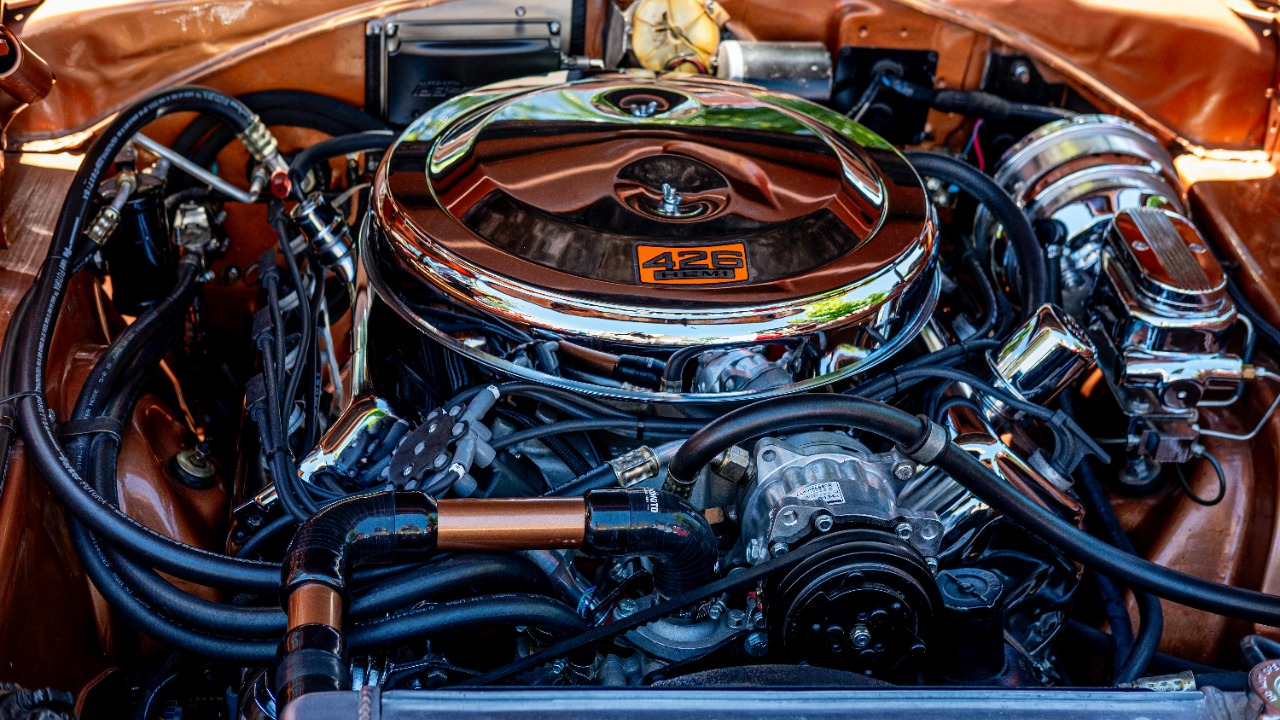
Some engines live in the shadow of their own legends. The word Hemi instantly conjures images of dragstrips and NASCAR, and the 426 remains the poster child, with Power supplied by the legendary 426/425hp HEMI V8 engine in some of the most valuable muscle cars ever built. That halo effect can make it easy to forget the more attainable hemispherical‑chamber engines that quietly powered family sedans and trucks, yet coverage of why a Hemi engine is so special makes clear that the basic architecture, not just the top‑tier tune, is what enthusiasts love. Even in period, buyers faced choices like a $250 high‑performance small‑block option versus an $871 Hemi upgrade, and many chose the cheaper route, leaving us with a rich ecosystem of underrated V8s that shared much of the same DNA, as period pricing comparisons for Hemi and small‑block options make clear.
The LS family tells a similar story from a different angle. From Corvettes like the Chevrolet Corvette and Camaros such as the Chevy Camaro to Pontiac GTOs and Cadillac CTS‑Vs, the LS architecture became a modern default, yet the smaller 5.3L variants are still treated as second‑tier by people chasing big dyno numbers. Builders who actually work with these engines know better, which is why guides to the essential LS history and detailed how‑tos on 5.3L builds emphasize how much value is hiding in the smaller displacements. One technical breakdown even notes that Those of you wondering why builders did not start with a larger 5.7L, 6.0L, or 6.2L should remember that the 5.3L is more readily available and cheaper, a point underscored in a step‑by‑step 5.3L LS build that shows how easily it can be coaxed into serious power.
Global V8 outliers and why enthusiasts keep them alive
Underrated V8s are not just an American story. Japanese manufacturers are better known for inline‑fours and sixes, But behind those legends lies a range of underrated Japanese engines that quietly deliver strong performance and reliability for drivers who know what to look for. Coverage of underrated Japanese powerplants highlights how these engines, including lesser‑known V8s, reward careful tuning and maintenance rather than headline‑grabbing specs. In Europe, BMW followed a similar path with the S65, a high‑revving V8 that enthusiasts adore for its throttle response and sound, even as they acknowledge the Reliability challenges that come with it. Detailed rundowns of Common Issues and Fixes The S65 face show why owners are willing to invest in rod bearings and regular inspections to keep that engine singing.
What ties all of these outliers together is the way they connect with people. Demographic analysis of LS7 versus Coyote buyers shows that high‑performance V8s tend to appeal most to enthusiasts aged 35 to 55, a group that often has the disposable income and mechanical curiosity to keep older engines alive. That Demographic analysis also notes how strongly people identify with specific engine architectures, which helps explain why LS loyalists, Hemi fans, and modular devotees all defend their favorites so fiercely. For many, the bond starts with sound: the Unique Rhythm of a Cross‑plane crank in an American V8 creates that deep burble enthusiasts crave, a trait explored in detail in guides to why V8 exhausts sound so good and one that engines like the S65 or a well‑tuned small‑block can deliver in very different but equally addictive ways.
Why these V8s still matter in a changing performance world
Even as electrification and downsized turbo engines reshape the market, the appeal of a charismatic V8 has not faded. Builders still gravitate to the 32-valve modular V‑8 when restomodding classics like the 1958 Ford Thunderbird, praising its smoothness and modern drivability in a vintage shell. That combination of old and new is why the 32-valve modular V‑8 has become a restomod favorite, and the same logic drives the use of Ford’s supercharged V8 in the mid‑2000s GT supercar. While it shared core architecture and some components with other Ford V8s of its era, it was anything but ordinary, a point underlined in retrospectives on how the Ford GT engine was engineered specifically for serious performance.
On the domestic side, the humble Chevy 350 still anchors countless builds, even as more exotic options crowd the scene. Your Thoughts Even if the small‑block vote is split among various versions, the consensus is that a well‑tuned Chevy 350 remains one of the most versatile V8s ever produced, capable of decent power from stock and huge gains with simple upgrades. That enduring respect is reflected in discussions of the small‑block Chevy 350 and in the way LS‑powered Pontiac GTOs are treated as modern classics. There is not a lot of free horsepower left in those LS engines from the factory, but they sit at the center of a thriving aftermarket where, as one guide to getting the most from a Pontiac GTO notes, almost any modification you can imagine has already been tried and refined. In that sense, the most underrated V8s are not the ones nobody knows about, but the ones quietly doing everything enthusiasts ask of them, year after year.