Volvo is quietly stoking the passions of wagon loyalists while plotting a new flagship with three rows of seats. Hints from senior executives suggest that a supersized utility vehicle and a renewed commitment to long-roof practicality could arrive in tandem, reshaping how the brand balances American tastes with its European roots. The result is a tantalizing prospect: a future lineup that pairs a full-size people mover with wagons that feel more aspirational than nostalgic.
From wagon icon to SUV powerhouse
For decades, Volvo built its reputation on boxy wagons that turned safety and sensibility into a kind of understated luxury. In the United States, that heritage effectively ended when Volvo Wagons in America Are Dead, For Now, with the V60 Cross Country identified as the final long-roof model available to American buyers before the company shifted its focus to higher-riding vehicles. That decision aligned with a broader strategy to streamline the range, as Volvo moved to discontinue several long-running models in order to concentrate on electrification and a clearer product vision that leans heavily on crossovers and utility vehicles.
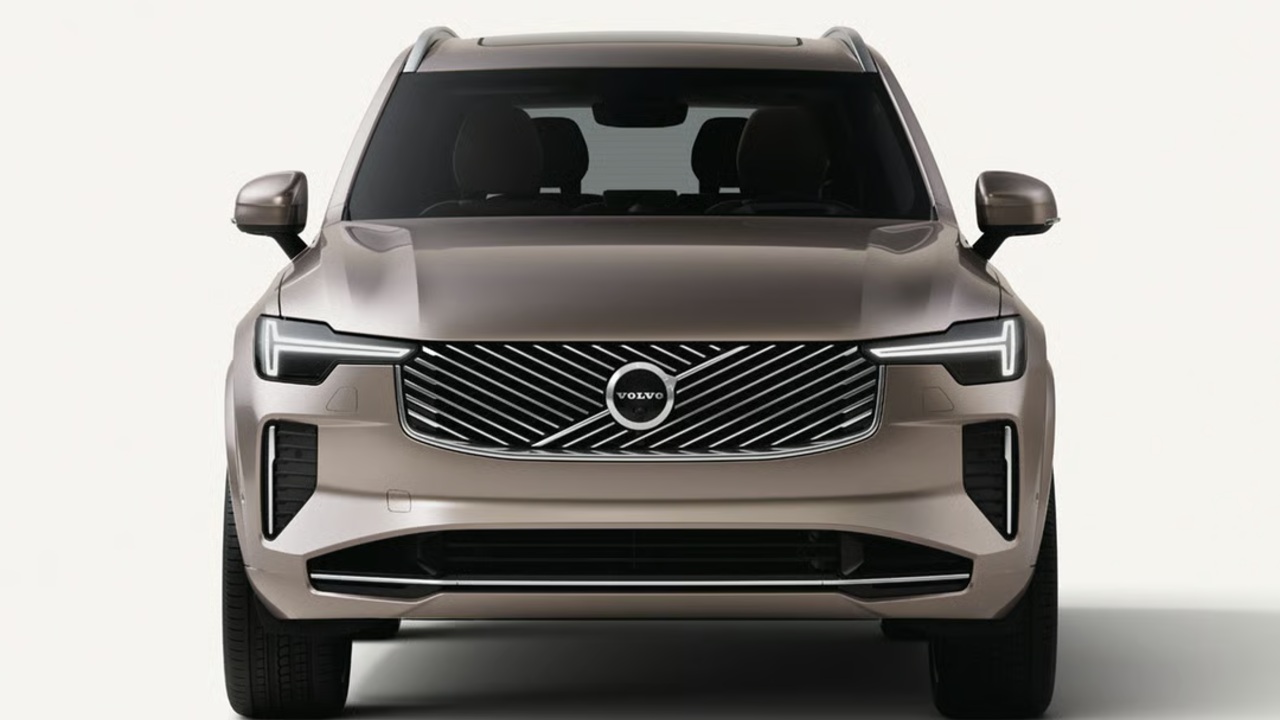
Even as the brand pivoted, the SUV side of the showroom flourished. Volvo Cars now fields a diverse lineup that runs from compact and mid-size crossovers to the larger Volvo XC90 SUV, with plug-in hybrid variants and other electrified options layered in to support its long-term emissions goals. The company is also preparing The Volvo EX60, described as a fully electric version of the carmaker’s best-selling Volvo XC60, a mid-size SUV positioned to deliver up to 400 miles of pure electric range and a body structure where the battery pack is an integrated part of the body. In practical terms, Volvo has already become an SUV-first manufacturer, and any revival of wagons will need to coexist with that reality rather than replace it.
A supersized three-row to challenge luxury flagships
Against that backdrop, Volvo Cars is exploring the idea of expanding its lineup with a larger three-row utility vehicle aimed squarely at luxury flagships. Executives have signaled interest in a full-size SUV that would rival established nameplates such as Escalade and other high-end three-row competitors, a move that would push the brand further upmarket in both size and price. Reporting on Volvo Cars indicates that this larger three-row utility vehicle is being studied as a way to compete directly with luxury flagships, suggesting that the company sees headroom above the current XC90 for a more imposing and more spacious model.
Hints of this strategy are reinforced by discussion of Dusting off XC100, a name that has circulated around Volvo’s past internal planning for a full-size SUV. With Volvo focused on electrified models tailored to regional demands, the idea of a U.S.-built supersized SUV to battle vehicles like the Mercedes GLS has resurfaced as a serious possibility rather than a speculative concept. The company is already expanding its North American manufacturing footprint, with Volvo extending hybrid plans through 2040 and preparing a new hybrid SUV for North American buyers in 2029, which underscores how central the region has become to its utility-vehicle strategy. A flagship three-row would fit neatly into that roadmap, giving Volvo a halo product that aligns with American preferences for size and presence.
Wagon loyalists get a glimmer of hope
At the same time, Volvo executives have been careful not to close the door on wagons as a body style. Public comments from product leaders make clear that Volvo is not done with wagons after all, with Yes the answer from Fleiss when asked whether there is still a viable market segment for wagons in the brand’s future planning. That stance is echoed in separate remarks where Volvo execs hint at a possible 3-row SUV to rival Escalade while also suggesting that wagons could return to the United States, a pairing that frames long-roof models not as relics but as complementary offerings alongside larger utility vehicles.
Outside the United States, the case for wagons looks even stronger. One executive has argued that Europe offers the biggest customer base for the segment, while also noting that the rest of the world is increasingly hopping onboard the bandwagon for practical, car-like vehicles that avoid the bulk of full-size SUVs. Reporting that Volvo is not totally done building wagons yet reinforces this view, indicating that the company still sees value in the format even if American buyers have gravitated toward crossovers. For enthusiasts who watched Volvo kill off sedans and wagons in the U.S. with a mix of disappointment and resignation, these comments amount to a carefully worded promise that the long-roof story is not finished.
Balancing American demand with European DNA
The tension between a supersized SUV and a revived wagon lineup reflects a deeper question about Volvo’s identity. In the United States, the market rewards height, size, and towing capacity, which explains why Volvo execs are openly considering a three-row SUV to rival Escalade and why Volvo Cars is exploring a larger three-row utility vehicle to compete with luxury flagships. In Europe, by contrast, the brand’s DNA is tied to efficient packaging, long-distance comfort, and the understated practicality that wagons have long represented. The company’s leadership appears intent on serving both constituencies, using regional tailoring to reconcile these divergent expectations.
With Volvo emphasizing electrified models that are tuned to local demand, the emerging strategy looks less like a binary choice and more like a portfolio play. A U.S.-built supersized SUV would cater to North American buyers who want a family hauler with three usable rows, while Europe could remain the primary home for new wagon designs that build on the brand’s heritage. The fact that Volvo extends hybrid plans through 2040 with a North America focused SUV arriving in 2029 shows that the company is willing to develop region-specific products when the business case is strong. In that context, a wagon revival in the United States, even in limited or crossover-adjacent form, becomes easier to imagine if the larger SUV can carry much of the volume and profit burden.
What a three-row “wagon revival” could look like
If Volvo follows through on both threads, the result may not be a nostalgic return to the exact wagons of old but a new interpretation of the long-roof idea. A full-size three-row utility vehicle, potentially informed by earlier XC100 thinking, would likely adopt a more upright stance and commanding driving position to satisfy American tastes. Yet Volvo’s design language and safety priorities could steer it toward a cleaner, more wagon-like silhouette than the typical body-on-frame giant, especially if electrification and an integrated battery structure similar to that of The Volvo EX60 encourage a lower, more aerodynamic profile. In that sense, the teased three-row could itself feel like a modern wagon in spirit, even if it wears an SUV badge.
Parallel to that, a renewed wagon offering would probably lean on markets where demand is strongest, with Europe identified as the biggest customer base and other regions gradually warming to the format. Volvo Wagons in America Are Dead, For Now, but executives have left open the possibility that the United States could see wagons return if the right product and timing align. As Volvo refines its lineup, from the robust XC90 SUV to future North American hybrids and fully electric models like the EX60, the company is effectively testing how far it can stretch between its pragmatic, low-slung heritage and the towering utility vehicles that dominate today’s roads. For wagon fans, the latest signals suggest that the dream is no longer confined to the past, but is instead being quietly woven into Volvo’s next generation of three-row and long-roof designs.
More from Fast Lane Only