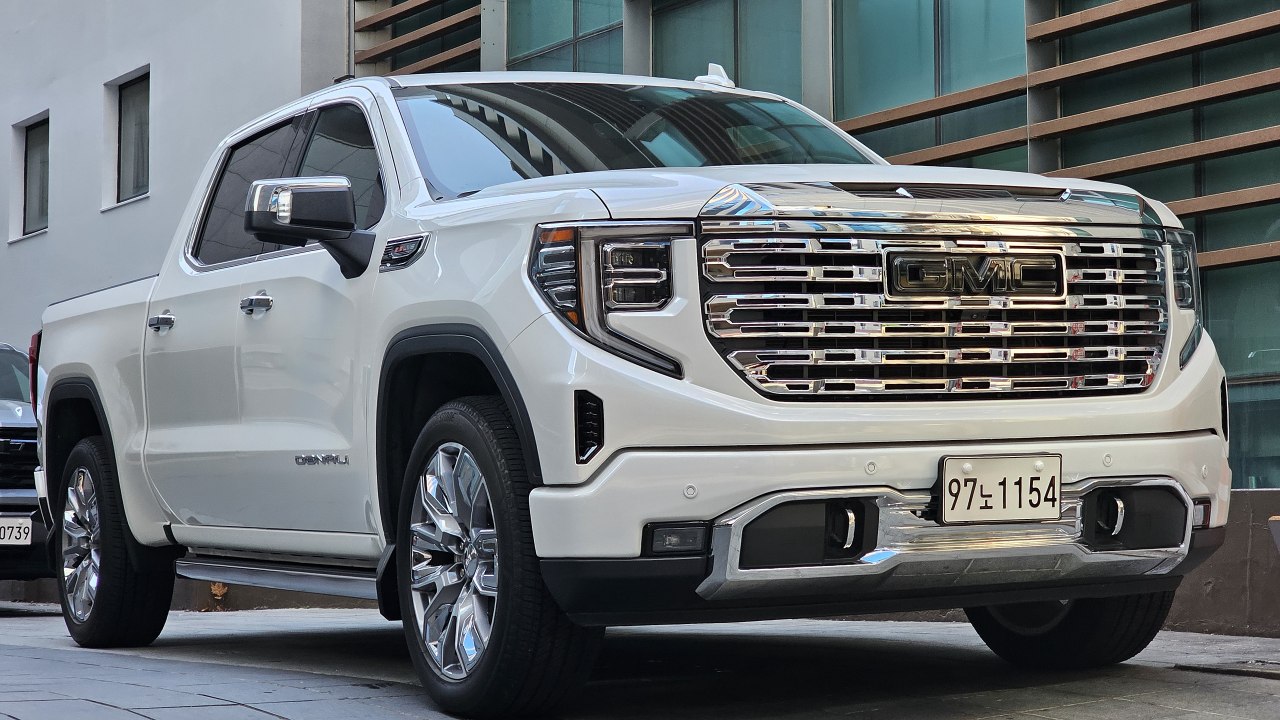
Federal safety officials are once again scrutinizing General Motors’ 6.2L L87 V8 after reports that engines are still failing even after recall repairs that were supposed to fix the problem. The renewed attention raises fresh questions about whether the original remedy was adequate and what that means for hundreds of thousands of truck and SUV owners who believed their vehicles had been made safe.
At stake is not only the reliability of a flagship engine but also confidence in how quickly and effectively automakers and regulators respond when a defect can destroy an engine without warning. The reopened probe signals that the federal government is not yet convinced the story of these failures is over.
Why regulators are back on GM’s 6.2L L87 V8
Federal investigators have moved from monitoring to actively reexamining the 6.2L L87 V8 after receiving a new wave of complaints that engines failed even after recall work was completed. The National Highway Traff safety agency, through NHTSA, has opened a fresh defect review that focuses on whether the earlier recall remedy truly addressed the root cause of the failures or simply delayed them. Reports describe engines that seize or catastrophically fail shortly after dealer inspections and software or oil-related updates that were intended to protect internal components.
According to federal summaries, the new action is driven by 36 owner complaints that engines suffered major damage after the recall fix, a figure that appears in multiple descriptions of the reopened inquiry. Regulators have linked the probe to roughly 600,000 G vehicles in the United States, with one account citing about 600,000 G affected models and another specifying 597,571 G trucks and SUVs equipped with the L87 6.2L V8. These figures sit within a broader global recall footprint of 721,000 vehicles that General Motors previously identified as needing attention for the same engine issue.
How the original recall was supposed to work
The earlier recall emerged after General Motors acknowledged that certain 6.2L V8 gas engines, designated by RPO, could suffer internal damage linked to lubrication and manufacturing concerns. Manufacturing records were used to pinpoint vehicles built within a suspect window, and the company ultimately recalled 721,000 SUVs and trucks worldwide, a number repeated in both federal filings and consumer reporting. The affected lineup included high profile models such as Chevrolet Silverado 1500, GMC Sierra 1500, Cadillac Escalade and ESV, along with related GMC Yukon and Yukon XL vehicles.
Under the Recall Scope and Inspection Protocol, dealers were instructed to inspect engines and, in many cases, adjust the motor oil strategy to a thicker viscosity at operating temperature to compensate for potential imperfections. The recall documentation indicates that the remedy centered on software updates and oil specifications rather than wholesale engine replacements, except where damage was already evident. That approach was intended to reduce the risk of Engine Seizures and Failures without the cost and disruption of mass mechanical overhauls, a strategy that is now under renewed scrutiny as Failures Continue After Recall.
What owners are reporting after the “fix”
Owner accounts collected by regulators and consumer attorneys describe a troubling pattern: vehicles that passed recall inspections or received updated oil and software settings, only to experience sudden engine failure later. In the federal defect file, the 36 post remedy complaints often involve engines that seized at highway speeds or shortly after startup, sometimes accompanied by loud knocking, loss of power, or complete shutdown. These narratives align with the broader description of Engines Are Still Failing, which notes that the Government Wants to Know Why the failures persist despite prior corrective action.
Legal and advocacy summaries of Engine Seizures and Failures, framed as What You Need to Know, emphasize that some owners had no warning lights or clear symptoms before the engine catastrophically failed. Others reported repeated trips to dealers where technicians could not replicate the issue until the engine finally locked up. These experiences have fueled skepticism about whether the recall inspections were rigorous enough and whether the oil based remedy could truly protect engines that might already have latent internal damage. For drivers who rely on these trucks and SUVs for work or family transport, the risk of a sudden failure is more than an inconvenience, it is a safety concern.
The scale of the investigation and legal fallout
The reopened federal probe now encompasses nearly the entire population of recalled vehicles in the United States, with NHTSA describing its focus as nearly 600,000 G or 597,571 G trucks and SUVs equipped with the L87 6.2L V8. Earlier, General Motors had already acknowledged recalling 721,000 vehicles worldwide, a figure repeated in both regulatory and consumer facing reports. The National Highway Traffic Safety Administration’s Office of Defects Investigation has formally registered a Recall Query, identified as RQ26001 in some legal summaries, to evaluate the effectiveness of GM’s safety remedy and determine whether additional action is warranted.
The regulatory pressure has coincided with mounting civil litigation. One detailed account notes that General Motors is facing a class action over its 6.2-liter L87 engines, with plaintiffs arguing that the recall did not sufficiently solve the problem and that engines remain prone to failure. Separate filings describe a GM 6.2L V8 L87 engine lawsuit focused on Affected Vehicles The company built between March 2020 and May 31, 2024, suggesting that owners across multiple model years and states are seeking compensation. Investor oriented coverage has also flagged the issue, citing General Motors Co trading at $79.65 with a daily move of 0.04% as the probe into nearly 600,000 vehicles over engine failure complaints gained attention, underscoring that the controversy is being watched on Wall Street as well as in Washington.
What it means for GM owners and the broader safety system
For current owners of affected trucks and SUVs, the reopened investigation is both a warning and a potential lifeline. On one hand, it confirms that regulators share their concern that Engine Failures Continue After Recall Fix and that the prior remedy may not be enough. On the other, it opens the door to stronger corrective measures, which could range from expanded inspections to more aggressive repairs or even engine replacements if NHTSA ultimately concludes that the existing fix is inadequate. Consumer guidance from legal advocates urges drivers who experience symptoms such as unusual noises, low oil pressure warnings, or sudden power loss to document everything and return to dealers promptly, while also preserving records in case they qualify for lemon law or class action relief.
At a systemic level, the saga is testing how effectively The National Highway Traffic Safety Administration can respond when Engines Are Still Failing after a recall that was supposed to close the case. The Government Wants to Know Why a modern powertrain with sophisticated monitoring and a documented remedy can still suffer catastrophic failures in normal use. The outcome of the Recall Query and related Reviews Remedy efforts will shape not only the fate of General Motors’ 6.2L L87 V8 but also expectations for how quickly automakers must pivot when an initial fix does not hold. For an industry that increasingly relies on complex software and finely tuned hardware, the L87 investigation is a reminder that when safety is at stake, regulators, manufacturers, and owners are bound together in the same high stakes experiment.
More from Fast Lane Only