The 1969 Camaro Z/28 earned its reputation by pairing a high-strung small-block V8 with road-race hardware that felt more at home on a Trans-Am grid than a suburban driveway. I see it as a car engineered around a rulebook, then refined just enough for the street, which is why its performance character still stands apart from other muscle-era Chevrolets.
Rather than chasing headline horsepower or drag-strip glory, the Z/28 focused on balance, grip, and durability at sustained high rpm. That focus, baked into its engine, chassis, and options list, is what turned a compact pony car into one of the most focused factory track tools of its time.
Trans-Am roots that shaped the Z/28’s mission
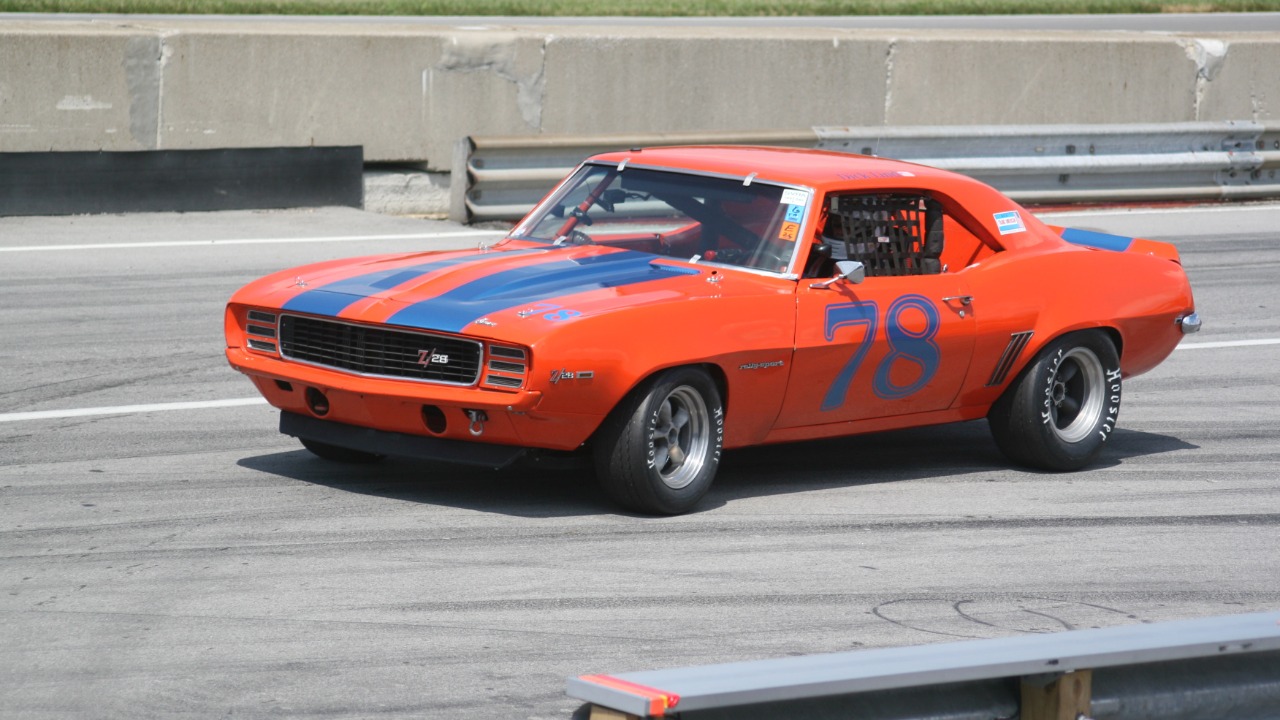
The 1969 Z/28 was not conceived as a typical street performance package, it was built to satisfy the Sports Car Club of America’s Trans-American Sedan Championship rules. Chevrolet needed a 5.0‑liter class contender, so engineers created a homologation special that met the displacement cap while still delivering serious power at race pace. That competition-first mindset explains why the car emphasized nimble handling and high-rpm endurance instead of the big-cube torque that defined many other Camaro variants.
To qualify for the series, Chevrolet had to sell a production version of its race car, which is where the Z/28 option came in. The package bundled the 302‑cubic‑inch V8, heavy-duty suspension, and mandatory 4‑speed manual transmission into a single order code, effectively turning showroom cars into street-legal versions of the Trans-Am machines. Period coverage of the Camaro’s Trans-Am program underscores how closely the production Z/28 mirrored the race cars in displacement, gearing, and chassis tuning, which is why the model’s identity is inseparable from that series.
The high-winding 302 V8 and its race-bred character
At the heart of the 1969 Z/28 was the 302‑cubic‑inch small-block, a hybrid of a 4.00‑inch bore 327 block and a 3.00‑inch stroke 283 crank that landed precisely at 4,942 cubic centimeters. I view that engine as the defining trait of the car, because its short-stroke design encouraged revs that were unusual for American V8s of the era. Factory ratings listed output at 290 horsepower, but that figure was quoted at a conservative rpm and widely regarded as understated for insurance and class reasons.
The 302’s solid-lifter camshaft, high compression ratio, and large-port cylinder heads gave it a peaky, race-oriented powerband that came alive at higher engine speeds. Contemporary tests noted that the engine pulled hardest as the tachometer swept past the midrange, a trait that rewarded drivers who were willing to keep the car in its upper revs through each gear. Documentation of the Z/28’s 302 engine design highlights the aggressive cam timing, 780‑cfm carburetor, and free-breathing intake that made the motor happiest near its redline, reinforcing its reputation as a small-block that behaved more like a racing unit than a boulevard cruiser.
Chassis tuning, brakes, and the Z/28’s handling edge
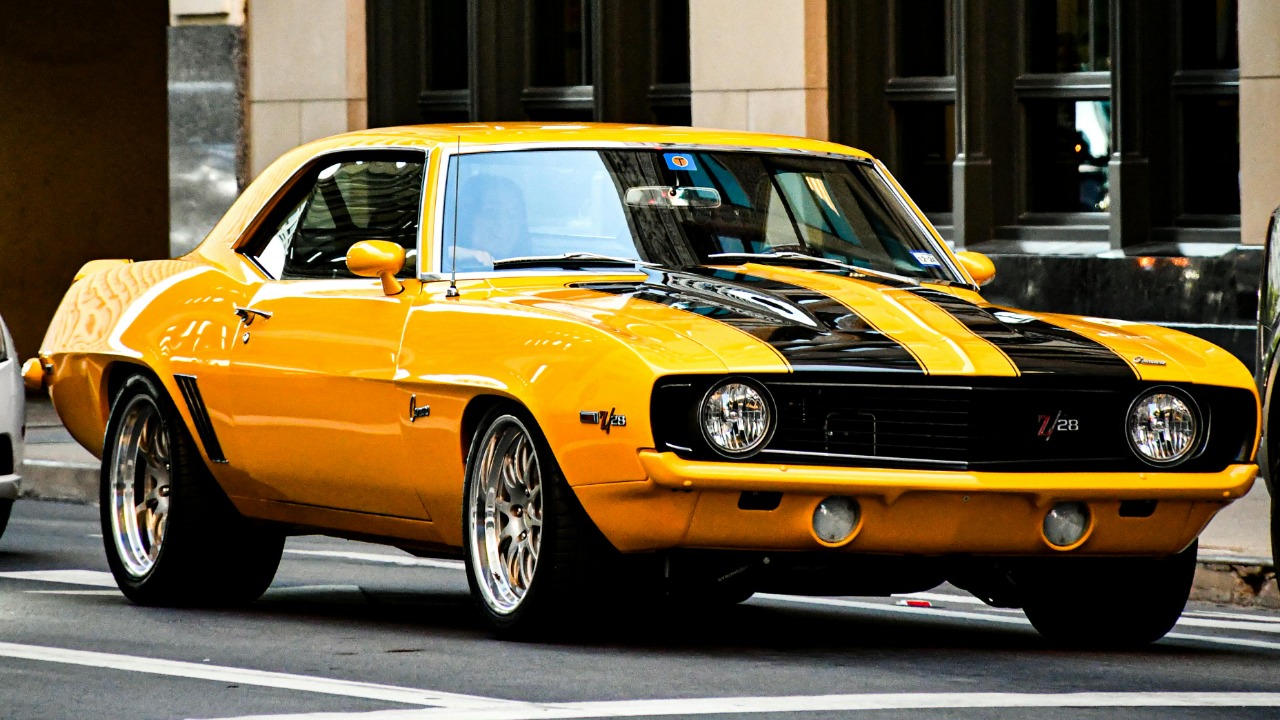
What truly separated the 1969 Z/28 from many of its muscle contemporaries was the way its chassis was tuned to match the engine’s character. Rather than relying solely on straight-line acceleration, the car used stiffer springs, specific shock valving, and a performance-oriented front anti-roll bar to keep the body flat and responsive in corners. I see that suspension calibration as the bridge between the Camaro’s Trans-Am ambitions and its real-world road manners, because it allowed the car to feel composed at speed without becoming unmanageable in daily use.
Front disc brakes were standard on the Z/28, a critical advantage for repeated high-speed stops on track or mountain roads. The combination of power-assisted discs up front and heavy-duty drums at the rear gave the car braking performance that matched its cornering grip, which was further enhanced by the availability of wide 15‑inch wheels and performance tires. Period technical breakdowns of the Z/28’s suspension and brake package emphasize how the uprated components, including higher-rate bushings and specific steering geometry, delivered sharper turn-in and better fade resistance than the base Camaro setups.
Close-ratio gearing, optional hardware, and driver involvement
The drivetrain choices available on the 1969 Z/28 were tailored to keep the 302 in its sweet spot, which is why the car was sold only with a 4‑speed manual transmission. Close-ratio gearsets allowed drivers to stay within the engine’s narrow but potent powerband, especially when paired with aggressive final-drive ratios. I see that mandatory manual gearbox as a deliberate decision to prioritize driver engagement and lap-time potential over ease of use in traffic.
Buyers could further sharpen the car with options such as 4.10:1 rear gears, Positraction differentials, and the JL8 four-wheel disc brake package, which added race-style stopping power. These extras were not cosmetic, they were functional upgrades that directly improved acceleration out of corners, stability under braking, and overall track durability. Surviving order sheets and technical summaries of the Z/28’s optional gearing and JL8 brakes show how the most heavily optioned cars approached full competition specification, giving committed drivers a factory path to near-race-ready performance.
Aerodynamics, styling cues, and functional details
While the 1969 Z/28’s performance story starts with its engine and chassis, the exterior details also played a role in how the car behaved at speed. The front air dam and rear deck spoiler were more than styling flourishes, they helped reduce lift and improve stability as speeds climbed, particularly on long straights and fast sweepers. I see these pieces as early examples of Chevrolet using subtle aerodynamic aids on a mass-market performance car to support its racing goals.
Signature elements such as the twin stripes, “Z/28” badging, and optional cowl-induction hood also had practical roots. The cowl hood, in particular, was designed to draw cooler, higher-pressure air from the base of the windshield into the engine bay, improving combustion efficiency at speed. Contemporary engineering notes and later analyses of the Camaro’s aero and cowl-induction features explain how these components contributed modest but measurable gains in stability and power, reinforcing that the car’s visual drama was closely tied to function.
How the Z/28 compared with other 1969 Camaro performance models
Within the 1969 Camaro lineup, the Z/28 occupied a distinct niche compared with big-block SS and COPO variants that chased raw quarter-mile numbers. Those cars relied on 396‑cubic‑inch or larger engines to deliver towering torque, which made them formidable in straight-line sprints but less suited to the kind of sustained, directional changes demanded by road courses. I view the Z/28 as the counterpoint, a car that sacrificed low-end punch for balance, agility, and consistency over a full lap.
Magazine tests from the period often recorded similar or slightly slower drag-strip times for the Z/28 relative to its big-block siblings, yet praised its composure and predictability when the road turned twisty. The lighter small-block over the front axle improved weight distribution, which in turn enhanced turn-in and reduced understeer compared with heavier-engine models. Comparative evaluations of 1969 Camaro Z/28 and SS performance highlight how the Z/28’s lap times and driver confidence often eclipsed its straight-line disadvantages, cementing its status as the driver’s choice in the range.
Legacy and why the 1969 Z/28 still feels special today
More than five decades later, the 1969 Camaro Z/28 is remembered less for any single statistic and more for the way its components worked together to create a cohesive performance package. The high-revving 302, close-ratio manual, firm suspension, and purposeful aero all pointed toward the same goal, which was to excel in a racing environment and then translate that character to the street. I see that unity of purpose as the main reason the car continues to resonate with enthusiasts who value driver involvement over effortless speed.
The model’s influence can be traced through later generations of Camaro and other factory track specials that adopted similar formulas of smaller, freer-revving engines paired with serious chassis hardware. Modern retrospectives on the Camaro’s Z/28 heritage consistently point back to 1969 as a high-water mark, not only for styling but for the way the car embodied a race-bred approach to engineering. In that context, the 1969 Z/28 stands out because it was not just fast for its time, it was focused, intentional, and built around the idea that the best performance cars are the ones that reward skill every time the driver shifts past 6,000 rpm.