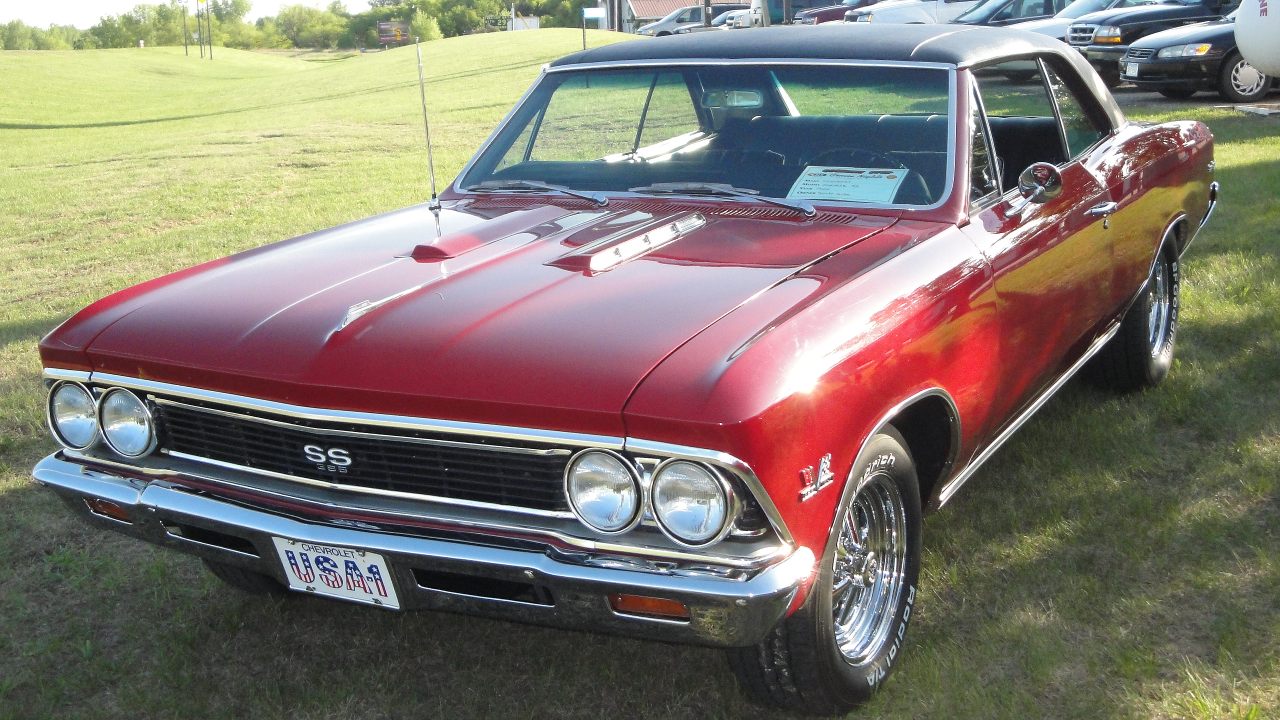
The Chevelle SS 402 occupies a strange sweet spot in muscle car history, living behind a more famous badge while quietly delivering big-block performance. For collectors, understanding exactly which years Chevrolet built this combination, and how the market now prices it against the headline SS 396 and SS 454 cars, is the key to buying smart instead of just buying loud. I will walk through the production timeline, decode the “396” versus “402” story, and then tie that history directly to current collector values.
When the Chevelle SS 396 quietly became a 402
The Chevelle SS 402 was never really marketed under that name, which is why so many enthusiasts still talk about the SS 396 as if the displacement never changed. Period reporting makes clear that in 1970 all “SS 396” Chevelles came standard with a 402-inch big block, after Chevy enlarged the bore of its existing 396 without updating the fender emblems. In 1970 all “SS 396” Chevelles carried this 402-inch version, a move that kept the familiar 396 badge in front of the muscle-car crowd through 1972 even as the actual cubic inches grew.
That sleight of hand was possible because the underlying engine family was already evolving. The Chevrolet big-block line had introduced the 396 cu in (6.5 L) V8 in the Corvette and Chevelle, and later expanded it to 402 cubic inches while retaining the same basic architecture. Technical histories of the Chevrolet big-block engine explicitly list both 396 and 402 as related displacements, with the Chevelle among the core applications. In other words, the Chevelle SS 402 is best understood as the later, enlarged version of the SS 396 package, sold from 1970 through 1972 under the older name even though the block itself measured 402 cubic inches.
Model years that actually used the 402 big block
To pin down the years, I start from the engine rather than the badge. Contemporary coverage of GM’s A-body line notes that Chevelle SS 396 engine choices carried over into the 1969 model year, though late in the model year the size increased to 402 cubic inches. That transition set up the fully revised 1970 lineup where all “SS 396” Chevelles were in fact built with a 402-inch big block. Enthusiast discussions echo this, reinforcing the idea that the displacement change was locked in by the start of the new decade.
By 1972, the Chevelle SS was still available with a big-block option, and valuation tools that track the 1972 Chevrolet Chevelle SS treat these cars as part of the same second-generation performance family that began in 1968. Listings for a 1972 Chevrolet Chevelle SS describe it as a classic American muscle car, with the Chevelle name and big-block power still central to its appeal. Taken together, the technical history, and later enthusiast commentary point to a clear window: the Chevelle SS 402 configuration effectively ran from the late 1969 changeover through the 1970, 1971, and 1972 model years, even though the fenders continued to wear “SS 396” badges.
How the 402 fit alongside the 396 and 454
Understanding the SS 402 also means seeing where it sat in the broader Chevelle performance hierarchy. The big-block family started with the 396, and period performance writeups still refer to 1969 Chevrolet Chevelle SS396 Performance Specifications when describing that earlier generation. Social posts celebrating the 1970 Chevelle SS 454 Sport Coupe point out that other options included the 396 cubic inch V8 producing around 350–375 horsepower, underscoring how the 396 label remained a marketing anchor even as the actual displacement crept to 402. Technical references to the Chevrolet big-block engine list both 396 and 402 as part of the same lineage, which is why Chevrolet could enlarge the bore and still sell the car as an SS 396 without confusing its own engineers.
Above the 402 sat the headline-grabbing 454. Enthusiast material on the 1970 Chevelle SS 454 Sport Coupe describes two 454 ci variants, LS5 and LS6, with the latter producing approximately 449.7 BHP and widely regarded as the most powerful factory engine of its day. Auction listings for a 1970 Chevrolet Chevelle SS 454/450 HP V-8, 4-speed highlight how a well-kept Chevrolet Chevelle SS in this configuration is pitched as pure American muscle that is likely to increase in value over time. In that context, the SS 402 functioned as the middle child: more displacement and torque than the earlier 396-branded engines, but without the extreme output and rarity of the LS6 454 cars that now dominate record-setting sales.

Authenticating a real SS 402 in a world of clones
Because the 402 lived behind a 396 badge, documentation and careful inspection matter more than ever for buyers who want the real thing. Guides to spotting a real 1970 Chevelle SS stress that the 1970 Chevelle SS is not only one of the most sought-after cars in the world, it is also one of the most faked, with incorrect VINs, restamped blocks, and added SS trim all capable of turning a regular Chevelle into an expensive mistake. Forum discussions echo that warning, noting that 1970 Chevelles are among the hardest to prove and are the most often faked, while also reminding shoppers that undocumented cars can still be enjoyable drivers even if they are not blue-chip investments.
For a Chevelle SS 402, that means the paperwork and the casting numbers have to tell the same story. Collectors and appraisers repeatedly emphasize Originality and Documentation, arguing that Having the original documentation and numbers-matching engine can significantly increase the value of the vehicle. In practice, that means verifying that a car advertised as an SS 396 from 1970 to 1972 actually carries a correct 402 big block, that the VIN and trim tags align with SS equipment, and that any claimed options, from bucket seats to Rally wheels, match period build data. When those pieces line up, the car is not just another Chevelle, it is a correctly configured SS 402 that can command a meaningful premium.
Current collector values for Chevelle SS 402–era cars
Market data for Chevelle SS models built during the 402 era shows how strongly collectors still value these cars. A sales history snapshot for the Chevrolet Chevelle SS second generation, covering 1968 to 1972, reports that over the last 5 years there have been 54 cars for sale, with an average sale price of $92,360 across a sales count of 554 transactions. That broad average captures everything from small-block SS cars to big-block 402 and 454 examples, but it sets a clear baseline: a genuine second-generation Chevrolet Chevelle SS is now a six-figure proposition in many configurations.
Zooming in on specific years reinforces that picture. A recent analysis of the 1970 Chevelle SS notes that All together, a V8 Chevelle SS will cost you an average of $105,440 today, a figure that reflects the intense demand for that single model year. Separate valuation tools for the 1972 Chevrolet Chevelle SS and 1973 Chevrolet Chevelle SS explain that the value of a Chevrolet Chevelle SS can vary greatly depending on condition, mileage, options, and history, but they still place well-kept examples in a strong five-figure to low six-figure band. Social posts that aggregate auction and private-sale data cite average sale prices around $73,000 for a 1969 Chevelle SS 396, around $202,000 for a 1970 Chevelle SS 454 LS6, and around $69,000 for a 1972 Chevelle SS, illustrating how the 402-era cars tend to sit between the earlier 396s and the top-tier LS6 in the current market.
What drives premiums for SS 402 cars today
Within those averages, the Chevelle SS 402 configuration benefits from several specific value drivers. First is the combination of performance and usability: the 402 big block delivers more torque than the earlier 396 while avoiding some of the extreme, high-strung character of the LS6 454, which makes it attractive to buyers who want to drive their cars rather than park them. Second is relative scarcity. While exact production counts for 402-equipped SS cars are Unverified based on available sources, the fact that the displacement was never advertised on the badge means many casual buyers still overlook these cars in favor of the more obvious SS 454, creating opportunities for informed collectors.
Premiums also track closely with how well a given car is documented and preserved. The same Originality and Documentation guidance that applies across the Chevelle SS range is especially potent here, because a numbers-matching 402 in a 1970–1972 SS 396-badged Chevelle proves that the car is part of this quiet displacement upgrade rather than a later swap. Auction descriptions of standout Chevrolet Chevelle SS examples, including 454/450 HP cars, routinely highlight low mileage, original drivetrains, and factory-correct options as reasons bidders are willing to stretch. For buyers focused on the SS 402, that pattern suggests that paying more for a fully documented, correctly optioned car is likely to be rewarded when it comes time to sell, particularly as interest in second-generation Chevelles and American big-block performance continues to build.