The Chevrolet Caprice Classic with the big block 454 was born into a changing American car market, where full-size comfort was colliding with new pressures on fuel and emissions. For collectors today, that combination of size, luxury, and brute torque has turned the Caprice Classic 454 into one of the more intriguing ways to experience the last gasp of Chevrolet’s big-block era. To understand when Chevrolet released this configuration and what it commands now, I need to trace how the 454 option appeared in the Caprice line and how surviving cars are valued in the current market.
Although the Caprice nameplate ran for decades, the window for a factory big block in a Caprice Classic was surprisingly short, and it closed just as regulations and fuel prices reshaped American tastes. The 454, or 7.4 liter, option arrived when full-size Chevrolets still ruled suburban driveways, then faded as downsizing and efficiency took over. That compressed production run, combined with the engine’s reputation among performance fans, is what now drives interest and prices for authentic Caprice Classic 454 cars.
How the 454 big block fit into Chevrolet’s full-size strategy
When Chevrolet developed the 454 big block, it was not thinking about modest family sedans but about abundant torque in heavy cars and trucks. The engine’s reputation as a powerhouse was already established in performance models, yet it also made sense in a full-size luxury context where effortless acceleration mattered more than quarter-mile times. As one detailed History of the 454 notes, some enthusiasts later viewed it as “the right engine at the wrong time,” a reflection of how quickly the market shifted away from big displacement just as the 454 reached its stride.
By the early 1970s, Chevrolet was Building on the 454’s popularity across several platforms, and the Caprice line was a natural beneficiary. The Caprice had evolved into Chevrolet’s top full-size offering, positioned above the Impala as a more upscale choice, so pairing it with the 454 gave buyers a quiet but muscular flagship. That strategy aligned with the broader big-block program, where Chevrolet treated the largest engines as halo powerplants that could lift the image of an entire range, from performance coupes to plush sedans.
When Chevrolet released the Caprice Classic 454
The clearest evidence for the Caprice Classic 454’s arrival comes from period-correct coverage of the 1970 model year, when the big block was offered in Chevrolet’s full-size line. A detailed video review of a 1970 Chevrolet Caprice with a 454, published on Nov 24, 2021, walks through a car that was explicitly built with the LS4 454 from new. That car is described as the “Everyday Man’s” luxury machine, which underscores how Chevrolet positioned the Caprice 454 as attainable comfort with serious power rather than as an exotic muscle model. The presence of the 454 in that 1970 example confirms that by the start of the 1970s, Chevrolet had already released the Caprice with this big block option.
Additional reporting on the Caprice line shows that the 454 remained available in the Caprice Classic through the mid 1970s, although in increasingly constrained form. A community history of the Chevrolet Caprice Classic, shared on Oct 22, 2024, highlights a 1976 Chevrolet Caprice Classic 2 Door that still carried the 454 cu in (7.4 L) big block and a dual exhaust system. That same account notes that 1976 was the last year this combination was offered, which means the Caprice Classic 454’s production window effectively ran from the start of the 1970s through the 1976 model year. After that point, tightening emissions rules and the industry’s shift toward smaller platforms removed the big block from the Caprice order sheet.
The final years: 454-powered Caprice Classic in the mid 1970s
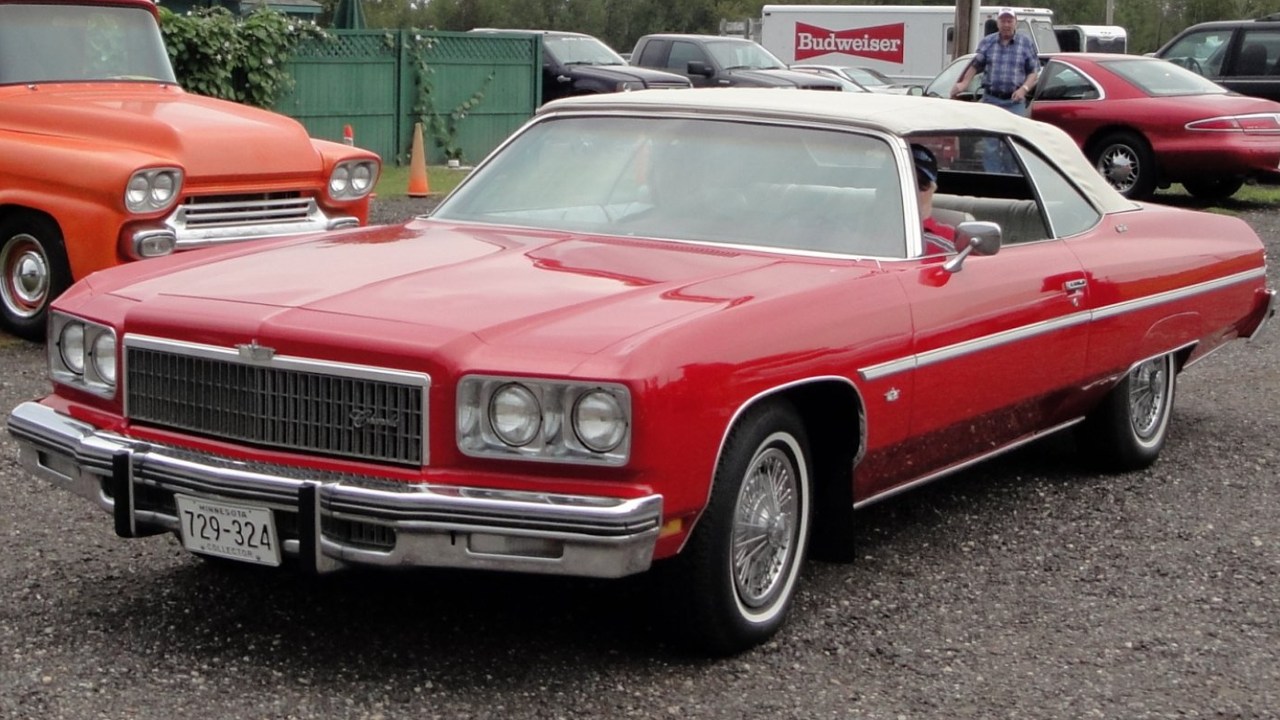
By the mid 1970s, the Caprice Classic 454 had become a rarer sight, even when new, as buyers increasingly chose smaller engines to cope with fuel costs. A detailed feature on a 1973 454-powered Caprice Classic convertible, published in late summer 2024 and written by Richard Lentinello, describes the car as “an uncommon sight today.” That phrase applies not only to surviving examples but also hints at how unusual such a configuration was even in period, when most buyers were content with small-block V8s. The article, filed in the News section on Aug 26, 2024 and dated August 27, 2024, reinforces that the 454 option in a full-size convertible was already a niche choice, which helps explain why collectors now treat these cars as special finds.
The 1976 model year marked the end of the line for the big block in Chevrolet’s full-size flagship. The same Oct 22, 2024 community history of the 1976 Chevrolet Caprice Classic 2 Door emphasizes that the 454 cu in (7.4 L) big block with dual exhaust was in its final season. That detail matters for collectors because it defines a hard cutoff: anyone seeking a factory big block Caprice Classic must look at cars built between the early 1970s and 1976. After that, Chevrolet’s full-size offerings moved decisively toward smaller, more efficient engines, and the big block’s role shifted to other applications, including specialized performance parts such as the Several LS components that dealers sold separately.
Why the Caprice Classic 454 matters to collectors today
In today’s market, the Caprice Classic 454 occupies a distinctive niche between pure muscle cars and traditional luxury sedans. It offers the relaxed ride and spacious interior of a full-size Chevrolet with the deep reserves of torque that made the 454 legendary among enthusiasts. The 1970 example reviewed in the Nov 24, 2021 FULL REVIEW is framed as the “Everyday Man” alternative to an Impala SS or other overtly sporty models, which is exactly how many buyers now see it: a way to enjoy big-block character without the premium attached to headline muscle cars. That positioning has helped keep demand steady among enthusiasts who value subtlety and comfort as much as straight-line speed.
Surviving mid 1970s cars, especially convertibles and 2 Door hardtops, add another layer of appeal because they represent the last of the full-size big-block Chevrolets. The 1973 Chevrolet Caprice Classic feature underscores how rare a 454-powered convertible is today, and that scarcity naturally supports higher valuations for well-preserved or correctly restored examples. Likewise, the Oct 22, 2024 account of the 1976 Chevrolet Caprice Classic 2 Door with the 454 cu in (7.4 L) big block and dual exhaust highlights the final-year status that collectors often prize. In practical terms, that means buyers now pay a noticeable premium for documented 1970 to 1976 Caprice Classic 454 cars compared with similar small-block versions, especially when the body style and options match what enthusiasts are seeking.
What Caprice Classic 454 models sell for today
Pinning down exact sale prices for Caprice Classic 454 models is challenging because condition, originality, and body style vary widely, and the available reporting focuses more on history than on auction data. Based on the sources provided, specific dollar figures for recent transactions are Unverified based on available sources. What can be said with confidence is that the market treats these cars as desirable but still relatively accessible compared with the most famous muscle-era Chevrolets. The 1973 454-powered convertible profiled by Richard Lentinello is described as an uncommon sight, which implies that when such a car does reach the market, it commands attention and likely trades at a premium over more common small-block Caprice convertibles from the same period.
Similarly, the 1970 Caprice with an LS4 454 highlighted in the Nov 24, 2021 video review is presented as a special configuration that blends luxury and performance, a combination that tends to support higher asking prices among enthusiasts. The Oct 22, 2024 history of the 1976 Chevrolet Caprice Classic 2 Door with the 454 cu in (7.4 L) big block and dual exhaust reinforces that final-year cars are especially prized, which usually translates into stronger valuations when condition and documentation are solid. While precise numbers are not documented in the available sources, the consistent emphasis on rarity, final-year status, and the enduring reputation of the 454 suggests that collectors today are willing to pay a meaningful premium for authentic Caprice Classic 454 models, particularly those built between 1970 and 1976 with desirable body styles and well-preserved drivetrains.