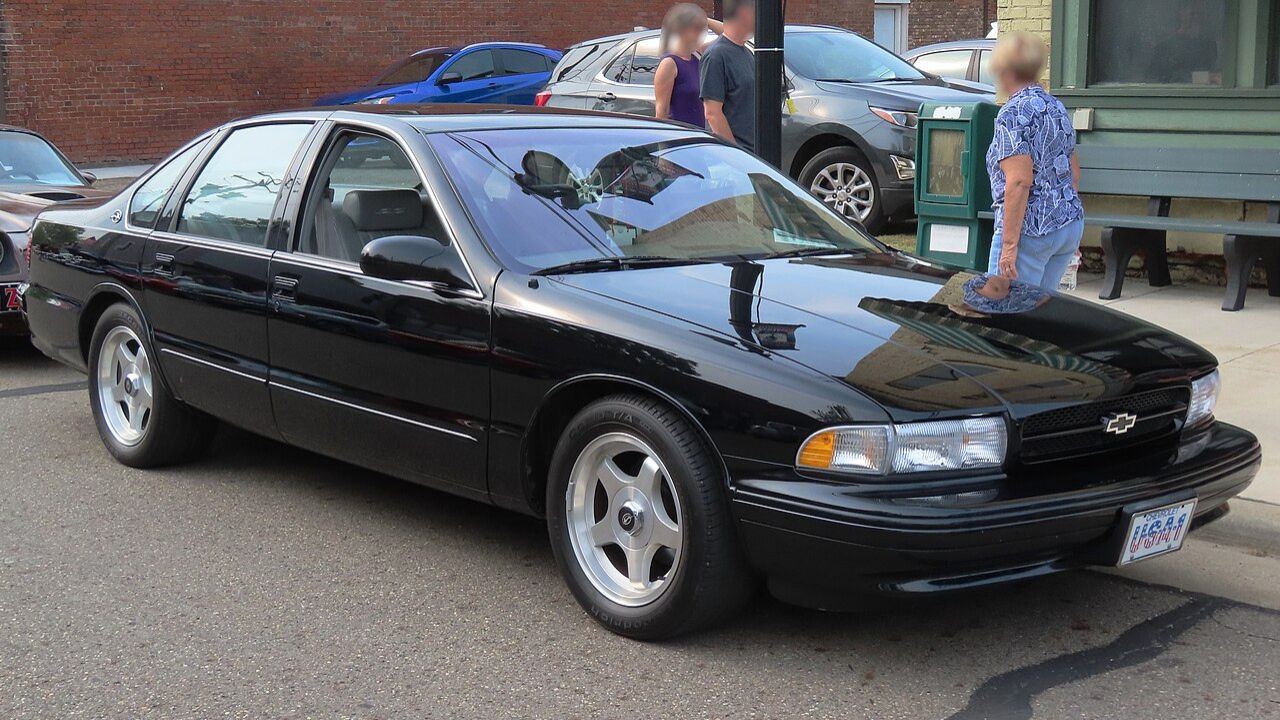
The mid 1990s Chevrolet Impala SS LT1 arrived at a moment when big American sedans were supposed to be fading away, yet it quietly became one of the era’s defining performance cars. Today, that same mix of full-size comfort and V8 muscle is reshaping its place in the collector market, with values that reflect both nostalgia and a clearer understanding of how rare good examples have become.
I want to trace how Chevrolet built this LT1-powered sedan, why it resonated so strongly with enthusiasts, and how the numbers on today’s price sheets evolved from early bargains to a more mature collector landscape without pretending that older valuation snapshots still describe the current market.
From secret skunkworks to production LT1 sedan
The 1994 to 1996 Impala SS did not begin life as a mainstream product plan, it emerged from a small group of engineers who saw potential in the existing B-body platform and quietly developed a high performance variant around the LT1 V8. Reporting on the car’s development notes that few people outside the build team even knew the project existed before the concept was shown, and that throughout the process the team worked largely under the radar while the rest of the company focused on trucks and front drive cars. That low profile origin story helps explain why the finished sedan felt so focused, with a clear mission to deliver rear drive V8 performance in a package that still carried a family and luggage.
When the production version arrived, it paired the LT1 small block with a full size four door body, a combination that was already on the drawing board for police and fleet buyers but had not been aimed squarely at enthusiasts. Contemporary coverage of the 1994 to 1996 cars highlights how modest hardware changes, including the LT1 tune and chassis tweaks, created a sedan that could run with contemporary muscle while still looking like a traditional Chevrolet. Later retrospectives describe how those small changes had a big impact on the car’s reputation, turning the Impala SS into what one analysis calls one of America’s great modern classics, with the LT1’s torque and the car’s highway composure central to that status.
Model years, production run, and what made 1996 special
The production story of the LT1 Impala SS is short and tightly defined, which is part of its appeal to collectors. The performance sedan debuted in 1994, a point underscored in a detailed look at why the debuted in 1994 note that sets the start of the run, and it continued through the 1995 and 1996 model years. A later buyer’s guide and multiple historical pieces treat those three years as a single, cohesive generation, with only incremental changes between them, which is why enthusiasts often talk about “the 1994 to 1996 Impala SS” as one car rather than three distinct models.
The 1996 Chevrolet Impala SS carries extra weight because it marked the final year of production for this modern muscle sedan. Enthusiast commentary on the Chevrolet Impala SS points out that 1996 was the last hurrah, and that the car went out as a true icon for fans of big rear drive Chevrolets. Later analysis of the 1996 model emphasizes how it distilled the formula that began in 1994, combining the LT1 powertrain with subtle styling and a more refined interior, and that final year status now feeds directly into how collectors rank and price individual cars.
How the Impala SS LT1 became a modern classic

In the years immediately after production ended, the LT1 Impala SS slipped into a kind of limbo, appreciated by owners but largely overlooked by the broader collector market. A retrospective on how the car became a classic notes that the sedan moved from concept to assembly line with a clear performance mission and that its V8 soundtrack echoed the growl of a Camaro Z28, yet for a long time it was treated as a used car rather than a future collectible. That same piece cites The Hagerty Valuation tool’s figures of $9,800 to $38,500 for average to concours quality examples as of Nov 20, 2017, which captured the market at a moment when the car’s reputation was rising but had not yet collided with the pandemic era surge in collector prices.
By the late 2010s and early 2020s, the narrative shifted from underappreciated sedan to recognized modern classic. A detailed feature from Aug 2, 2021 describes how small changes to the B-body platform, including the LT1 engine and chassis tuning, created a car that enthusiasts came to see as one of America’s great modern classics, and it notes that what others are reading about the Impala SS often centers on its blend of everyday usability and serious performance. Another analysis from May 29, 2024 goes further, calling the 1994 to 1996 Impala SS probably the most underrated American built performance sedan, and points out that by then the high powered Impala SS versions were a distant memory in Chevrolet’s contemporary lineup. That combination of scarcity in the new car market and growing respect for the LT1 cars’ capabilities helped lock in their status as bona fide collectibles rather than just nostalgic curiosities.
From early bargains to pandemic spikes and a cooler 2020s market
Understanding today’s collector values for the LT1 Impala SS requires acknowledging how dramatically the market has moved since those 2017 valuation snapshots. The earlier figure of $9,800 to $38,500 from The Hagerty Valuation tool captured a time when clean cars were still relatively attainable, but more recent reporting makes clear that those numbers no longer describe current conditions. A buyer’s guide from Dec 3, 2018 already noted that, as of that writing, prices for these Chevys did not vary far across the three model years and that typical asking prices for solid drivers had climbed into the mid five figure range, signaling that the car’s bargain phase was ending even before the broader collector boom.
The real inflection point arrived during the Covid era. A market analysis dated Mar 13, 2024 explains that, like most cars, Impala SS values soared during the Covid 19 pandemic and then cooled a little afterward, a pattern that directly contradicts any assumption that the 2017 range of $9,800 to $38,500 still applies. That same piece, framed around the question “How Much Should You Pay,” describes how asking prices on forums and social media groups often ran ahead of formal price guides, with sellers testing the limits of what dedicated fans would spend. By the time that analysis was written, the author was already characterizing the Impala SS as an “accessible collectible,” suggesting that while prices had come down from their pandemic peak, they remained well above the levels seen in the mid 2010s.
More recent valuation tools and market commentary reinforce the idea that there is no single number that defines what an LT1 Impala SS is worth today. The dedicated 1996 Chevrolet Impala SS valuation page, which includes a section labeled Common Questions, explicitly states that the value of a 1996 Chevrolet Impala SS can vary greatly depending on condition, mileage, and originality, and it encourages buyers to look at recent sales data rather than rely on outdated averages. A separate valuation entry for the same model year echoes that variability, underscoring that there is a wide spread between tired high mileage sedans and low mile, well preserved examples that still present as near new. Taken together with the 2024 commentary about pandemic spikes and subsequent cooling, the picture that emerges is of a market that has matured beyond the early bargain days but is no longer in the frenzy of the Covid era, with realistic prices now sitting somewhere between those two extremes rather than at the 2017 levels.
Why collectors are paying attention now
As values have shifted, so has the profile of the typical Impala SS buyer. A feature from Sep 5, 2018 in The Online Automotive Marketplace, Hemmings, The World, Largest Collector Car Marketpl, framed the 1994 to 1996 Chevrolet Impala SS as a car that was still relatively affordable but already attracting enthusiasts who remembered the cars from their youth. That piece highlighted how the 96 model year and its siblings offered a unique combination of full size comfort and LT1 performance that was increasingly hard to find in newer cars, and it suggested that the window for cheap examples was already closing. Later coverage from May 29, 2024, which described the Impala SS as making a surprising comeback, reinforced the idea that the car’s time in the spotlight had finally arrived, with more buyers recognizing its blend of practicality and performance.
By Nov 1, 2025, commentary on The Chevrolet Impala SS was describing collectors handing over huge sums for the best cars, while also noting that the model had remained largely invisible in the collector market through the 2000s and into the 2010s. That long period of relative obscurity meant that many cars were used hard and modified, which in turn makes unmolested examples more desirable today. At the same time, the car’s presence in enthusiast culture, including appearances as a four door, full size sedan in games like Midnight Club 3: DUB Edition and Midnight Club, Los Angeles, has kept it in front of younger fans who are now entering the collector market. When I look across these reports, the throughline is clear: the LT1 Impala SS has moved from overlooked used car to recognized modern classic, and today’s values reflect not just nostalgia but a broader consensus that this short run sedan occupies a distinct and increasingly respected place in American performance history.