The Dodge Polara 500 426 sits at the intersection of early muscle car engineering and low-volume factory experimentation, a combination that now drives intense collector interest. Built in tiny numbers and aimed squarely at quarter-mile dominance, these cars have shifted from obscure drag-strip weapons to six-figure blue-chip collectibles, with values that reflect both their rarity and their role in Chrysler’s performance arms race.
Tracing when Dodge built the Polara 500 with the 426 Max Wedge, and how those decisions echo in today’s market, reveals a story of escalating horsepower, hard-edged street manners, and a modern valuation curve that rewards originality and documented racing history.
The Polara 500 steps into the performance spotlight
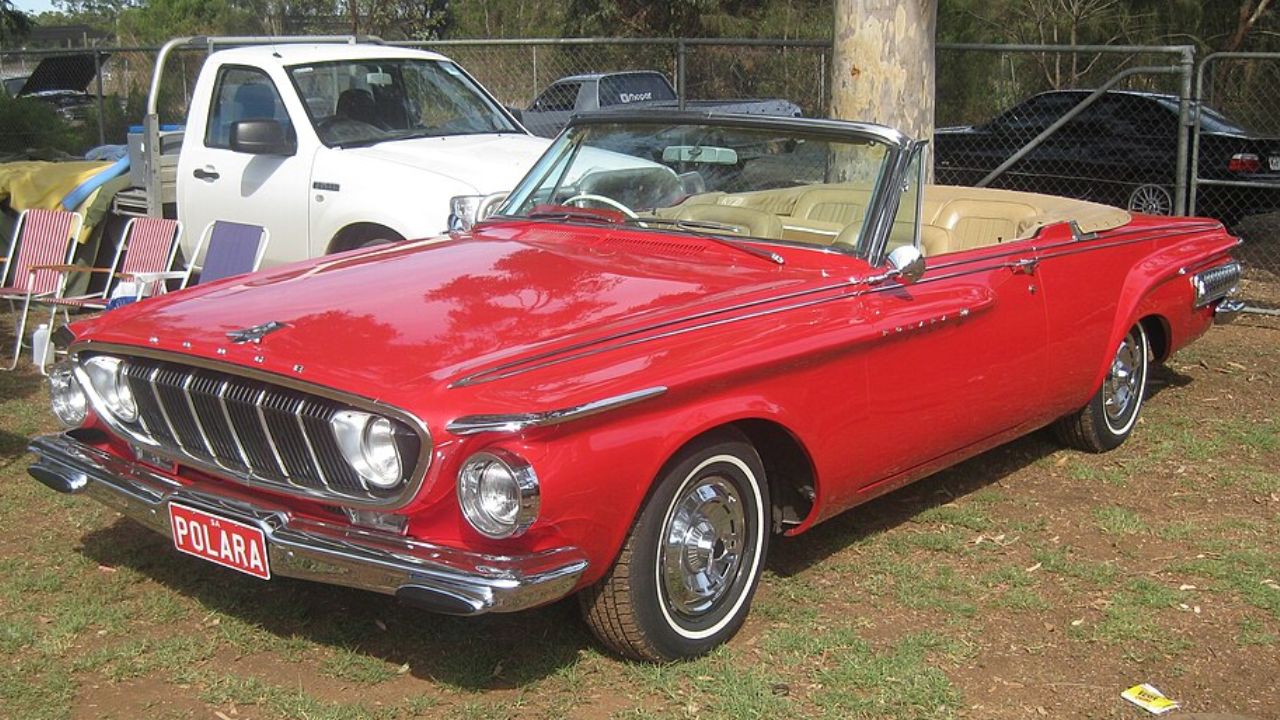
The Polara nameplate was already established when Dodge decided to give it a more upscale and sporting twist with the Polara 500. In mid 1962, the company introduced a bucket-seat Polara 500 Sport Series that blended full-size comfort with a more focused driving position and a clear performance intent, a combination that set the stage for the big-cube engines that would follow in short order. That early move toward a sportier interior and image, captured in period descriptions of the Polara 500 as a distinct Sport Series with a Convertible body style and a Top engine option, framed the car as a natural host for serious power upgrades later on.
By the time the 1963 model year arrived, Dodge had refined this formula, keeping the Polara 500 as a premium trim while steadily raising the performance ceiling. The emphasis on bucket seats, console shifters, and higher-spec drivetrains meant the Polara 500 was no longer just a family cruiser but a platform that could credibly carry the most aggressive engines in the corporate catalog. That evolution is evident in profiles of the early 1960s Dodge Polara Convertible Sport Series Top, which highlight how the 500 trim was positioned as the performance-oriented flagship of the full-size line.
How the 426 Max Wedge transformed the Polara 500
The real turning point came when Dodge dropped its race-bred 426 Max Wedge into the Polara 500, turning a stylish full-size into a brutal straight-line machine. The Max Wedge program was conceived as a factory drag racing solution, and by the early 1960s it had evolved into a 426 cubic inch package with high compression, aggressive camshaft profiles, and dual four-barrel carburetors that prioritized horsepower over civility. In period, the Max Wedge was notorious for its uncompromising character, and that reputation still shapes how collectors view these cars today.
Contemporary accounts of the Max Wedge’s behavior underline just how extreme these engines were for street use. One detailed look at a 1963 Max Wedge notes that the owner’s manual itself warned buyers about a rough idle, poor gas mileage, and other compromises that came with the package, a reminder that Dodge was effectively selling a race engine in a showroom wrapper. That same report describes a later 1964 hardtop as a “Max Wedge Polara” capable of delivering serious horsepower off the showroom floor, underscoring how the 426 option turned the car into a purpose-built weapon rather than a mild performance variant. The combination of full-size body and drag-strip power is captured vividly in coverage of a Max Wedge Polara hardtop that still draws crowds at modern shows.
1962–1964: the short, intense run of the Polara 500 426
The Polara 500’s relationship with the 426 Max Wedge was both brief and intense, concentrated in the early 1960s as Dodge chased dominance in Super Stock and related drag classes. In 1962, the Polara 500 was already being recognized as a high performance machine, and enthusiasts now look back on that first year of the Sport Series as the moment when Dodge committed to pairing luxury cues with serious speed. A later social media feature on a 1962 Dodge Polara 500 Max Wedge, posted on Aug 11, 2024, describes the car as a high performance muscle machine and highlights how the 500 M specification signaled a top-tier configuration even before the 426 reached its final form. That same discussion of a 1962 Dodge Polara 500 Max Wedge shows how quickly the model became a canvas for factory drag packages.
By 1964, the formula had been sharpened into one of the rarest and most coveted configurations of the era: the Dodge Polara 500 with the optional 426 Max Wedge engine. Multiple detailed listings and enthusiast posts agree that Of the 153 64 Dodge Max Wedge cars built, only a handful were Polara 500s, making the combination exceptionally scarce even when new. One widely shared description of a 1964 Dodge Polara 500 with the 426 M option, dated Sep 23, 2022, calls it a very rare car and repeats that Of the 153 64 Dodge Max Wedge examples, only 5 were Polara 500 hardtops, a figure echoed again in a Dec 20, 2024 feature on another 1964 Dodge Polara 500 with the same 426 M package. Those later posts, which spotlight specific Offered Dodge Polara Max Wedge cars and a separate Dodge Polara Max Wedge equipped with dual four barrel carburetors, have helped cement the production figure of 153 and the tiny subset of 500-badged cars in the modern collector consciousness.
The rarity narrative is reinforced by more general coverage of the 1964 Dodge Polara 500 with the 426 M option, including an Aug 11, 2024 enthusiast post that again cites the same 153 total Max Wedge cars and the same count of 5 Polara 500s. That piece, which focuses on a specific 1964 Dodge Polara 500 426 M example, has become a touchstone for fans who track these cars by serial number and build sheet. Together, these sources show that the Polara 500 426 Max Wedge existed in a narrow window from 1962 through 1964, with the 1964 model year in particular producing only 153 64 Dodge Max Wedge cars and just a handful of 500-badged versions, a production reality that now drives intense competition whenever one surfaces. The repeated references to 500, 426 M, 153, and 64 in coverage of the Dodge Polara Max Wedge underline how central those figures have become to the car’s legend.
Why the Polara 500 426 is so rare, even among early Mopar muscle
Even in the context of early 1960s Mopar performance, the Polara 500 426 Max Wedge stands out as unusually scarce. Dodge was experimenting with multiple body styles and nameplates at the time, and the company often steered its most aggressive engines into lighter or more competition-focused models rather than fully trimmed luxury variants. That strategy helps explain why only 5 of the 153 64 Dodge Max Wedge cars were Polara 500s, and why surviving examples today are often tied to specific racing histories or special-order builds rather than routine dealer inventory.
Comparisons with other early 1960s Dodge performance cars underscore this point. A detailed feature on a 1962 Dodge Polara 500 that Hides Ultra Rare Surprise Under the Hood, published on Sep 16, 2025 at 20:39 UTC, describes how even within the same nameplate, unusual engine combinations and high compression packages were reserved for a tiny fraction of buyers. That story, which highlights a 1962 Dodge Polara 500 Hides Ultra Rare Surprise Under the Hood Published UTC, shows how the brand’s most extreme powertrains were often hidden in plain sight, built in tiny numbers and aimed at knowledgeable racers. When that philosophy was applied to the 1964 Polara 500 with the 426 Max Wedge, the result was a car that was both expensive and uncompromising, which naturally limited demand and production.
What a Polara 500 426 is worth in today’s market
Modern valuation data confirms that the market has caught up with the historical significance of the 1964 Dodge Polara 500, especially in high-spec configurations. Price guides that focus on the 1964 Dodge Polara 500 emphasize how widely values can vary depending on originality, documentation, and whether the car retains its factory performance equipment. In the Common Questions section that addresses How much a 1964 Dodge Polara 500 is worth, analysts stress that condition, modifications, and ownership history can swing the number dramatically, particularly for cars that left the factory with serious powertrains. That framework is reflected in the valuation tools for the Dodge Polara 500, which treat top-condition examples as distinct from driver-quality cars.
Broader auction data for the 1964 Dodge Polara line helps put those figures into context. One detailed valuation breakdown lists Perfect Condition cars in a range from $34,650 to $220,000, with Excellent Condition examples between $27,000 and $34,650, Good Condition cars from $20,475 to $27,000, and Fair Con vehicles below that threshold. Those numbers, which apply to the 1964 Dodge Polara generally, suggest that a documented 426 Max Wedge Polara 500 with strong provenance could sit at or near the top of the $34,650 to $220,000 band, while lesser trims and non-original cars cluster lower in the spectrum. The spread captured in the Perfect Condition and Excellent Condition Good Condition Fair Con ranges illustrates how sharply the market differentiates between ordinary full-size Dodges and the rarest factory drag packages.
How rarity and history shape future prospects
Looking ahead, I see the Polara 500 426 Max Wedge as a car whose value will continue to be driven by documentation and narrative as much as by raw condition. With only 153 64 Dodge Max Wedge cars built and just 5 Polara 500s among them, the supply side is fixed and vanishingly small, which means each surviving example effectively becomes its own micro market. Cars with clear build sheets, period photos, or known drag racing records are likely to command a premium within the already wide $34,650 to $220,000 valuation band, while less documented cars may trade closer to the Excellent Condition or Good Condition ranges even if they present well cosmetically.
At the same time, the broader appreciation for early 1960s Mopar performance, from the first Polara 500 Sport Series to the later Max Wedge hardtops, suggests that interest in these cars is not a passing fad. Enthusiast coverage of specific 1962 and 1964 Dodge Polara 500 Max Wedge examples, from the Aug and Sep social media posts to the more recent Feb spotlight on a Max Wedge hardtop, keeps the story alive for a new generation of collectors who value both the engineering and the mythology. As long as those narratives continue to circulate, the Polara 500 426 will remain one of the most closely watched and hotly contested corners of the vintage Dodge Polara market.
More from Fast Lane Only