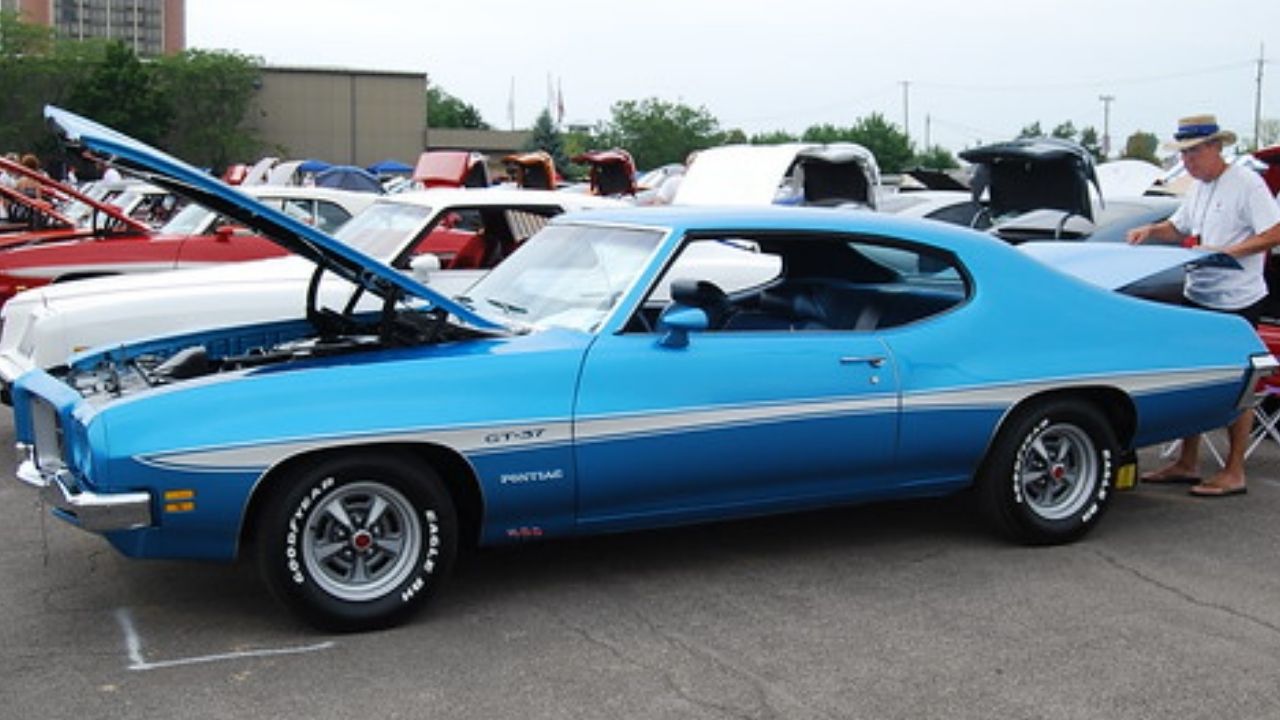
The Pontiac LeMans GT-37 occupied a narrow but fascinating slice of the muscle-car era, built to deliver GTO flavor without the GTO price or insurance sting. I want to trace when this short-lived package appeared, how it evolved over its brief run, and what collectors are actually paying for surviving cars today. Along the way, the story of the GT-37 shows how Detroit tried to keep performance alive even as costs, regulations, and insurers closed in.
How the LeMans GT-37 emerged as a budget muscle car
The GT-37 grew out of Pontiac’s effort to offer muscle on a budget, using the LeMans and its siblings as a foundation instead of the headline GTO. The package was conceived as a way to give younger buyers the look and feel of a performance model while keeping the window sticker and monthly premiums in check. Period coverage describes it as a stripped, no-nonsense alternative that still carried the visual punch and V8 options enthusiasts wanted, which is why enthusiasts later leaned into nicknames like “baby GTO” and “Sleeping Goat” to capture its mission.
That positioning is clear in enthusiast retrospectives that frame the car as “Pontiac’s Sleeping Goat,” an “Affordable Alternative” to the GTO that still carried the “The GT” identity in its badging. Those same accounts emphasize how the GT-37 package relied on simple stripes, special emblems, and a carefully chosen list of options to keep costs down while preserving the core appeal of a mid-size Pontiac with real performance potential. The number 37 itself became part of the lore, a shorthand that enthusiasts still repeat when they talk about this particular blend of value and speed.
Model years, platforms, and what made the GT-37 distinct
The GT-37 package was offered for a very limited window, centered on the 1970 and 1971 model years, and it was built on the same basic architecture as the Pontiac Tempest and LeMans. That means the car shared its bones with the broader A-body family, but the GT-37 treatment gave it a more focused personality. I see it as Pontiac’s attempt to carve out a specific niche inside its own lineup, using the existing platform and drivetrains but wrapping them in a leaner, more youth-oriented package.
Detailed breakdowns of the “1970–1971 Pontiac GT-37” place the car squarely within the Pontiac Tempest and LeMans family, and they explicitly connect it to the Grand LeMans lineage that followed. Those same guides highlight how the “Pontiac GT” identity was expressed through specific stripes, wheel choices, and engine options, all wrapped around the recurring “37” designation that set the package apart from more ordinary Tempest or LeMans trims. In practice, that meant a car that looked and felt more purposeful than a base LeMans but still sat a step below a fully loaded GTO in both image and cost.
Insurance games and the GT-37’s sleeper reputation
Part of the GT-37’s appeal in period was how it threaded the needle with insurers, who were already wary of high-profile muscle cars. Owners could order serious performance hardware under a nameplate that did not trigger the same red flags as a GTO, which made the car attractive to drivers who wanted speed without drawing attention from the people setting premiums. That dynamic helped cement the GT-37’s reputation as a sleeper, a car that looked relatively modest on paper but could be optioned to run with more famous muscle machines.
That reputation shows up clearly in later recollections, including a column that answers a reader named Twingles and describes a 1971 Pontiac GT-37 as a “real deal” muscle car that managed to fool insurance companies. That piece, published on Jan 5, 2020, underscores how the car’s relatively low-key branding and LeMans roots helped it slip under the radar even when equipped with strong engines. It is a reminder that the GT-37’s value proposition was not just about sticker price, but also about how it fit into the broader ecosystem of costs and regulations that shaped the early 1970s performance market.
What a 1970 LeMans GT-37 is worth today
Fast forward to today, and the 1970 Pontiac LeMans GT-37 has moved from budget upstart to recognized collectible, with pricing that reflects both its rarity and its connection to the muscle era. Values vary widely based on condition, originality, and options, but the market has clearly identified the GT-37 as more than just an oddball trim line. I see the 1970 cars as the foundation of that story, since they introduced the formula that later enthusiasts came to appreciate.
Pricing guides for the 1970 Pontiac Lemans GT 37 2 Door Hardtop Coupe show how the market stratifies by condition, with a spread that runs from driver-quality examples to high-end restorations. Those same tools break out “Prices” across low, average, and high retail, and in the detailed valuation section they note that a top-flight example can reach a “High Retail $34,800,” a figure that anchors the upper end of what collectors might expect to pay for a particularly clean 1970 Pontiac Lemans GT 37 2 Door Hardtop Coupe. That range confirms that the GT-37 has moved firmly into serious-collector territory, even if it still undercuts the very best GTOs from the same era.
How 1971 GT-37 values compare and where the market is heading
The 1971 GT-37 occupies a slightly different place in the market, shaped by both its mechanical changes and its even shorter production run. Collectors often debate whether the 1970 or 1971 cars are more desirable, but from a valuation standpoint the key variables are condition, documentation, and how closely a given car matches its original specification. I tend to see the 1971 models as benefiting from their scarcity and from the growing recognition that they represent the last gasp of this particular experiment in budget performance.
Valuation tools focused on the 1971 Pontiac GT-37 base model spell out how much a car can be worth depending on its state, with the question “How much is a 1971 Pontiac GT-37 worth?” answered through detailed condition-based pricing and forecasted values. Those tools explicitly label the model as a Pontiac GT and provide a range that helps owners and buyers calibrate expectations, while also noting that forecasted values may not reflect a specific vehicle. When I compare those figures with the 1970 pricing, the pattern suggests that well-kept 1971 cars can command similar or higher money, especially when they carry desirable drivetrains and strong documentation.
Current pricing signals from auctions and market trackers
Beyond static price guides, recent auction and market coverage helps show where GT-37 values are actually landing in the real world. I pay particular attention to sales of nicely presented cars, since they tend to set the tone for the broader market and influence what owners think their projects might be worth. The GT-37’s mix of rarity and relative affordability has made it a regular, if still niche, presence at major sales and in online valuation discussions.
One recent overview of “Current Pricing” for the model highlights a 1971 Pontiac LeMans GT-37 finished in red with a tan interior that crossed the block at Mecum, using that example to illustrate how a clean car can still represent a relative bargain compared with top-tier GTOs. That same analysis notes that Hagerty pricing for a representative GT-37 sits at $21,340, a figure that slots the car into a sweet spot for enthusiasts who want a genuine muscle-era Pontiac without paying six-figure money. The piece also reinforces the “Ponti” identity and again leans on the “37” shorthand, underlining how the car’s branding continues to shape how buyers perceive its value.
Why the GT-37’s brief run keeps collectors interested
Part of what keeps the LeMans GT-37 in the conversation today is how short its production run was, and how clearly it reflects the pressures of its time. The package appeared, evolved, and then disappeared in the space of just a couple of model years, leaving behind a small but passionate community of owners and fans. I see that brevity as a key ingredient in its appeal: the GT-37 is rare enough to feel special, but not so obscure that parts and knowledge are impossible to find.
Enthusiast histories that revisit the GT-37’s origins, including the Mar 18, 2018 piece that dubs it Pontiac’s “Sleeping Goat,” emphasize how the car was marketed as an “Affordable Alternative” to the GTO and how its “The GT” badging and “37” identity set it apart from other trims. That same narrative threads through later resources that catalog the “1970–1971 Pontiac GT-37” within the broader Pontiac Tempest and Grand LeMans story, tying the car to a specific moment when performance, regulation, and insurance all collided. Taken together, those sources show why the GT-37’s values have climbed into the tens of thousands of dollars and why collectors continue to chase both 1970 and 1971 examples as a distinctive, attainable slice of Pontiac history.
More from Fast Lane Only