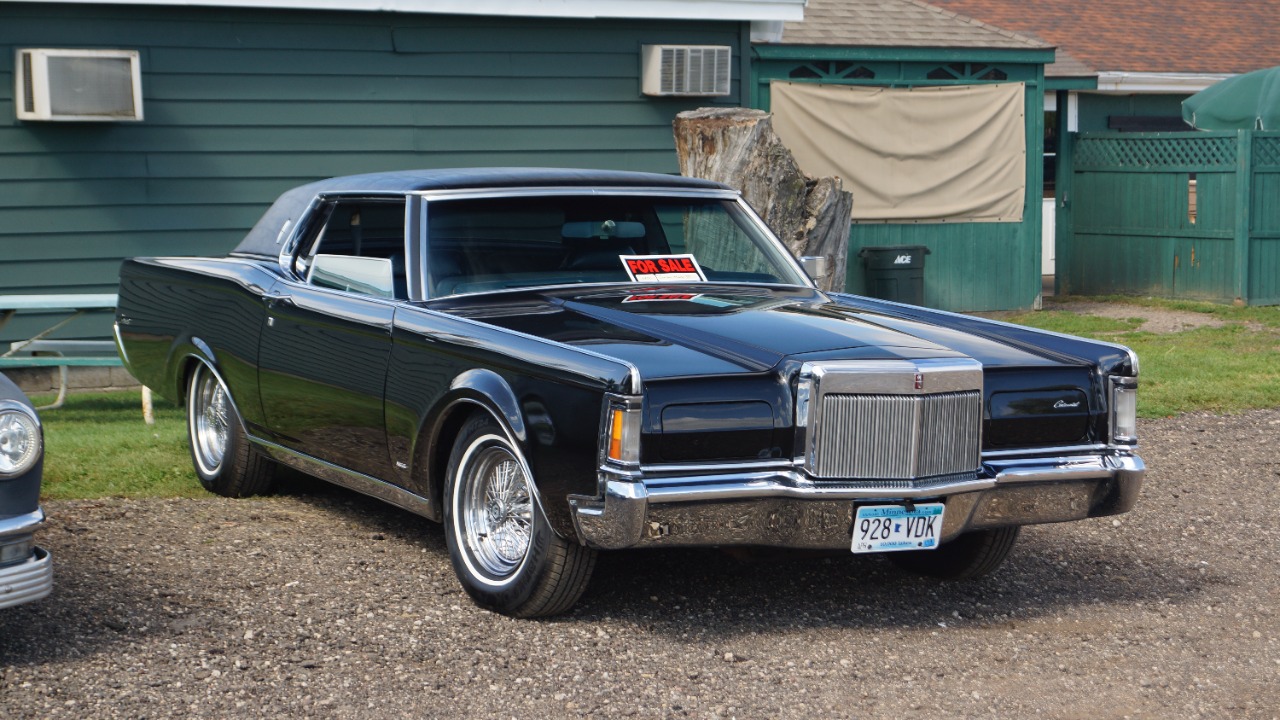
In 1970, you could walk into a Lincoln showroom and order a car that tried to be two things at once: a velvet-lined luxury coupe and a torque-rich highway bruiser. The Lincoln Continental Mark III did not whisper about that ambition, it announced it with a vast hood, a formal roofline, and a V‑8 that belonged to the muscle era. If you are drawn to cars that mix comfort with attitude, this is one of the clearest examples of muscle meeting luxury in Detroit’s golden age.
More than half a century later, you can still feel that dual personality in the way enthusiasts talk about the Mark III, from its bold styling to the way it surges down the road. You are not just looking at a plush cruiser, you are looking at a statement from Lincoln that it could match Cadillac on opulence while tapping into the same power-obsessed culture that produced the era’s most famous muscle cars.
The luxury coupe that wanted to be a muscle car
To understand why the 1970 Lincoln Continental Mark III feels so special, you have to place it in the context of the horsepower wars raging at the time. Enthusiasts still Remember 1970 as a peak year, when the Big Three and AMC stuffed huge engines into everything from mid-size coupes to full-size sedans. Lincoln’s answer was to take that same spirit and wrap it in leather, wood, and thick carpeting, giving you a car that could keep up with the era’s performance machines while coddling you like a private lounge.
Under the Mark III’s long hood sat a 460 cubic inch V‑8 rated at a stout 365-horsepower, a figure that put it squarely in muscle territory even if the car’s mission was more grand touring than drag racing. That 460 engine, paired with a C‑6 automatic, gave the Mark III the kind of effortless surge you expect from a big-block performance car, yet you experienced it from a cabin trimmed to compete directly with Rolls‑Royce and Cadillac. When you read period comparisons that describe the Lincoln Continental Mark as the most luxurious option in a field that also included the Mercury Marauder X‑100, you see how deliberately Lincoln aimed this car at buyers who wanted muscle-era power without giving up prestige.
Design that shouted presence, not subtlety
When you first see a Mark III in person, what hits you is not subtlety but presence. The car stretches out with a long, low profile and a formal roofline that makes the hood feel even more imposing, a look that enthusiasts still describe as Its bold, classic lines. Up front, the grille is tall and upright, evoking a traditional radiator shape that gives the car a stately face, while the rear deck carries the famous faux spare tire hump that instantly identifies it as a Mark III. Those cues, highlighted in period walkarounds that linger on the Styling of the Mark III, make the car impossible to mistake for anything else on the road.
Even among classic luxury coupes, the Mark III stands out for the way it balances aggression and elegance. Enthusiast writeups on the Details of the Lincoln Continental Mark III emphasize its Distinctive Design, from the hidden headlights to the crisp character lines that run the length of the body. Owners still celebrate the way the car’s long hood and short deck proportions give it a commanding stance, and you can see that same appreciation in posts that call the 2 Door Hardtop a perfect example of Luxury and Power. You are not just driving a big coupe, you are piloting a rolling piece of design theater.
Inside, a rolling lounge with serious hardware
Slip into the driver’s seat and you understand why the Mark III was marketed as a personal luxury coupe rather than a pure performance car. The cabin surrounds you with plush upholstery, deep carpeting, and a dashboard that mixes wood and brightwork in a way that still feels upscale. Enthusiast descriptions of the striking design and opulent features highlight how The Mark III was part of the Contin tradition of American luxury, with power accessories and comfort features that were cutting edge at the time. You are meant to glide, not hustle, yet the car never lets you forget the power waiting under your right foot.
That dual nature shows up in the technical data as clearly as it does in the upholstery. Period specifications list the Mark III’s Mark III Technical with TOTAL PRODUCTION of 27,091 and a Base Price of $8,421, figures that placed it firmly in the upper tier of the market. The closely related technicaldata for the Mark III line underline how Lincoln invested in both comfort and performance hardware, pairing that big 460 engine with heavy-duty components to handle the weight and speed. When you read modern sales listings that still emphasize the car’s standard 460 and C‑6 automatic as key selling points, such as the collector-grade Mark II example with turbine-style wheel covers, you see how much that mechanical package still matters to buyers like you.
How the Mark III took on Cadillac and the rest
Lincoln did not build the Mark III in a vacuum, it built it to challenge Cadillac and even European prestige brands. Contemporary enthusiasts still describe the 1970 Lincoln Continental Mark III as a luxury coupe that defined American elegance and gave the car a commanding road presence. Posts celebrating a white 1970 Lincoln Continental emphasize how it was positioned against Rolls‑Royce and Cadillac, while another enthusiast note points out that The Mark III was part of the Contin line that carried the spirit of American automotive craftsmanship. When you see the car parked next to its rivals, you understand why Lincoln felt confident making that claim.
At the same time, the Mark III had to keep pace with rapid changes in technology and taste. Reference material on the Little year-to-year changes notes that features like tinted glass, automatic climate control, and the Sure‑Track anti-lock braking system became standard as the model evolved, helping Lincoln stay competitive with Cadillac’s own innovations. Enthusiast comparisons that frame the Mercury Marauder X‑100 as the sportiest option and the Mark III as the most luxurious show how Ford’s divisions carved out distinct personalities. If you were the kind of buyer who wanted muscle car power wrapped in the quiet confidence of a high-end coupe, the Mark III was the obvious choice.
Living with a Mark III today
Owning a 1970 Lincoln Continental Mark III now means living with a car that is as much about experience as it is about numbers. Enthusiast groups describe the 1970 Lincoln as old-school American luxury, with a ride that floats over imperfections and a cabin that still feels indulgent. Posts that break down the Lincoln Continental Mark III 10 Details, including its Distinctive Design and relatively common status as a classic car today, remind you that parts and knowledge are accessible if you decide to bring one into your garage. You are not chasing an obscure unicorn, you are joining a community that knows these cars well.
That community is part of the appeal. On dedicated forums, owners debate details like the Oct differences between 1969 and 1970 cars, from exposed wipers to Cartier chronometer clocks, while broader discussions on the LincolnForum cover everything from maintenance tips to originality debates. Video tours that linger on the 1971 Lincoln Mark III show you how similar the experience is behind the wheel, and sales descriptions that open with lines like There are cars, and then there are statements, capture how the Mark III still exudes sophistication, power, and undeniable presence. When you see enthusiasts on social media asking, with a wink, what else men need from life as they share photos of a Mark III that epitomized traditional luxury, you realize that owning one today is as much about the story you tell as the miles you drive.
More from Fast Lane Only