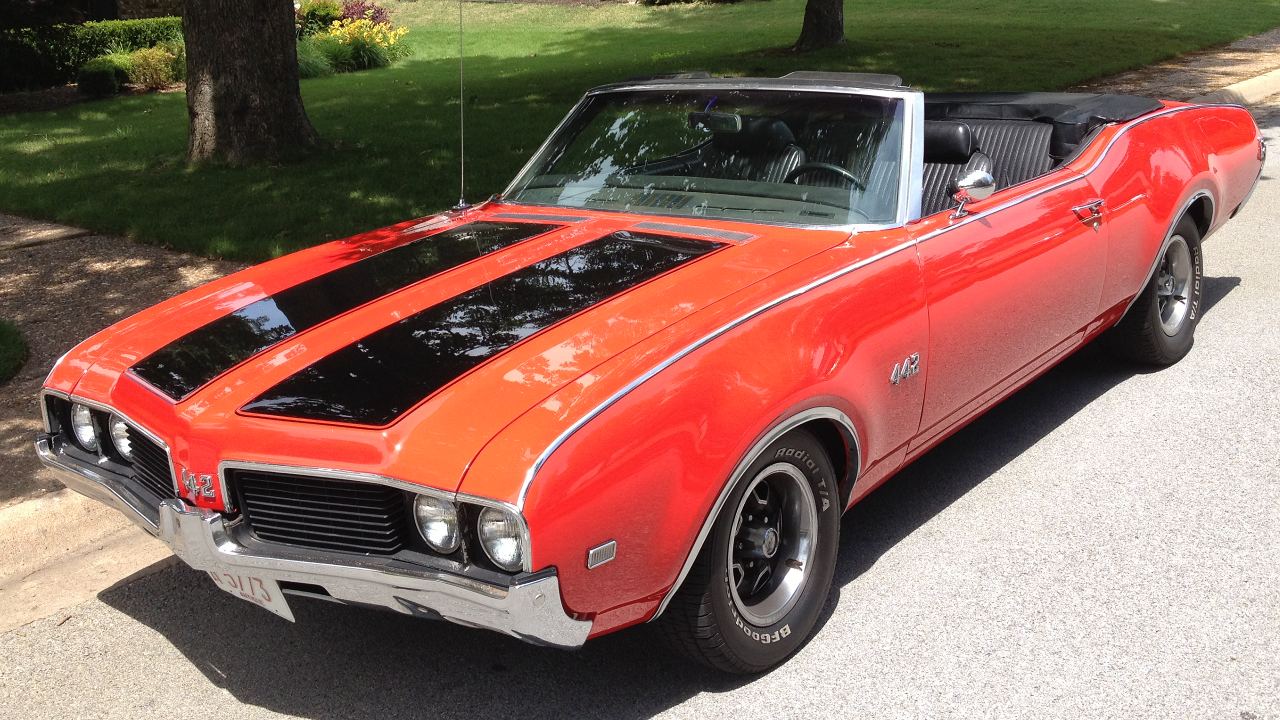
The 1968 Oldsmobile 442 marked the moment when Oldsmobile stopped flirting with performance and fully embraced brute-force torque. By reworking its midsize muscle car around a new big-inch V8 and a more focused mission, the division turned a comfortable Cutlass derivative into one of the era’s most forceful street machines. The result was a car that did not just chase horsepower bragging rights, it delivered the kind of low-end shove that defined American muscle at its peak.
From option package to standalone muscle car
When I look at the 1968 Oldsmobile 442, the first thing that stands out is how decisively Oldsmobile repositioned the car. What had started earlier in the decade as a performance option on the Cutlass became a distinct model line by 1968, with its own identity and engineering priorities. The second generation 442 arrived on a new body, and factory literature treated it as a separate performance model, not just a trim level, which signaled that Oldsmobile was ready to compete directly with the most serious muscle offerings in its own corporate family and beyond. Contemporary overviews of the Oldsmobile 442 underscore that shift, listing the 1968 car within a dedicated second generation and separating it from the broader Cutlass range.
That structural change mattered because it freed Oldsmobile engineers to tune the chassis, driveline, and options around performance rather than pure volume sales. The 442 name itself, preserved verbatim as 442 in official descriptions, had already become shorthand for a balanced mix of power, handling, and style. By 1968, the model’s own “Overview” sections in reference material treat it as a self-contained performance story, with later mentions of the 1969 convertible and the 1969 Hur-based variants reinforcing how quickly the 442 line diversified once it stood on its own. In other words, the 1968 model year was not just a styling update, it was the foundation for a more serious, torque-rich Oldsmobile muscle program.
The long-stroke 400 that changed the car’s character
The real transformation in 1968 happened under the hood. Oldsmobile replaced its earlier performance engines with a new long-stroke 400 cu. in. V8 that fundamentally altered how the 442 delivered power. This engine, displacing 400 cubic inches or 6,554 cc, was rated at 350 horsepower, equivalent to 261 kW, on paper matching the output of the previous unit. On the surface, that might sound like a lateral move, but the longer stroke shifted the torque curve lower in the rev range, giving the car a stronger, more immediate surge in everyday driving. Detailed histories of the Cutlass and 442 point out that while the peak numbers stayed the same, the new engine’s practical rev limit and power delivery made the car feel more muscular in real-world use.
That change in character is what, in my view, turned the 1968 442 into a torque monster rather than just a high-revving showpiece. The long-stroke design emphasized midrange pull, which suited the heavier, more upscale Oldsmobile body and the kind of buyers the brand attracted. Instead of chasing the highest possible redline, engineers accepted a lower practical ceiling in exchange for stronger thrust where drivers spent most of their time. Period-style analyses of the long-stroke 400 emphasize that tradeoff, noting that the engine’s configuration and limits were central to how the 1968 car behaved on the street.
How the 442 balanced performance and refinement
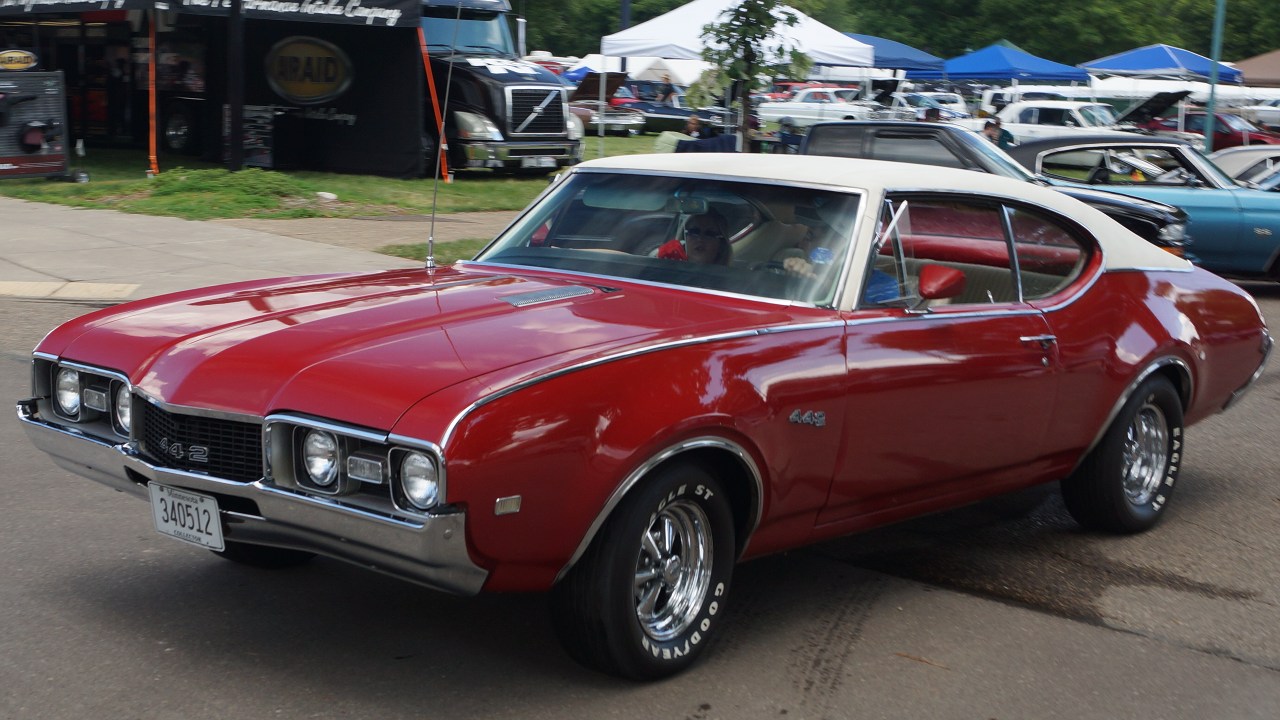
What makes the 1968 Oldsmobile 442 compelling to me is how it balanced that newfound torque with the division’s traditional emphasis on comfort. Oldsmobile had a reputation for building slightly more refined muscle, and the 442 embodied that approach by pairing its strong V8 with a relatively plush interior and a composed ride. Contemporary and modern commentary on the broader 442 line, including later variants like the 1969 convertible and the 1969 Hur-based models, consistently highlight this dual personality. The car could run hard, but it still felt like an Oldsmobile, with sound insulation, thoughtful trim, and an overall sense that it was meant to be driven daily rather than only on Saturday nights.
That balance is echoed in later discussions of related models, where enthusiasts describe their favorite Oldsmobile of the era as combining “fantastic power” with “a moderate amount of luxury.” A video comparison of the 1968 and 1969 Hurst-based cars, for example, praises an Oldsmobile of that period for exactly that mix. While the 1968 442 itself was not yet a Hurst collaboration, it set the template: a midsize chassis with serious torque, wrapped in a cabin that did not punish its occupants. That formula helped the 442 stand apart from more bare-bones rivals and made its torque-rich character feel usable rather than overwhelming.
Hurst/Olds: the 455-cubic-inch escalation
The clearest proof that Oldsmobile had built a strong foundation in 1968 is how quickly the platform was pushed even further by the Hurst partnership. The 1968 Oldsmobile Hurst/Olds took the basic 442 idea and escalated it by dropping a 455-cubic-inch Rocket V8 into the midsize engine bay, a move that directly challenged internal corporate limits on displacement. Reports on the Oldsmobile Hurst and Olds collaboration describe how this car shattered GM’s engine restrictions by fitting that massive Rocket unit into a package that had previously been capped at smaller displacements. The result was a car that took the 442’s torque-heavy personality and amplified it dramatically.
What fascinates me is how covert that escalation had to be. Another detailed reel on the Is the 1968 Hurst/Olds describes it as “the car that Oldsmobile had to literally lie about just to sell,” noting that it hid a 455 cubic inch monster under the skin while presenting itself as a more conventional luxury coupe. That tension between official policy and actual hardware is part of what makes the 1968 Hurst/Olds so significant. It showed how far the 442-based platform could be pushed, and it did so in very limited numbers, with just 515 units built according to the same Hurst/Olds reporting. In effect, the Hurst/Olds turned the already stout 442 into a full-blown torque legend, even if it had to bend the rules to get there.
Legacy, collectability, and the market’s verdict
Today, the market’s view of the 1968 Oldsmobile 442 reflects both its historical importance and its enduring appeal as a driver’s car. Valuation guides that track the 1968 Oldsmobile 4~4~2 treat it as a distinct entry, with condition-based pricing that recognizes the car’s place among serious American muscle. Those tools break down values by body style and state of preservation, and the numbers they assign show that collectors are willing to pay a premium for well-kept examples, especially those that retain their original long-stroke 400 engines and correct driveline components. The fact that the 1968 model is tracked separately from later 442s underscores how pivotal that year was in the car’s evolution.
The Hurst-linked variants that grew out of the 1968 formula have carved out their own niche as well. Museums and curated collections highlight cars like the 1969 Hurst/Olds 4-4-2 as examples of how Oldsmobile blended muscle with style, often placing them in exhibits that emphasize both performance and design. One such display of a 1969 Hurst/Olds 4-4-2 presents it as more than just a straight-line machine, noting its visual flair and upscale touches alongside its formidable power. That curatorial approach reinforces the idea that the 1968 442 and its immediate descendants were not only torque monsters, they were also sophisticated expressions of what a late 1960s American performance car could be.
More from Fast Lane Only: