
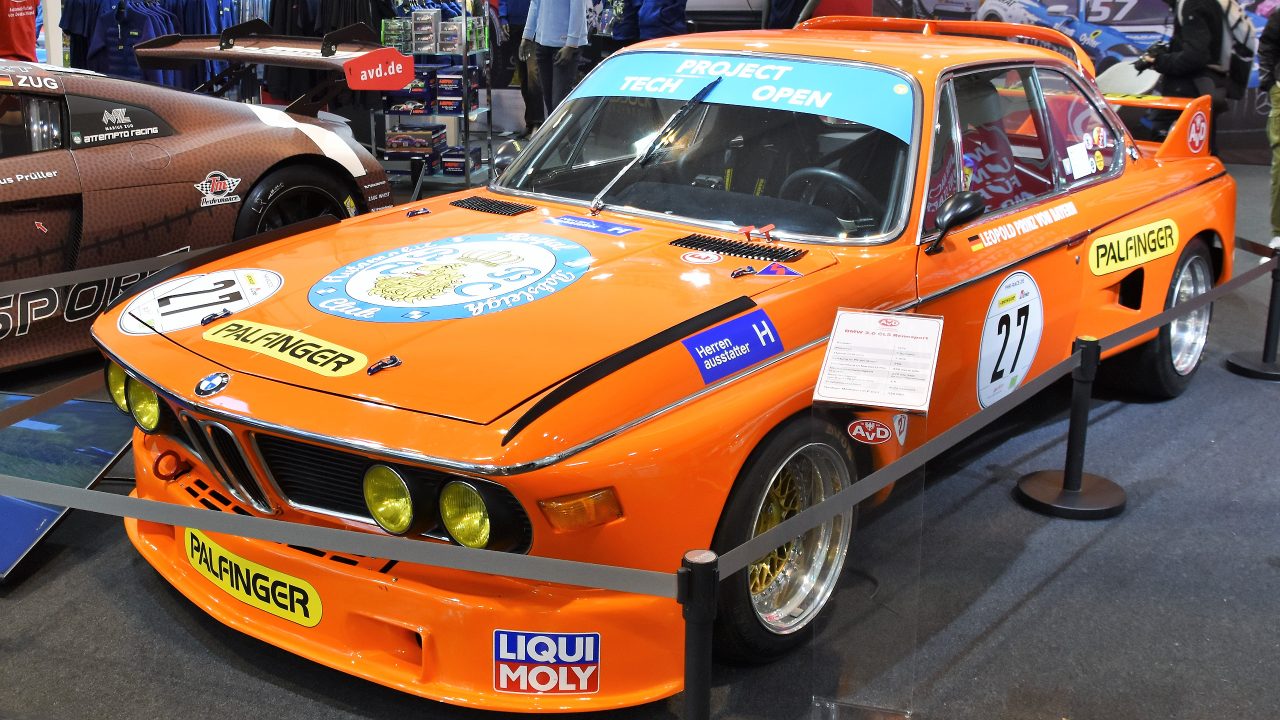
The 1971 BMW 3.0 CSL did not begin life as a collector’s darling or a design statement. It was conceived as a blunt instrument to win back racing credibility, a lightweight weapon built so BMW could turn its elegant E9 coupé into a serial winner in touring car championships. When it finally reached the grid, the CSL transformed BMW’s reputation from respectable saloon maker to fearsome force in European motorsport.
What made that transformation compelling was not just the trophies, but the way BMW bent its road car program around the demands of the track. The 3.0 CSL was stripped, re‑engineered and, in some cases, quietly prototyped in the background so that the company could satisfy homologation rules and then unleash a far more extreme racer than its showroom brochures suggested.
From refined coupé to stripped “L”ightweight
BMW’s starting point was the regular E9 coupé, a graceful grand tourer that needed a harder edge if it was going to survive in the rough company of touring car grids. To turn it into a credible racer, engineers focused on weight, shaving mass wherever the rulebook allowed and creating the “L” in CSL, which stood for “Coupé Sport Leicht.” The result was a performance coupé that traded some comfort for agility, a car that was still recognisably an E9 but with a far more purposeful brief.
That focus on mass reduction was not cosmetic. BMW used thinner steel for parts of the body, deleted sound deadening and luxury trim, and substituted lighter materials where possible so the CSL could qualify as a special lightweight version of the standard 3.0 CS. Contemporary accounts describe the CSL as the machine that put BMW back among the touring car elite, a “touring car superstar” whose lighter shell and tuned straight‑six engine gave it the pace to challenge established rivals in the European Touring Car Championship.
Homologation pressure and the 1971 prototypes
The urgency behind the CSL project came from homologation rules that required BMW to build road‑going versions before the race car could be approved. The 3.0 CSL was one of those 1970s “homologation specials,” a model spun from the regular E9 so that it could be certified by the Fédération Internationale de l’Automobile and then entered in touring car competition. That meant BMW had to juggle showroom realities with the needs of its racing department, creating a car that could be sold to customers yet still form the basis of a highly modified track machine.
To bridge that gap, BMW experimented early. One vehicle is described as a 1971 BMW 3.0 CSL prototype that the company sent to Broadspeed in England in September of that year so it could be converted into a racing car. That prototype work, carried out before the full production run, shows how BMW used early chassis as test beds to refine the CSL concept and prepare it for serious competition. The same prototype is said to have been among the first to receive the famous motorsport livery, underlining how closely the visual identity of BMW’s racing program was tied to this new lightweight coupé.

Zandvoort, April fools and the scramble for approval
The pressure to get the CSL onto the grid produced some almost farcical moments. One account describes how a team went to Zandvoort on 3 April 1972 in the belief that BMW would homologate the CSL on 1 April. The reference to “April fools” captures the frustration of arriving at the circuit expecting a fully signed‑off race car, only to find that the paperwork and approvals were not yet aligned with the team’s ambitions.
That Zandvoort trip illustrates how thin the margins were between BMW’s road car schedule and its racing calendar. Engineers and privateer teams were effectively working in parallel, preparing cars for competition while the homologation process was still in motion. The fact that people were willing to tow a CSL to a circuit on the assumption that approval was imminent shows how much faith they had in the project and how eager they were to unleash the new coupé against established touring car rivals.
Engineering the CSL into a touring car superstar
Once the homologation hurdles were cleared, the CSL’s engineering potential could be fully exploited. In race trim, the straight‑six engine was pushed far beyond its road‑car specification, and specialists such as Fritz Indra of Alpina played a key role in that transformation. Indra’s work allowed the engine to develop 332 bhp and rev to 8,000 rpm, a dramatic increase over the standard unit that turned the CSL into a high‑revving weapon on long European circuits. Those figures underline how much latent performance BMW had built into the basic architecture of the E9.
The chassis and aerodynamics evolved just as aggressively. While the earliest CSLs were relatively subtle, later versions gained the dramatic spoilers and appendages that earned them the “Batmobile” nickname among fans. These additions were not styling flourishes but functional solutions to keep the lightweight coupé stable at the speeds its tuned engine could now reach. Period race reports and later retrospectives describe how the CSL, in this fully developed form, became a sensation in the early 1970s, its combination of power, reduced weight and improved downforce making it a dominant force in touring car racing.
Championships, legacy and the credibility BMW wanted
The real measure of the 3.0 CSL’s success was its record in the European Touring Car Championship. In the 1973 season, the CSL secured the drivers’ title for Toine Hezemans and stacked up a string of race wins that confirmed BMW’s return to the top tier of touring car competition. Racing highlights from that period credit the CSL with turning BMW into a serial contender, its performance on track matching the company’s ambitions to be seen as a builder of serious high‑performance machinery rather than just refined saloons.
That success had a lasting impact on BMW’s identity. The CSL’s achievements in the early 1970s helped establish a template in which road cars and race cars were closely linked, with limited‑run specials built to satisfy regulations and then pushed far beyond their showroom specification in competition. When I look at the way enthusiasts still talk about the 3.0 CSL, from its prototype days in 1971 to its championship‑winning seasons, it is clear that the car did more than win trophies. It gave BMW the credibility it craved in motorsport and laid the groundwork for the performance image the company continues to trade on today.
More from Fast Lane Only:



Leave a Reply