The 1977 Camaro did not simply keep Chevrolet in the pony-car race, it flipped the leaderboard and turned a once-secondary contender into a volume champion. By the late 1970s, tightening emissions rules and shifting buyer tastes were supposed to be killing off performance coupes, yet the Camaro surged, outselling its oldest rival and setting a production record for its generation. That unlikely rise is the story of how a carefully refreshed design, a revived performance badge, and smart positioning turned the 1977 Camaro into a sales powerhouse.
The turning point: when Camaro overtook Mustang
The clearest sign that 1977 marked a breakthrough is the scoreboard. After years of trailing Ford, Chevrolet finally pushed its pony car into first place, a symbolic and commercial victory that reshaped the segment. The 1977 Chevrolet Camaro outsold the Ford Mustang by a margin of 198,755 to 161,654, a precise gap that shows how decisively buyers shifted their loyalty once the second-generation car hit its stride. That swing did not happen in a vacuum, it reflected a moment when drivers wanted style and attitude more than raw horsepower, and the Camaro’s long-hood, short-deck proportions fit that mood better than the downsized Mustang of the era.
Production numbers underline how far the Camaro had come by that model year. Output for the second-generation Camaro set a record, with 218,853 coupes produced, a figure that stands out in the official Sales table for the nameplate’s history. When I look at that 218,853 total in context, it is clear that 1977 was not just a good year, it was the high-water mark for that body style, proof that Chevrolet had found the right mix of design, pricing, and performance cues to pull shoppers into showrooms. The Camaro had moved from challenger to benchmark, and the Mustang for the first time had to answer to it rather than the other way around.
Design tweaks and everyday appeal
Raw numbers only tell part of the story, because the 1977 car succeeded by broadening its appeal beyond hardcore enthusiasts. The model-year updates, captured in period material like the 1977 Spotters Guide & New Features Besides the, show a car that leaned into comfort and style while still looking aggressive. Chevrolet kept the basic second-generation shape but refined details, from trim and color choices to interior touches, so the Camaro felt more like a personal coupe that happened to have muscle-car roots. That balance helped explain why so many buyers who might once have chosen a sedan or a more conservative coupe instead drove home in a Camaro.
Specific examples from surviving cars illustrate how Chevrolet threaded that needle. One documented 1977 Camaro Z28, for instance, left the factory during the third week of July with Its Brown (code 69) paint carried across the bumpers and spoilers, a look that blended period-correct earth tones with performance cues. Details like that show how the Camaro could be both fashionable and sporty, a car that fit in the office parking lot but still looked at home at the drag strip. By offering a wide range of trims and colors, Chevrolet turned the Camaro into a canvas for personal expression, which helped sustain those 198,755 sales even as pure performance numbers were no longer climbing.
The return of the Z28 and the performance halo
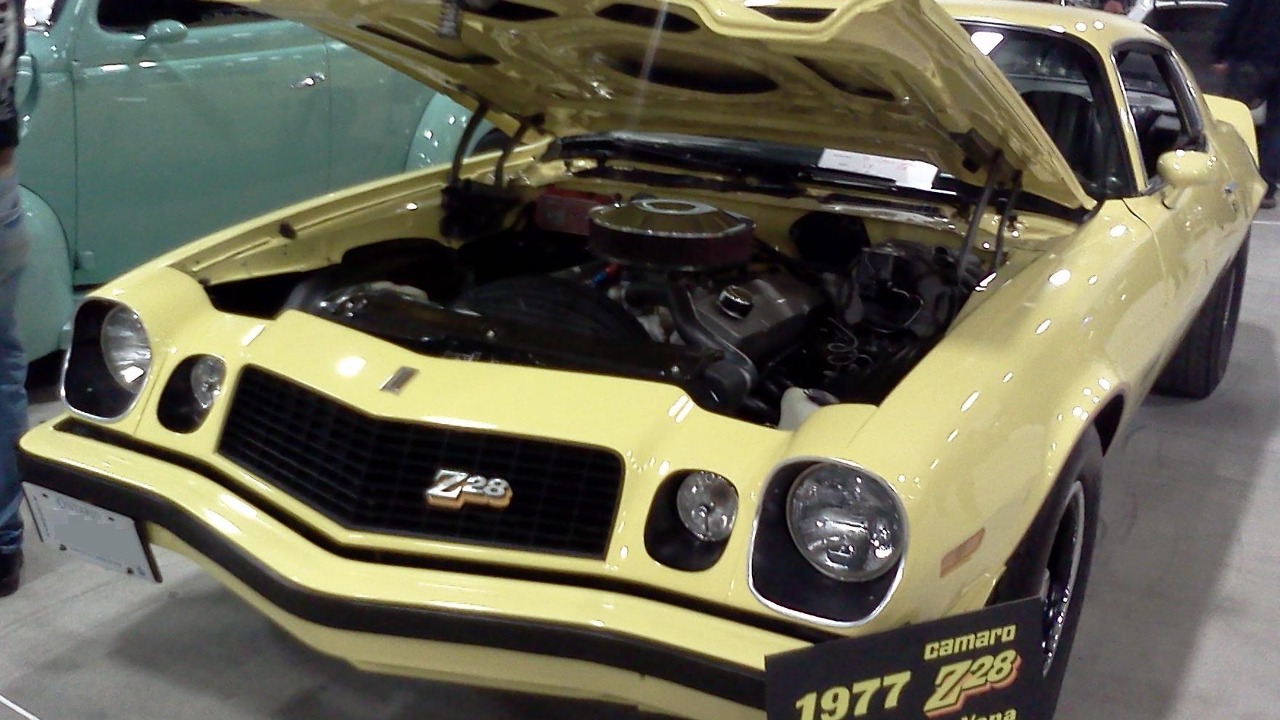
If the base and luxury-oriented models brought volume, the revived Z28 badge gave the entire lineup a crucial halo. Chevrolet had previously dropped the Z28, but by 1977 the company recognized that it needed a performance flagship to counter the Pontiac Trans Am, which had enjoyed skyrocketing sales during the Z28’s absence. Bringing back the Z28 reasserted the Camaro’s performance credentials at a time when enthusiasts were worried that emissions rules had permanently dulled American muscle. The badge signaled that Chevrolet still cared about handling, braking, and track credibility, not just vinyl roofs and plush seats.
The motorsport connection made that signal even stronger. Chevrolet continued racing the Camaro in the International Race of Champions, often shortened to IRO, which kept the car visible in a competitive, high-speed environment. That racing presence fed directly into the marketing of The Return of the Z-28 in 1977, tying showroom cars to the machines fans watched dice on track. When I connect that racing narrative to the sales surge, it is clear that the Z28 did more than add a few thousand units to the tally, it lifted the entire Camaro image, making even a base V8 coupe feel like it shared DNA with something built for the grid.
Anniversary timing and a maturing market
Timing also worked in the Camaro’s favor. The year 1977 marked the 10th anniversary of the Chevrolet Camaro, a milestone that gave marketers a natural hook and reminded buyers that this was no longer an upstart. A decade in, the car had a track record, a fan base, and a clear identity as Chevrolet’s answer to the pony-car formula. That sense of continuity mattered in a market that had seen plenty of nameplates come and go, and it helped reassure buyers that their investment in a sporty coupe would not be orphaned.
The broader market context was shifting as well. Early 1970s muscle had been about quarter-mile bragging rights, but by the late 1970s, buyers were more interested in style, comfort, and a manageable blend of performance and economy. Reports on the period note that the Camaro had struggled in the immediate aftermath of the first fuel crisis but gained momentum in the late 1970s as it adapted to those new expectations. The 1977 model, with its mix of available V8 power, improved creature comforts, and still-dramatic styling, landed right in that sweet spot. It was fast enough to feel special, yet civilized enough to serve as a daily driver, which is exactly the combination that tends to produce high-volume success.
Legacy of a record-setting model year
Looking back from today, the 1977 Camaro’s legacy is visible in the way enthusiasts restore and preserve these cars. Detailed restoration guides for the 1977 Chevrolet Camaro, including sections labeled Spotters Guide & New Features Besides the, treat that model year as a reference point, not just another entry in a long production run. The attention to correct trim, paint codes like 69, and factory options shows how seriously owners take authenticity, a respect usually reserved for historically important cars. When a model year inspires that level of care decades later, it is usually because it marked a turning point, and the 1977 Camaro fits that pattern.
Individual survivor stories reinforce that sense of importance. One account of a 1977 Camaro RS that spent 12 years off the road before roaring back to life describes the year 1977 as especially significant for the Chevrolet Camaro, highlighting both the 10th anniversary and the return of the performance focus that would carry the car into the 1980s. Those narratives, combined with the hard numbers of 218,853 total units and the 198,755 to 161,654 edge over the Mustang for the first time, explain why I see 1977 as the moment the Camaro fully claimed its place at the top of the pony-car hierarchy. It was not just a strong sales year, it was the season when Chevrolet proved that a well-judged mix of heritage, design, and performance could still win big in a changing automotive world.
More from Fast Lane Only: