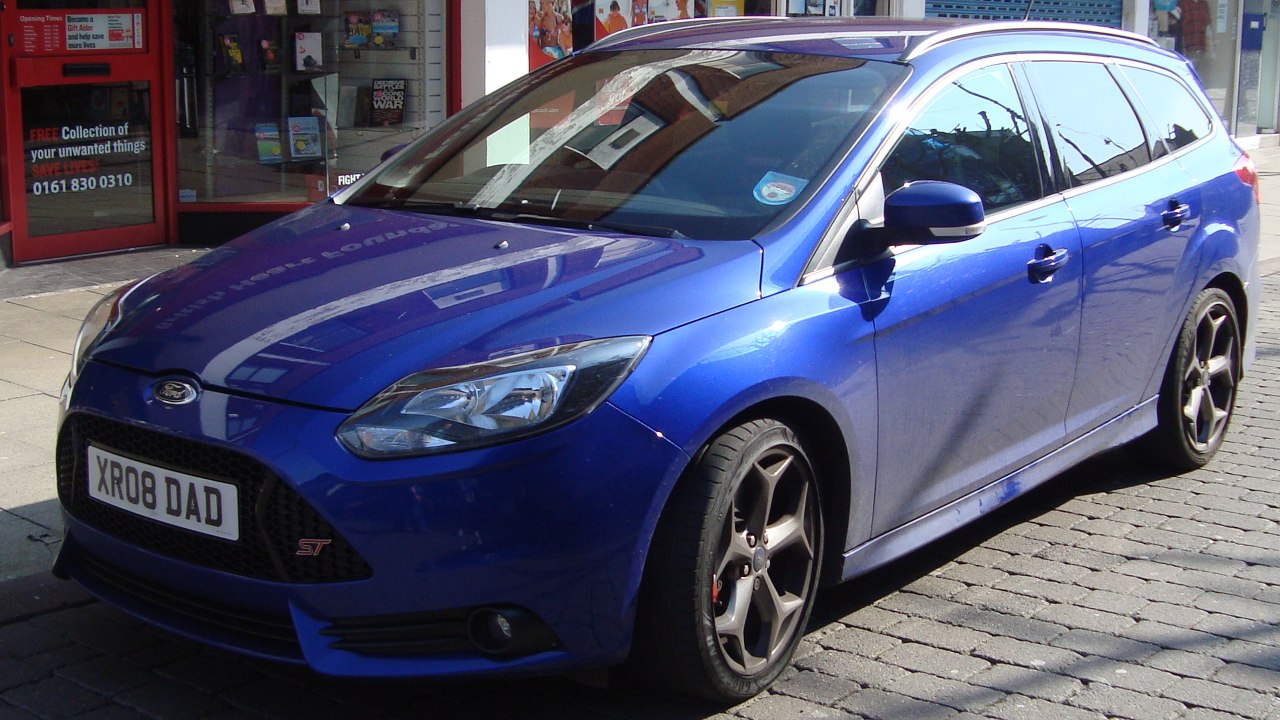
The 2013 Ford Focus ST arrived at a moment when American hot hatch fans were tired of watching compact performance stay overseas. Built on Ford’s global third-generation Focus platform and tuned by the same engineers who had been serving European drivers for years, it brought turbocharged power, serious chassis tuning, and everyday usability into a single, relatively affordable package. In doing so, it did more than add another quick hatchback to the market, it reset expectations for what a front-drive performance compact could be in the United States.
By combining a 250 horsepower turbo four, a manual gearbox, and practical five-door bodywork, the Focus ST made the hot hatch feel fresh again for a new generation of buyers. It was not the first fast hatch sold here, but it was the first time Ford treated American enthusiasts as equal partners in its global performance strategy, and that decision helped reignite interest in the entire segment.
The global Focus that finally came home
The 2013 Focus ST was a direct product of Ford’s One Ford strategy, which unified the North American and global Focus lines into a single third-generation platform. Instead of the older, separate North American Focus that had lagged behind its European counterpart, the company brought the same chassis and engineering to both sides of the Atlantic, then used that shared base to create a single performance model. According to reporting on the third-generation Focus, the One Ford plan specifically reunited the North American and global Focus ranges, replacing the previous North American version with the global car for the 2012 model year.
That corporate decision mattered because the Focus ST sold in the United States was, with only minor exceptions, the same car that European Focus ST buyers received. Pricing data and model descriptions note that the American version shared its core hardware and tuning with the European Focus ST, giving U.S. drivers access to the same turbocharged performance and chassis sophistication that had previously been reserved for European markets. For Ford performance enthusiasts who had long watched European hot hatches from afar, this was the first time the brand’s global hot hatch strategy truly included them.
Power, poise, and the “seat of your pants” factor
On paper, the Focus ST’s specification read like a greatest hits list for hot hatch fans. A turbocharged 2.0 liter four cylinder produced 250 horsepower and drove the front wheels through a six speed manual transmission, with no automatic option to dilute the experience. Contemporary reviews highlighted how the car encouraged drivers to operate it by the seat of their pants, with strong mid range torque and a playful chassis that rewarded committed inputs. The combination of power and relatively low curb weight gave the Focus ST the kind of punch that could challenge established rivals while still returning usable fuel economy in daily use.
The chassis tuning was just as critical as the engine. Road tests praised the Steering for being nice and direct, noting that while front drive understeer could still appear at the limit, a lift of the throttle would rotate the car and bring the rear into play. That balance between mild understeer and lift off rotation gave the Focus ST a lively character that felt closer to European hot hatches than to the softer compacts American buyers were used to. Reviewers also pointed out that the car’s suspension and electronic aids allowed enthusiastic driving without sacrificing basic comfort, which helped it function as a genuine one car solution.
Challenging the GTI and reshaping the segment
When the Focus ST landed in U.S. showrooms, it did not arrive into a vacuum. The Volkswagen GTI and Subaru WRX were already established performance benchmarks, and American buyers had spent years watching Europe enjoy a richer mix of small, fast cars. Coverage from the time framed the Focus ST as a direct challenger to those incumbents, with some reviewers explicitly positioning it against the GTI and WRX in terms of performance and value. One analysis even described the car as a kind of kingslayer, arguing that the days when European hot hatch fans got all the best toys were coming to an end as Ford brought its global performance game to North America.
That competitive positioning mattered because it signaled a shift in how manufacturers viewed the American compact performance market. Instead of treating the United States as an afterthought, Ford used the Focus ST to show that a global hot hatch could be sold here with minimal compromise. A separate review emphasized that the car represented an excellent bargain, especially when equipped with features like Recaro sport seats and technology packages, which undercut some rivals on price while matching or exceeding them on power. By offering that mix, the Focus ST helped push the segment toward higher output, sharper handling, and better equipped models, forcing competitors to respond.
Everyday usability with real enthusiast credibility
Part of what reignited interest in hot hatches was the Focus ST’s ability to blend serious performance with everyday practicality. The five door layout and folding rear seats provided real cargo space, with one test citing a maximum luggage room figure of 44.8 cubic feet when the rear bench was folded. That meant owners could haul bikes, luggage, or home improvement supplies on the weekend, then commute comfortably during the week, all in the same car that could tackle a back road with genuine pace. The interior also offered supportive sport seats, especially when optioned with Recaro buckets, which held drivers in place during spirited driving without making long trips uncomfortable.
Technology and comfort features further broadened its appeal. Reviews noted that the Focus ST could be equipped with systems like MyFord Touch and premium audio, and that even without every option box ticked, the car represented strong value for money. One evaluation pointed out that the Focus ST kept its MSRP below 30,000 dollars while still delivering turbocharged performance and a well appointed cabin, which made it accessible to younger enthusiasts who needed one vehicle to do everything. That balance of usability and excitement is central to the hot hatch formula, and the Focus ST executed it in a way that felt modern and globally competitive.
Legacy, depreciation, and the path to cult status
More than a decade later, the 2013 Focus ST is aging into a different kind of relevance. Used market analyses describe it as a potential certified classic and a used hot hatch bargain, noting that values have begun to drop as the car gets older and as buyers chase newer models with more screens and driver aids. One report on Current Pricing observed that because the Focus ST is aging and American, its prices have fallen considerably, especially compared with some European rivals that have held their value more stubbornly. That depreciation, combined with the car’s robust performance hardware, has turned it into an attractive entry point for enthusiasts shopping the second hand market.
At the same time, some commentators argue that the Focus ST has the ingredients to become collectible in the long term. A retrospective on the Legacy of Performance of the Focus ST suggested that it is easy to see the model remaining popular and perhaps even becoming a sought after classic, particularly because it was America’s first and only Focus ST generation. Another enthusiast focused review described the 2013 Ford Focus ST as a great hot hatchback that is becoming even more appealing as it ages and prices fall. That combination of historical significance, global engineering pedigree, and accessible pricing is exactly what often pushes once common performance cars into cult status.
The ST’s place in Ford’s performance story
The Focus ST also sits at a pivotal point in Ford’s broader performance narrative. Historical overviews of the model line describe 2013 as The Global Expansion and Introduction to the U.S. Market, when The Focus ST became a global phenomenon by officially entering the American scene. That move paved the way for later performance variants like the all wheel drive Focus RS, which built on the same basic platform. However, reporting on the Focus RS notes that its short lifespan in the United States was tied to the discontinuation of the entire Focus line as Ford shifted its attention more fully to SUVs and pickup trucks.
With Ford now out of the hot hatch business in the United States, the 2013 Focus ST looks less like a stepping stone and more like a high water mark. A recent analysis on how Ford has killed its last hot hatch pointed out that the third generation ST, released globally in 2012, made the model accessible to U.S. buyers for the first time and is now effectively the last of its kind from the brand. In that context, the 2013 car’s role in reigniting the hot hatch segment takes on added weight. It was the moment when Ford’s global performance strategy fully embraced American enthusiasts, and it may stand as the definitive expression of that philosophy in compact form.
More from Fast Lane Only: