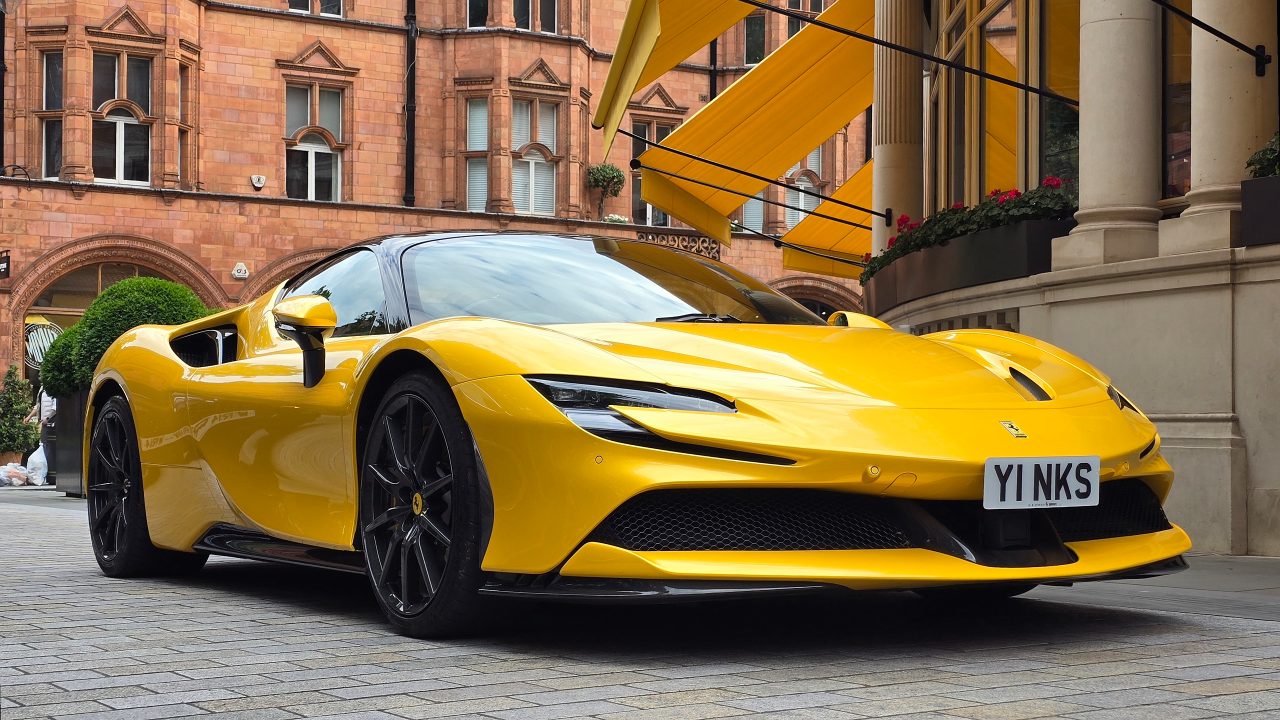
The 2023 Ferrari SF90 XX did not simply sharpen an already ferocious hybrid supercar, it redrew the boundary between track program and public road. By turning its once ring‑fenced XX development lab into a pair of street‑legal flagships, Ferrari used the SF90 XX Stradale and SF90 XX Spider to push the idea of a road car further toward uncompromised circuit thinking. I see this pair as a turning point, where software, aerodynamics and hybrid powertrain strategy converge into something closer to a rolling prototype than a traditional limited series.
From XX laboratory to license plate
Ferrari’s XX programme was created as a closed world, a place where clients drove experimental cars that were never meant to wear number plates. With the SF90 XX Stradale and SF90 XX Spider, that firewall finally came down, creating what Ferrari itself describes as the first road‑going cars in the XX programme and the first road‑legal XX model in the company’s history. The cars are based on the SF90 Stradale, but they carry the XX badge that previously belonged to track‑only machines such as the FXX‑K EVO, which signals how far the engineers were willing to stretch a series‑production platform.
That decision is not a mere marketing flourish, it is backed by hardware and numbers. The SF90 XX Stradale and SF90 XX Spider produce a combined output of 1,016 horsepower, making the SF90 XX the most powerful Ferrari road car ever made according to detailed technical coverage of the model. Production is capped at 799 coupes and 599 convertibles, all pre‑allocated to customers, which keeps the XX spirit of exclusivity intact even as the cars move from private track days to public roads.
Aerodynamics that think like a race car
What really pushes the SF90 XX concept forward is how deeply track‑car aerodynamics have been baked into a road‑legal silhouette. The bodywork is not just more aggressive than the SF90 Stradale, it is re‑sculpted to generate significantly higher downforce, with a fixed rear wing that visually and functionally recalls Ferrari’s top‑level endurance racers. Technical briefings on the car describe a complex system of underbody channels, side intakes and a reworked rear diffuser that together create a stable aerodynamic platform at high speed, a clear step beyond the already advanced aero of the standard Stradale.
One of the most telling details is the use of an active device around the rear wing known as a shut‑off Gurney, which can alter the airflow to balance drag and downforce depending on the driving situation. That kind of solution, familiar from racing prototypes, is now integrated into a car that must also cope with speed bumps and city traffic. Reports on the SF90 XX Stradale and SF90 XX Spider highlight how the aero package works with the chassis electronics to keep the car planted, rather than simply chasing headline downforce figures, which underlines Ferrari’s intent to make the XX experience exploitable rather than intimidating.
Hybrid powertrain as a performance multiplier
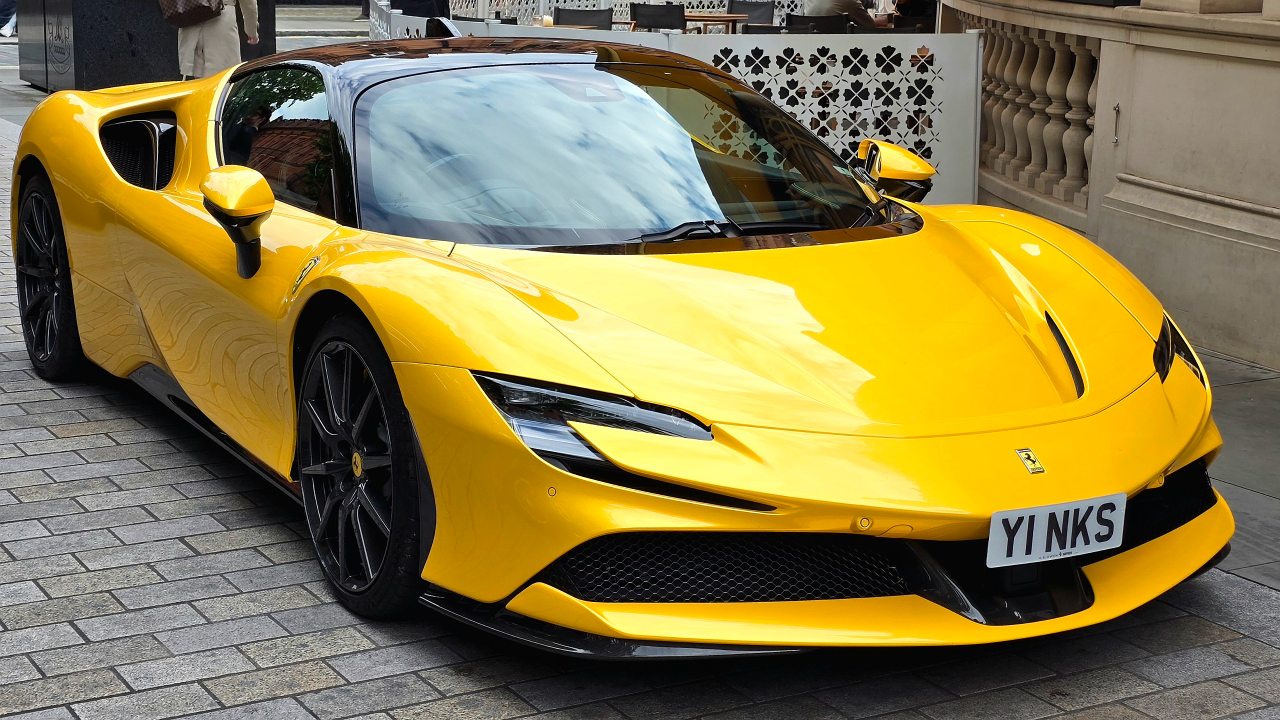
The SF90 XX Stradale inherits the plug‑in hybrid (PHEV) layout of the SF90 Stradale, but the calibration and output have been pushed to a new level. The powertrain combines a twin‑turbo V8 with three electric motors, two at the front axle and one between engine and gearbox, to deliver that total of 1,016 horsepower while still allowing for electric‑only running in certain modes. Ferrari’s own technical overview of the SF90 XX Stradale and SF90 XX Spider stresses that the PHEV system is not an efficiency add‑on, it is central to how the car deploys torque, fills turbo gaps and shapes the driving character.
What strikes me is how much of the performance gain comes from software rather than raw hardware changes. Detailed analysis of the SF90 XX points to Ferrari’s mastery of software and the seamlessness of the regenerative braking handover between the electric motors and the friction brakes, which lets the driver lean on the car’s stopping power without feeling transitions. The hybrid system can pre‑emptively charge or discharge the battery to ensure maximum boost is available when needed, a strategy that turns the electric side of the PHEV into a performance multiplier rather than a compromise.
Chassis, software and the pursuit of lap time
Ferrari has been explicit that the SF90 XX Stradale is not only its most powerful road car, but also its fastest around the company’s own reference track. The car has been described as Ferrari’s fastest‑ever road car, with development led on circuit by Raffaele de Simone, Ferrari’s Head of Development Test driving. That context matters, because it explains why the chassis setup, braking system and electronic controls have all been tuned with lap time as the primary metric, even if the car still has to function on ordinary roads.
Underneath the dramatic bodywork, the SF90 XX uses a suite of electronic aids that are more tightly integrated than on the standard Stradale. Reports on the model talk about unprecedented synergy between aerodynamics, powertrain and control software, with systems such as traction control, torque vectoring and brake‑by‑wire all sharing data to keep the car within a narrow performance window. The result, as described in track impressions, is a car that feels highly scientific in the way it manages grip and balance, yet still allows the driver to access the V8’s full character when the electronics judge that conditions are right.
Spider, scarcity and what comes next
The SF90 XX Spider takes the same technical recipe and packages it in a 2‑door retractable‑hardtop body style, assembled in Maranello, Italy, that lets drivers experience the hybrid V8 soundtrack with the sky above. Technical summaries of the Spider confirm that it shares the core PHEV architecture and output with the Stradale, while adding the complexity of a folding roof and the structural reinforcements that go with it. Despite that, the Spider remains firmly in supercar territory on weight and performance, which shows how aggressively Ferrari has chased mass reduction and stiffness in the underlying platform.
Both SF90 XX variants sit within a broader family that includes the original SF90 Stradale and its own open‑top SF90 Spider variant, but the XX cars occupy a distinct, more extreme tier. Coverage of the SF90 XX Stradale and SF90 XX Spider repeatedly emphasizes that the entire production run of 799 coupes and 599 convertibles was spoken for from the outset, reinforcing the idea that these are rolling showcases for Ferrari’s latest thinking rather than mainstream models. As I see it, the SF90 XX project pushed the idea of a road car further by proving that a manufacturer can bring its most experimental track technology to the street without diluting it, and it sets a clear template for how future limited‑series Ferraris might blend hybrid power, active aerodynamics and software‑driven dynamics into something even more radical.
More from Fast Lane Only: