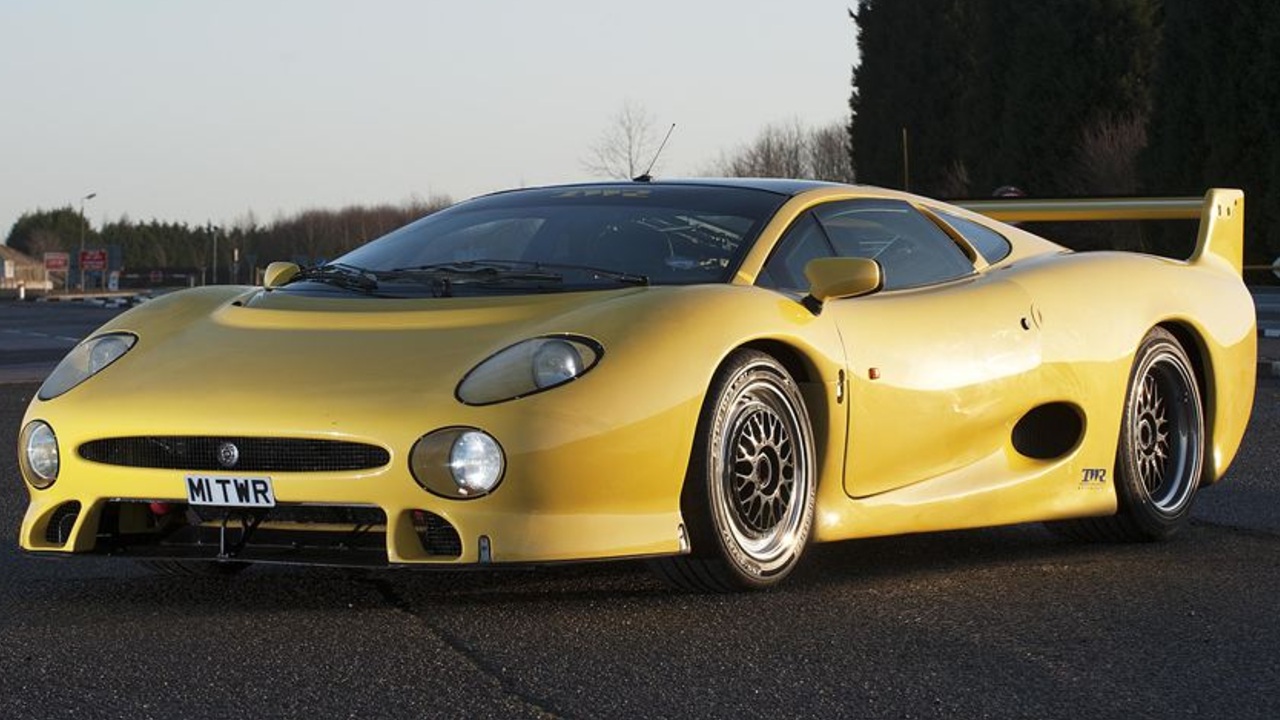
The Jaguar XJ220 was always rare, but the 1994 landscape turned it into something closer to a ghost. By the time production ended, the car had gone from headline-grabbing supercar to a misunderstood machine that struggled to find buyers, then slowly rebounded as collectors realized how few were built. When enthusiasts now talk about ultra-rare versions such as the 1994 Jaguar XJ220S, they are really responding to how constrained the entire XJ220 story became.
To understand why any XJ220-based variant is considered exceptionally scarce, I have to start with the production car’s troubled path, the unexpectedly low build numbers, and the way market sentiment flipped from apathy to obsession. The result is a car that most enthusiasts have never seen in person, yet one that has become a benchmark for limited-production supercar values.
The ambitious supercar that arrived at the wrong moment
The XJ220 began life as a bold statement, a flagship supercar intended to showcase Jaguar’s engineering and racing pedigree. It emerged from a period when manufacturers were chasing ever higher top speeds and dramatic styling, and Jaguar positioned the car at the very top of that hierarchy with a six-figure price tag and technology that echoed its competition efforts. Contemporary reporting notes that each car carried a retail price of £470,000 in 1992, a figure that placed it firmly in the rarefied air of ultra-expensive exotics and set expectations that only a small, highly committed group of buyers would ever sign on.
That ambition collided with a rapidly changing market. As one detailed history of driving the XJ220 explains, the project evolved significantly from concept to production, with key elements changed along the way and the broader economic climate turning less favorable by the time cars were ready for customers. The same account points to lawsuits and shifting buyer sentiment that complicated sales, reinforcing that the XJ220 did not arrive into a simple environment of guaranteed demand but instead had to fight for attention just as the supercar bubble was deflating.
Production capped at just 281 cars
The most concrete measure of the XJ220’s scarcity is its production total. Ultimately, only about 270–280 examples were planned, and multiple sources converge on a final figure of 281 cars built before the line shut down. One detailed overview states that a total of just 281 cars were produced by the time production ended, confirming that the XJ220 never came close to the kind of volume seen by more mainstream performance models and instead lived firmly in the realm of hand-built, low-run exotics.
Another retrospective on the car’s anniversary reinforces that point, noting that when production ceased in 1994 with just 281 cars built, Jaguar was left with 150 unwanted XJ220s that had not yet found buyers. That detail is striking: even with such a small run, more than half of the cars were still looking for homes, which underlines how limited demand was at the time and how unusual it is that a supercar this rare could sit unsold. A separate sales listing, describing a one-owner 1994 example, echoes the same scale by stating that ultimately, only about 270–280 examples of this remarkable car were produced, and presents the car as a time capsule in completely original condition, underscoring how carefully preserved many surviving cars now are.
From showroom burden to collector obsession
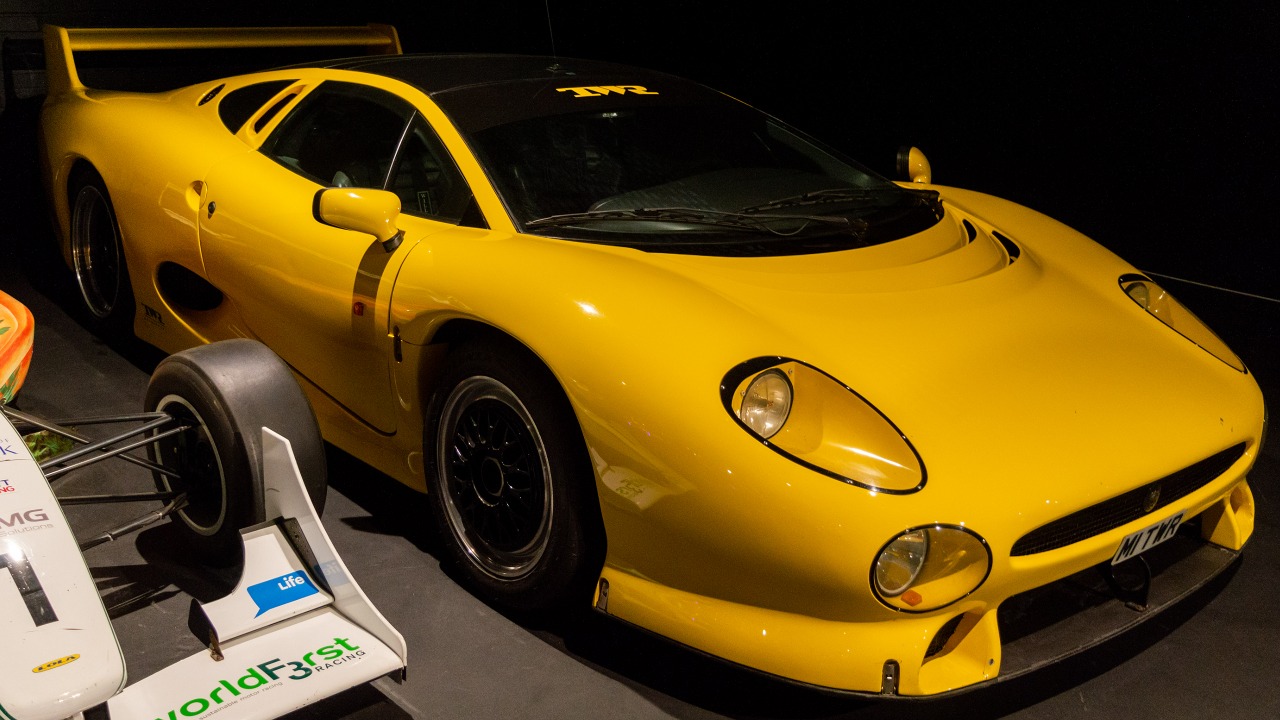
The fact that Jaguar reportedly had 150 unsold XJ220s at the end of production shows how far reality diverged from the original hype. In the mid‑1990s, the car’s high price and changing tastes meant dealers had to discount heavily, with some reports describing cars selling for less than half of their list price. That kind of market correction can damage a model’s reputation for years, and it helps explain why the XJ220 spent a long stretch as an undervalued supercar rather than an instant blue-chip collectible, despite its tiny production run and advanced engineering.
Over time, however, scarcity and nostalgia began to work in its favor. One enthusiast-focused profile notes that most enthusiasts have never even seen one in person or up close, and follows that observation by pointing out that yet every kid or aspiring car fan of the era knew the XJ220 from posters and magazines. That disconnect between cultural fame and physical absence is exactly what fuels modern collector interest. Another investment-oriented analysis points out that later values have moved significantly more than the older model primarily due to the super-limited production numbers, a pattern that fits the XJ220’s trajectory as buyers re-evaluated just how few cars were built and how advanced they were for their time.
Why any XJ220-based special is perceived as ultra-rare
When enthusiasts talk about the 1994 Jaguar XJ220S as ultra-rare, they are building on this foundation of already limited production and difficult early sales. With only 281 standard cars produced and evidence that Jaguar struggled to place 150 of them when new, any derivative or special configuration that traces its roots to that 1994 production window is, by definition, operating in a very small universe of possible chassis. Even without separate, verified production data for an XJ220S variant (unverified based on available sources), the base car’s numbers alone explain why collectors treat any offshoot as something they are unlikely to encounter.
The broader supercar world reinforces how such scarcity shapes perception. Design studies and radical concepts, such as a McLaren 570S concept that appears nothing like the original from the front and back thanks to the removal of bodywork and exposed structure, show how quickly a familiar model can be transformed into something that looks like it belongs in a science fiction film. When similar levels of visual drama or mechanical focus are applied to a platform that started with only 281 units, the result is naturally framed as exceptionally rare, even if the exact build count of the derivative is not documented in the same way as the base car.
The XJ220’s legacy as a benchmark for rarity
Today, the XJ220 occupies a curious but powerful place in supercar history. It is remembered as a car that pushed boundaries, carried a retail price of £470,000 in 1992, and yet ended production with just 281 cars built and 150 still looking for buyers. That combination of technical ambition, commercial struggle and extremely low volume has turned it into a reference point whenever collectors discuss how to judge rarity and long-term value in the high-performance market.
Sales listings for surviving examples lean heavily on that narrative, emphasizing that ultimately, Jaguar produced only about 270–280 cars and presenting low-mileage, one-owner vehicles as museum-grade artifacts. Enthusiast histories that revisit the driving experience and the project’s evolution from concept to production underline how much the market misread the car at launch, and how its limited numbers now make it a case study in how quickly sentiment can flip. Against that backdrop, any 1994 Jaguar XJ220S reference resonates as shorthand for the most exclusive edge of an already scarce lineage, even if specific details about that designation remain unverified based on available sources.
More from Fast Lane Only: